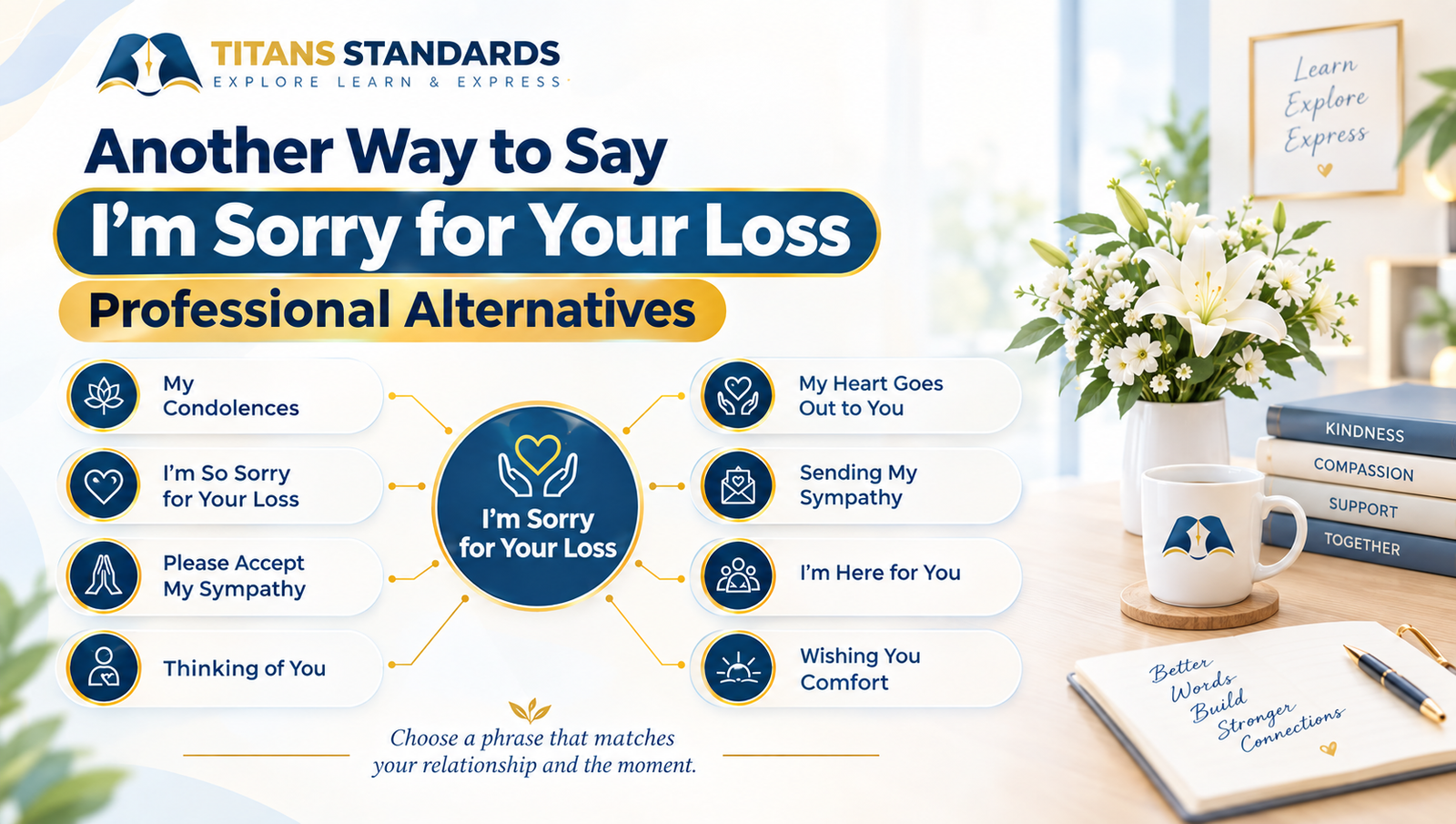
Another way to say “I’m sorry for your loss” is “I’m thinking of you,” “My heart goes out to you,” “Please accept my deepest condolences,” or “I’m here for you.” The best choice depends on your relationship with the grieving person. A specific memory, sincere acknowledgment, or concrete offer of support can make your message feel more personal.
Quick Answer
Here are some natural alternatives to “I’m sorry for your loss”:
- I’m thinking of you and your family. — Warm and appropriate in many situations.
- My heart goes out to you. — Compassionate and personal.
- Please accept my deepest condolences. — Formal and respectful.
- I’m here for you. — Best for a close friend or family member.
- I’m so sorry you’re going through this. — Personal without being overly specific.
- I was deeply saddened to hear about [Name]. — Appropriate when you knew the person who died.
- Wishing you comfort and peace. — Gentle and suitable for cards or messages.
- You and your family are in my thoughts. — Good for professional or personal situations.
- I can’t imagine how difficult this must be. — Acknowledges the person’s pain without claiming to understand it completely.
- I’ll always remember [Name] for [specific quality or memory]. — Especially meaningful when you knew the deceased.
The strongest condolence messages usually do more than replace one phrase with another. They acknowledge the loss, recognize the person who died, and let the grieving person know they are not alone.
Key Takeaways
- “I’m sorry for your loss” is completely appropriate, but it can sound generic when repeated often.
- A more personal message can mention the deceased person by name or recall a meaningful memory.
- “My deepest condolences” works particularly well in formal or professional situations.
- “I’m here for you” is warmer and better suited to someone you know well.
- Avoid telling someone how they should grieve or suggesting that the loss happened for a particular reason.
- If you offer help, make it specific rather than simply saying, “Let me know if you need anything.”
What Does “I’m Sorry for Your Loss” Mean?
“I’m sorry for your loss” is a conventional expression of sympathy used after someone has died. In this context, “sorry” does not mean that you caused the loss or are apologizing for it. It communicates sadness, sympathy, and acknowledgment of what the other person is experiencing.
The phrase remains useful because it is simple, respectful, and unlikely to demand anything from the grieving person. It can work when you do not know someone well, when you are speaking briefly at a funeral, or when you are unsure what else to say.
However, people often search for another way to say it because the expression can feel repetitive or impersonal. A more specific message can make the person feel seen rather than simply receiving a standard condolence. Current guidance on expressing sympathy similarly emphasizes personal acknowledgment, memories, and supportive presence rather than trying to explain or fix grief.
For example, instead of:
“I’m sorry for your loss.”
You could say:
“I was so saddened to hear about your mother. I’m thinking of you and your family.”
The second version acknowledges the actual person who died and makes the message feel more personal.
Best Alternatives to “I’m Sorry for Your Loss”
1. “I’m Thinking of You and Your Family”
Meaning
This tells the grieving person that they are on your mind during a difficult period. It expresses care without making assumptions about exactly how they feel.
How It Differs
Unlike “I’m sorry for your loss,” this wording focuses more directly on your continued support and attention.
Best For
Texts, cards, coworkers, friends, family, professional communication
Tone
Warm, gentle, neutral
Example
“I heard about your father. I’m thinking of you and your family during this difficult time.”
Quick Tip
This is one of the safest alternatives when you want to sound caring without being overly emotional.
2. “My Heart Goes Out to You”
Meaning
This is an emotional expression of sympathy. It communicates that you feel compassion for what the person is experiencing.
How It Differs
It is more emotionally expressive than the standard “I’m sorry for your loss” and can sound especially natural in a personal message.
Best For
Friends, family, sympathy cards, personal messages
Tone
Warm, compassionate, personal
Example
“My heart goes out to you and everyone who loved your grandmother.”
Quick Tip
Use this with someone you have a reasonably warm relationship with rather than in very formal business communication.
3. “Please Accept My Deepest Condolences”
Meaning
This is a formal expression of sympathy following a death. “Condolences” specifically refers to expressions of sympathy after someone’s death.
How It Differs
It is more formal and traditional than “I’m sorry for your loss.” It works particularly well when you want to maintain respectful distance.
Best For
Professional communication, sympathy cards, acquaintances, formal messages
Tone
Formal, respectful, professional
Example
“Please accept my deepest condolences to you and your family following the loss of your mother.”
Quick Tip
This is a strong choice for a coworker, client, manager, or professional acquaintance.
4. “I’m So Sorry You’re Going Through This”
Meaning
This acknowledges the grieving person’s experience rather than simply referring to the loss itself.
How It Differs
The wording is more conversational and personal. It can feel less like a standard condolence phrase.
Best For
Friends, coworkers, relatives, texts, conversations
Tone
Warm, natural, supportive
Example
“I just heard about your brother. I’m so sorry you’re going through this.”
Quick Tip
This works especially well when you want to sound sincere without trying to find a profound statement.
5. “I’m Here for You”
Meaning
This communicates availability and emotional support. It tells the person that they do not have to handle everything alone.
How It Differs
Rather than simply expressing sympathy, it offers a continuing sense of presence.
Best For
Close friends, family, partners, personal messages
Tone
Warm, personal, supportive
Example
“I know there are no easy words right now. I’m here for you whenever you need me.”
Quick Tip
If you say this, be prepared to follow through. Emotional support is more meaningful when your actions match your words.
6. “I Was Deeply Saddened to Hear About [Name]”
Meaning
This directly acknowledges the person who died and communicates your own sadness about hearing the news.
How It Differs
It is more personal than a generic condolence because it uses the deceased person’s name.
Best For
Sympathy cards, professional messages, acquaintances, people you knew personally
Tone
Respectful, sincere, formal-to-neutral
Example
“I was deeply saddened to hear about James. He always made everyone feel welcome.”
Quick Tip
If you knew the deceased, adding one honest memory can make this much more meaningful.
7. “Wishing You Comfort and Peace”
Meaning
This expresses a gentle hope that the grieving person finds comfort while dealing with the loss.
How It Differs
It does not directly state that you are sorry. Instead, it focuses on what you hope the person experiences during a difficult time.
Best For
Cards, texts, sympathy messages, acquaintances
Tone
Gentle, respectful, traditional
Example
“Wishing you comfort and peace as you remember your mother and the life you shared.”
Quick Tip
This works particularly well as a closing sentence in a longer condolence message.
8. “You and Your Family Are in My Thoughts”
Meaning
This communicates continued concern for both the individual and their family.
How It Differs
It broadens the message beyond the individual who received it and can be appropriate when an entire family is grieving.
Best For
Coworkers, acquaintances, friends, professional communication
Tone
Respectful, warm, neutral
Example
“You and your family are in my thoughts during this difficult time.”
Quick Tip
If you do not know the person well, this is a dependable alternative to a more intimate expression.
9. “I Can’t Imagine How Difficult This Must Be”
Meaning
This recognizes that the person may be experiencing intense grief without claiming that you know exactly how they feel.
How It Differs
It focuses on the person’s emotional experience rather than simply acknowledging the death.
Best For
Friends, family, coworkers, personal conversations
Tone
Empathetic, thoughtful, gentle
Example
“I can’t imagine how difficult this must be after losing someone so close to you.”
Quick Tip
Avoid following it with a comparison such as “I know exactly how you feel.” Grief is personal, even when you have experienced loss yourself.
10. “I’ll Always Remember [Name] for…”
Meaning
This is one of the most personal options when you knew the person who died. It honors their life rather than focusing only on the fact of their death.
How It Differs
Instead of simply expressing sympathy, you contribute a memory or positive observation about the deceased.
Best For
Close friends, family, coworkers who knew the deceased, sympathy cards
Tone
Personal, heartfelt, sincere
Example
“I’ll always remember Sarah for her incredible sense of humor and the way she could make everyone feel welcome.”
Quick Tip
A specific, genuine memory is usually stronger than a general compliment.
How to Choose the Right Condolence Phrase
There is no single replacement that works for every situation. The right wording depends largely on your relationship with the grieving person, whether you knew the deceased, and how formal the situation is.
If you are speaking to a close friend, something simple such as “I’m here for you” may feel more genuine than a formal expression.
If you are writing to a coworker, manager, client, or professional acquaintance, “Please accept my deepest condolences” or “You and your family are in my thoughts” may be more appropriate.
If you knew the person who died, consider mentioning their name and one specific quality or memory. That approach shifts the message from a generic condolence to a personal remembrance.
Alternatives Based on the Situation
For a Close Friend
Try:
- “I’m here for you.”
- “I’m so sorry you’re going through this.”
- “I’m thinking about you.”
- “You don’t have to go through this alone.”
- “I’m here whenever you want to talk.”
A close relationship gives you more room to use natural, personal language.
For a Family Member
Try:
- “My heart goes out to you.”
- “I’m thinking of you and everyone in the family.”
- “I’m here for you, whatever you need.”
- “I’m so sorry. I know how much they meant to you.”
A family message can be more intimate, but avoid assuming what another family member’s grief should look like.
For a Coworker
Try:
- “I was very sorry to hear about your loss.”
- “My condolences to you and your family.”
- “I’m thinking of you during this difficult time.”
- “Please take the time you need.”
A professional condolence should be warm without becoming overly personal.
For a Boss, Client, or Professional Contact
Try:
- “Please accept my sincere condolences.”
- “My deepest condolences to you and your family.”
- “I was deeply saddened to hear the news.”
- “Wishing you and your family comfort during this difficult time.”
Traditional wording is often appropriate when the relationship has clear professional boundaries.
For a Sympathy Card
A card gives you more room to combine sympathy with a personal observation:
“I was so saddened to hear about Michael. He was always kind and generous whenever we saw him. Thinking of you and your family and wishing you comfort in the days ahead.”
What to Say Instead of “Sorry for Your Loss” in a Text
Text messages usually work best when they are short, sincere, and free from pressure to respond.
Examples include:
- “I just heard about your mom. I’m so sorry. I’m thinking of you.”
- “I’m so sorry you’re going through this. I’m here for you.”
- “My heart goes out to you and your family.”
- “Thinking of you today. No need to respond—I just wanted you to know I care.”
- “I was so saddened to hear about David. He was a wonderful person.”
A short message is not automatically less meaningful. In fact, keeping it simple can be appropriate when the person is overwhelmed.
What to Say If You Knew the Person Who Died
When you knew the deceased, one of the most meaningful approaches is to name them and share something genuine about them.
For example:
“I’m so sorry about Linda. I’ll always remember how welcoming she was whenever we visited. She made everyone feel like family.”
This is different from simply saying “sorry for your loss” because it recognizes the person who died as an individual.
You do not need to write a long story. One honest memory is enough.
What to Avoid Saying
1. “Everything happens for a reason.”
This can unintentionally minimize someone’s grief. You may believe the statement is comforting, but the grieving person may not share that belief.
2. “I know exactly how you feel.”
Even if you have experienced a similar loss, you cannot know exactly how another person is grieving.
3. “Be strong.”
People do not need to hide their grief to make others comfortable. Give them room to experience their emotions naturally.
4. “At least they lived a long life.”
A person’s age does not make losing them painless.
5. “They’re in a better place.”
This may be comforting in some religious or personal contexts, but it should not be assumed. If you do not know the person’s beliefs, choose neutral language.
6. “Let me know if you need anything.”
This is well-intentioned, but it puts the responsibility on the grieving person to identify what they need. A specific offer can be more helpful, such as, “I can bring dinner Thursday if that would help.”
7. Comparing Their Loss With Yours
Sharing your own experience can shift attention away from the person who is grieving. If you mention your own loss at all, make sure it supports the conversation rather than becoming the focus.
How to Make a Condolence Message More Personal
A useful formula is:
Acknowledge the loss + mention the person + offer genuine support.
For example:
“I was so sorry to hear about your father. He was such a kind person, and I always enjoyed talking with him. I’m thinking of you and your family.”
Another option is:
“I’m so sorry you’re going through this. I know how much Maria meant to you. I’m here for you, and there’s no need to respond.”
The goal is not to find a perfect sentence. Grief cannot be fixed with the right words. The purpose of a condolence message is simply to acknowledge the loss and show that you care. Guidance on grief communication commonly recommends avoiding explanations, comparisons, or pressure to recover quickly.
Administrative, Professional, and Formal Alternatives
For professional situations, choose language that is respectful but not overly intimate.
| Situation | Recommended Phrase | Tone |
| Coworker | “I’m thinking of you and your family.” | Warm, professional |
| Manager | “Please accept my sincere condolences.” | Formal |
| Client | “I was deeply saddened to hear the news.” | Respectful |
| Professional email | “My deepest condolences to you and your family.” | Formal |
| Acquaintance | “I’m very sorry to hear about your loss.” | Neutral |
| Close colleague | “I’m so sorry you’re going through this.” | Personal, supportive |
| Close friend | “I’m here for you.” | Warm, personal |
| Sympathy card | “Wishing you comfort and peace.” | Gentle |
Is “I’m Sorry for Your Loss” Still Appropriate?
Yes. There is nothing inherently wrong with saying “I’m sorry for your loss.” It remains a clear and respectful way to acknowledge someone’s grief.
The issue is not that the phrase is incorrect. Its limitation is that it is general. If you know the person well or knew the deceased, adding something specific can make your message feel more genuine.
For example:
“I’m sorry for your loss. I’ll always remember how kind your mother was.”
That keeps the familiar phrase while adding a personal element.
Frequently Asked Questions
What is another way to say “I’m sorry for your loss”?
Natural alternatives include “I’m thinking of you,” “My heart goes out to you,” “Please accept my deepest condolences,” and “I’m so sorry you’re going through this.” If you knew the deceased, mentioning their name or sharing a brief memory can make your message more personal and meaningful.
What is a more personal way to say “I’m sorry for your loss”?
Try acknowledging the person who died rather than referring only to the loss. For example, “I was so saddened to hear about your mother. She was such a kind person, and I’m thinking of you.” A specific, truthful memory often makes a condolence feel more personal.
What can I say instead of “sorry for your loss” to a coworker?
For a coworker, “I’m thinking of you and your family,” “I was very sorry to hear about your loss,” or “Please accept my sincere condolences” are appropriate. Keep the message supportive and respectful without asking for personal details or expecting a response.
What is a formal way to say “sorry for your loss”?
“Please accept my deepest condolences” is one of the most formal alternatives. You can also say, “I was deeply saddened to hear the news” or “My sincere condolences to you and your family.” These expressions work well in professional emails, sympathy cards, and messages to acquaintances.
What should I say to a friend who lost a loved one?
A close friend may appreciate something simple and direct, such as “I’m so sorry you’re going through this. I’m here for you.” You can also mention the person who died if you knew them. Avoid trying to explain the loss or tell your friend how they should feel.
Is “my condolences” too formal?
“My condolences” is somewhat formal, but it is not inappropriate. It can work well with coworkers, acquaintances, clients, or professional contacts. With a close friend or family member, a warmer phrase such as “I’m here for you” may sound more natural.
What should I say if I knew the person who died?
Mentioning the person’s name and sharing a genuine memory can be especially meaningful. For example: “I’m so sorry about Daniel. I’ll always remember his sense of humor and how he made everyone feel welcome.” A brief, sincere memory is often more personal than a generic condolence.
Is it okay to say “I know how you feel”?
It is better to avoid saying that you know exactly how someone feels. Even if you have experienced a similar loss, every relationship and grieving experience is different. A gentler alternative is, “I can only imagine how difficult this must be,” which leaves room for the person’s individual experience.
What should I write in a sympathy card?
Start with a sincere acknowledgment of the loss, then add something personal if appropriate. For example: “I was deeply saddened to hear about your father. He was always so kind to me, and I’ll remember him fondly. Wishing you and your family comfort and peace.”
What is the best short condolence message?
A strong short message is: “I’m so sorry. I’m thinking of you and your family.” If you knew the deceased, an even more personal option is: “I’m so sorry about [Name]. I’ll always remember [specific memory].” Keep the message sincere rather than trying to make it profound.
Conclusion
The best alternative to “I’m sorry for your loss” is not necessarily a more sophisticated phrase. It is the expression that fits your relationship with the grieving person and honestly communicates that you care.
For a professional situation, “Please accept my deepest condolences” is respectful and appropriate. For a friend, “I’m here for you” may feel more natural. If you knew the person who died, mentioning their name and sharing one genuine memory can make your message much more personal.

Editorial Desk
The Titan Standards Editorial Team develops, reviews, and maintains practical English-language resources. The team checks articles for clarity, accuracy, context, readability, and consistency with Titan Standards’ editorial guidelines.