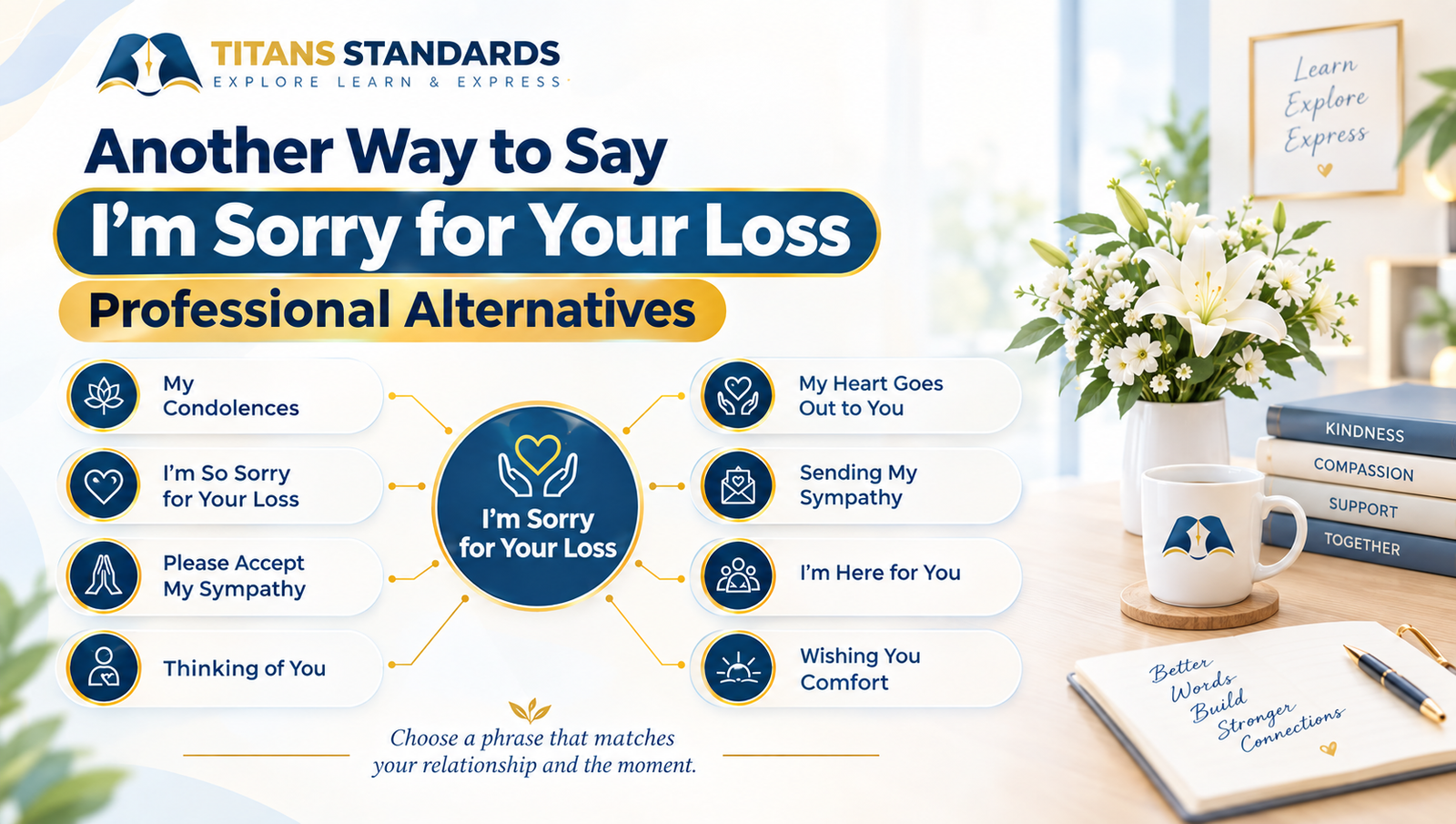
If you are looking for another way to say RIP (Rest in Peace), respectful options include “may they rest peacefully,” “gone but never forgotten,” “forever in our hearts,” “in loving memory,” “may their memory be a blessing,” and “rest easy.” The best choice depends on whether you are writing a condolence message, memorial post, sympathy card, or personal tribute.
Quick Answer
Here are some of the most natural alternatives to RIP:
- Rest in peace — the full, traditional form of RIP.
- May they rest peacefully — gentle and neutral.
- Gone but never forgotten — emphasizes lasting remembrance.
- Forever in our hearts — warm and personal.
- In loving memory — appropriate for memorials and tributes.
- Rest easy — brief, informal, and heartfelt.
- May their memory live on — focuses on the person’s legacy.
- Forever remembered — concise and respectful.
- Until we meet again — personal and potentially spiritual.
- May their soul rest in peace — explicitly spiritual or religious.
The expression RIP is an abbreviation of requiescat in pace, traditionally translated as “rest in peace.” In modern American English, it is widely used as a respectful expression following someone’s death.
Key Takeaways
- “Rest in peace” is still appropriate in most memorial and condolence contexts.
- “Gone but never forgotten” works well when you want to emphasize remembrance.
- “Forever in our hearts” sounds warmer and more personal.
- “In loving memory” is especially suitable for memorials, tributes, and remembrance posts.
- For a grieving person, “I’m so sorry for your loss” may be more comforting than simply saying RIP.
- Religious alternatives should match the beliefs of the deceased and their family.
What Is Another Way to Say RIP?
“RIP” usually means “Rest in Peace,” an expression used to honor someone who has died. It can appear in social media posts, sympathy messages, obituaries, memorials, funeral programs, and personal tributes.
Although RIP is short and familiar, you may want a different expression because you want your message to sound more personal, comforting, formal, spiritual, or appropriate for a particular relationship.
For example:
RIP, John.
Gone but never forgotten, John. Your memory will always be with us.
Both express remembrance, but the second feels more personal.
One important distinction is that RIP addresses the deceased, while a condolence such as “I’m deeply sorry for your loss” addresses the person who is grieving. If your goal is to comfort a friend, coworker, or family member, the second type of message is often more directly supportive.
Best Alternatives to “RIP”
1. May They Rest Peacefully
Meaning
“May they rest peacefully” expresses a gentle wish for peace after death. It is a close alternative to “rest in peace” without sounding as abbreviated or conventional.
How It Differs
It has essentially the same basic sentiment as RIP but uses a softer, complete sentence.
Best For
- Sympathy messages
- Memorial posts
- Professional condolences
- Written tributes
Tone
Respectful, gentle, neutral
Example
May they rest peacefully, and may their memory bring comfort to everyone who loved them.
Quick Tip
Use this when you want an alternative that remains respectful without sounding overly formal or religious.
2. Gone but Never Forgotten
Meaning
This phrase says that although the person has died, their memory remains with those who knew and loved them.
How It Differs
Instead of wishing the deceased peace, it focuses on remembrance and lasting impact.
Best For
- Social media tributes
- Memorial posts
- Sympathy cards
- Personal messages
Tone
Warm, heartfelt, personal
Example
Gone but never forgotten. Your kindness will always be remembered.
Quick Tip
This is one of the strongest choices when you want your message to emphasize the person’s lasting memory.
3. Forever in Our Hearts
Meaning
“Forever in our hearts” expresses enduring love and remembrance for someone who has died.
How It Differs
Unlike RIP, it does not make a statement about the person’s spiritual state or afterlife. Instead, it centers on the feelings of the people left behind.
Best For
- Memorials
- Family tributes
- Social media posts
- Sympathy cards
Tone
Warm, emotional, affectionate
Example
You may be gone, but you will be forever in our hearts.
Quick Tip
Choose this for someone you knew personally when you want the message to feel affectionate rather than simply conventional.
4. In Loving Memory
Meaning
“In loving memory” is a traditional phrase used to honor someone who has died and preserve their memory.
How It Differs
It functions more naturally as a memorial phrase than as a direct replacement for RIP in conversation.
Best For
- Memorial pages
- Funeral programs
- Tributes
- Memorial posts
- Engravings
Tone
Formal, respectful, timeless
Example
In loving memory of Sarah, whose kindness touched everyone around her.
Quick Tip
This works especially well when introducing a longer tribute rather than ending a casual message.
5. Rest Easy
Meaning
“Rest easy” is a shorter, more conversational expression wishing someone peace after death.
How It Differs
It sounds less formal than “rest in peace” and is often used in personal tributes or online posts.
Best For
- Social media
- Personal tributes
- Messages to friends
- Informal remembrance
Tone
Informal, warm, heartfelt
Example
Rest easy, brother. You will never be forgotten.
Quick Tip
Because it is conversational, consider the relationship and setting before using it in a highly formal condolence message.
6. May Their Memory Live On
Meaning
This phrase expresses the hope that the person’s influence, personality, achievements, or memories will continue after their death.
How It Differs
It focuses on the person’s legacy rather than peace after death.
Best For
- Memorials
- Tributes
- Public figures
- Community remembrance
Tone
Respectful, reflective, uplifting
Example
May her memory live on through the family and community she cared for so deeply.
Quick Tip
This is especially effective when the person made a meaningful contribution to other people’s lives.
7. Forever Remembered
Meaning
“Forever remembered” communicates that the person will continue to be remembered by those who knew them.
How It Differs
It is shorter and more understated than “forever in our hearts.”
Best For
- Memorial captions
- Tribute messages
- Sympathy cards
- Short inscriptions
Tone
Simple, respectful, sincere
Example
Forever remembered and deeply missed.
Quick Tip
Use this when you need a short phrase for a caption, photograph, memorial graphic, or tribute.
8. Until We Meet Again
Meaning
“Until we meet again” expresses the idea of saying goodbye for now rather than forever.
How It Differs
This phrase can carry a spiritual implication, depending on the reader’s beliefs. It is therefore more personal than the neutral expression RIP.
Best For
- Personal tributes
- Messages for close friends or relatives
- Memorial posts
Tone
Emotional, intimate, hopeful
Example
Until we meet again, you will remain in our thoughts and hearts.
Quick Tip
Use it when you know the phrase fits the person’s or family’s beliefs.
9. May Their Soul Rest in Peace
Meaning
“May their soul rest in peace” is a more explicitly spiritual version of “rest in peace.”
How It Differs
The reference to the soul makes the expression more religious or spiritual than the simple abbreviation RIP.
Best For
- Religious condolences
- Memorial messages
- Sympathy cards
- Faith-based communities
Tone
Spiritual, solemn, reverent
Example
May his soul rest in peace, and may his family find strength during this difficult time.
Quick Tip
Use this when you are confident that spiritual language is appropriate.
10. May Their Memory Be a Blessing
Meaning
This expression focuses on the comfort and value found in remembering someone who has died.
How It Differs
Rather than wishing the deceased peace, it connects remembrance with comfort and meaning for those who survive them.
Best For
- Memorial messages
- Sympathy cards
- Religious or cultural settings
- Personal tributes
Tone
Respectful, reflective, compassionate
Example
We are deeply sorry for your loss. May their memory be a blessing to everyone who knew them.
Quick Tip
This is particularly useful when speaking to grieving family members because it acknowledges both the person who died and those experiencing the loss.
Alternatives to RIP for a Condolence Message
If you are speaking directly to someone who has lost a loved one, you do not necessarily need to replace RIP with another phrase about the deceased.
A more supportive message might be:
- I’m so sorry for your loss.
- My deepest condolences to you and your family.
- Thinking of you and your family during this difficult time.
- My heart goes out to you and your family.
- Wishing you comfort and strength.
- I’m keeping you and your family in my thoughts.
- I’m here for you if you need anything.
- Your family is in my thoughts and prayers.
For example, instead of writing:
RIP to your father.
You could write:
I’m deeply sorry for your loss. Thinking of you and your family during this difficult time.
That approach is often more appropriate when the purpose of the message is to comfort the living, rather than simply honor the deceased.
Professional Alternatives to RIP
When expressing condolences to a coworker, manager, client, employee, or professional contact, keep the language sincere but measured.
Good choices include:
- I’m very sorry for your loss.
- My sincere condolences to you and your family.
- Please accept my deepest condolences.
- Thinking of you and your family during this difficult time.
- Wishing you and your family comfort and strength.
- My thoughts are with you during this difficult time.
For example:
Please accept my sincere condolences on your loss. Wishing you and your family comfort and strength during this difficult time.
A simple “RIP” may be acceptable in an informal workplace relationship or social-media setting, but a complete condolence sentence is generally safer for a professional email or formal communication.
What to Say Instead of RIP on Social Media
Social media often calls for something short, but you can make the message more personal than simply writing “RIP.”
Short and respectful
Rest in peace. You will be missed.
Warm and personal
Gone but never forgotten. Your kindness will always be remembered.
Emotional
Forever in our hearts. May your memory continue to inspire everyone who knew you.
Simple
Rest easy. You will always be remembered.
For a friend
Rest easy, my friend. I’m grateful for every memory we shared.
For a public tribute
Remembering a remarkable person whose impact will continue long after their passing.
RIP vs. Rest in Peace vs. Other Alternatives
| Expression | Main Focus | Tone | Best Use |
| RIP | Peace after death | Brief, traditional | Social posts, memorials |
| Rest in peace | Peace after death | Respectful | General use |
| May they rest peacefully | Peace after death | Gentle | Condolences |
| Gone but never forgotten | Remembrance | Warm | Tributes |
| Forever in our hearts | Love and remembrance | Emotional | Personal tributes |
| In loving memory | Memorial remembrance | Formal | Memorials |
| Rest easy | Peace | Informal | Personal posts |
| May their memory live on | Legacy | Reflective | Tributes |
| Until we meet again | Farewell and hope | Personal | Close relationships |
| May their soul rest in peace | Spiritual peace | Religious | Faith-based messages |
How to Choose the Right Alternative
The best replacement for RIP depends less on finding a perfect synonym and more on what you want the message to communicate.
If you want something neutral
Choose:
“May they rest peacefully.”
It carries the same basic sentiment without adding a strong personal or religious tone.
If you want to emphasize remembrance
Choose:
“Gone but never forgotten.”
This is ideal when the person’s memory is the central theme.
If you want something emotional
Choose:
“Forever in our hearts.”
It works particularly well for close friends and family members.
If you are writing a memorial
Choose:
“In loving memory.”
It naturally introduces a tribute or remembrance.
If you want something informal
Choose:
“Rest easy.”
This sounds more conversational than traditional condolence language.
If you want something spiritual
Choose:
“May their soul rest in peace.”
Only use explicitly religious language when it fits the person’s beliefs or the family’s preferences.
If you are comforting someone who is grieving
Choose:
“I’m so sorry for your loss.”
This may be more appropriate than any direct substitute for RIP because it speaks directly to the grieving person.
Common Mistakes to Avoid
1. Choosing a phrase that does not match the relationship
“Forever in our hearts” may feel natural for a close family member but overly intimate for a distant professional contact.
2. Assuming everyone prefers religious language
Expressions involving the soul, heaven, or an afterlife can be meaningful to some people but inappropriate for others.
3. Making the message about yourself
A condolence should primarily acknowledge the loss and support the grieving person.
4. Using humor in the wrong setting
Informal expressions can work among close friends, but humor or slang can easily sound insensitive immediately after a death.
5. Treating every alternative as a direct synonym
“Gone but never forgotten” and “in loving memory” do not literally mean the same thing as “rest in peace.” They shift the focus toward remembrance.
6. Writing too much
A short, sincere message is often better than an elaborate paragraph that feels forced.
7. Forgetting the person’s name
When appropriate, using the deceased person’s name can make a message feel more personal:
May James rest peacefully. He will be deeply missed.
Frequently Asked Questions
What is another professional way to say RIP?
A professional alternative to RIP is “Please accept my sincere condolences” when you are addressing someone who has experienced a loss. Other suitable options include “My deepest condolences to you and your family” and “Thinking of you during this difficult time.” These expressions focus on supporting the grieving person rather than simply referring to the deceased.
What is a respectful way to say RIP?
“May they rest peacefully” is a respectful alternative to RIP. You can also say “In loving memory,” “gone but never forgotten,” or “forever remembered.” The most appropriate choice depends on whether you want to emphasize peace, remembrance, affection, or the person’s lasting legacy.
What can I say instead of RIP on Facebook?
For a Facebook tribute, natural alternatives include “Gone but never forgotten,” “Forever in our hearts,” “Rest easy,” “May your memory live on,” and “In loving memory.” If you knew the person personally, adding one specific memory or quality can make the tribute more meaningful than using a standard phrase alone.
Is “rest easy” another way to say RIP?
Yes. “Rest easy” can serve as an informal alternative to “rest in peace.” Both express a wish for peace after death, but “rest easy” sounds more conversational. It is particularly common in personal tributes, social-media posts, and messages about friends, relatives, or people with whom the writer had a close relationship.
Is “gone but never forgotten” the same as RIP?
Not exactly. “Gone but never forgotten” focuses on remembrance, while “rest in peace” expresses a wish for peace after death. They are often used in similar memorial contexts, but they communicate different ideas. You can also combine them: “Rest in peace. You are gone but never forgotten.”
What is a modern way to say RIP?
There is no single modern replacement for RIP. Depending on the context, phrases such as “forever remembered,” “rest easy,” “your memory will live on,” or “gone but never forgotten” can sound more personal. For a professional condolence, a complete expression such as “My sincere condolences to you and your family” is usually more appropriate.
What should I say instead of RIP to a grieving friend?
Address your friend directly rather than focusing only on the person who died. For example: “I’m so sorry for your loss. I’m thinking of you and I’m here if you need anything.” If you also want to honor the deceased, you can add “They will always be remembered.”
Can I say “RIP” in a professional message?
You can, but a complete condolence is generally more appropriate in formal workplace communication. “Please accept my sincere condolences” or “I’m very sorry for your loss” sounds more professional than simply writing “RIP.” The relationship, company culture, and communication channel should guide your choice.
Is “forever in our hearts” appropriate for a funeral?
Yes. “Forever in our hearts” is a common memorial expression that emphasizes continuing love and remembrance. It can work in funeral programs, sympathy cards, memorial posts, flowers, and spoken tributes. Because it is emotionally warm, it is usually most natural when the deceased had a meaningful relationship with the people using it.
What is the difference between RIP and “in loving memory”?
RIP means “rest in peace” and traditionally expresses a wish for peace after death. “In loving memory” is a memorial expression that honors and remembers someone who has died. The two can appear together, but they serve different purposes: one expresses a wish for peace, while the other emphasizes remembrance.
Conclusion
There is no single perfect replacement for RIP. The best expression depends on what you want your words to convey and who will read them. “May they rest peacefully” is a gentle, close alternative; “gone but never forgotten” emphasizes remembrance; “forever in our hearts” adds warmth; and “in loving memory” works especially well for formal tributes and memorials.

English Usage Specialist
Elliot Harrow specializes in English usage, grammar, phrasing, and word choice. His editorial work focuses on explaining subtle differences between similar words and helping readers choose language that is precise, natural, and appropriate for the context.