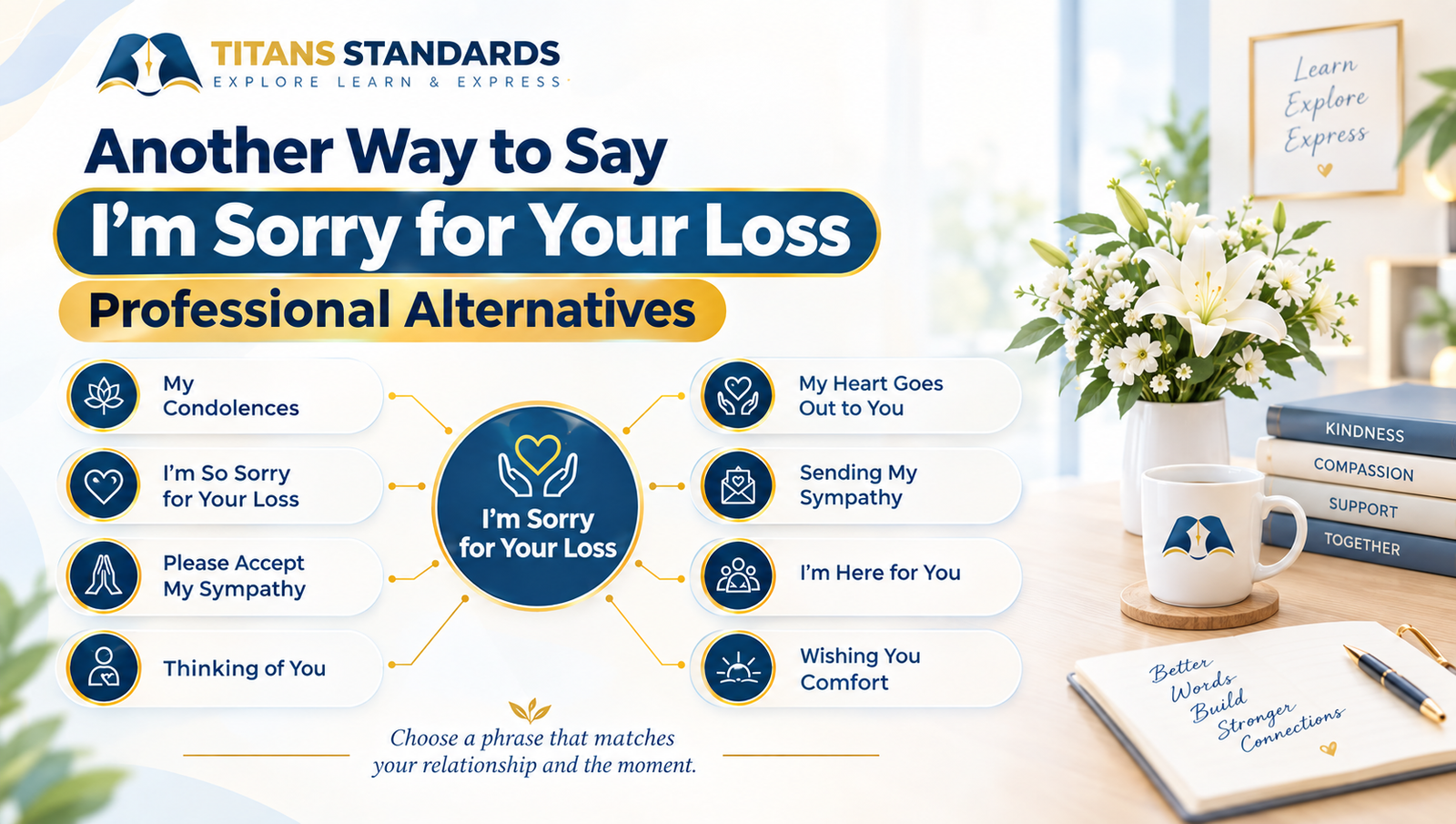
When someone loses a loved one, you may want to say more than “I’m sorry for your loss.” The best alternative depends on your relationship with the person and how personal or formal you want to sound.
Options such as “My heart goes out to you,” “I’m thinking of you,” and “Please accept my deepest condolences” can express sympathy while fitting different situations.
Key Takeaways – another way to say im sorry for your loss
- “I’m sorry for your loss” is still a natural and appropriate expression of sympathy.
- “My deepest condolences” works well in formal or professional situations.
- “My heart goes out to you” sounds warmer and more personal.
- Adding a genuine memory or specific offer of help can make a short message more meaningful.
- Avoid phrases that try to explain, minimize, or rush someone’s grief.
What Does “I’m Sorry for Your Loss” Mean?

“I’m sorry for your loss” is a standard expression of sympathy used when someone has lost a loved one. The word “sorry” does not mean that you caused the loss. Instead, it communicates that you recognize the person’s pain and regret that they are going through such a difficult experience.
The phrase is neutral enough for many situations. You can use it with a friend, relative, coworker, neighbor, acquaintance, or someone you do not know well.
Still, you may want a different expression when you are writing a sympathy card, sending a text, speaking to a close friend, or offering condolences in a professional setting.
Why Use Another Way to Say It?
There is nothing wrong with “I’m sorry for your loss.” Sometimes, however, another phrase can better match your relationship with the grieving person.
You might choose different wording to:
- Sound more personal and heartfelt
- Match a formal or professional situation
- Offer emotional support
- Mention the person who died
- Acknowledge a shared memory
- Express care without sounding repetitive
- Offer practical help alongside your sympathy
The goal is not to find a more impressive phrase. It is to choose words that feel sincere and appropriate.
12 Ways to Say “I’m Sorry for Your Loss”
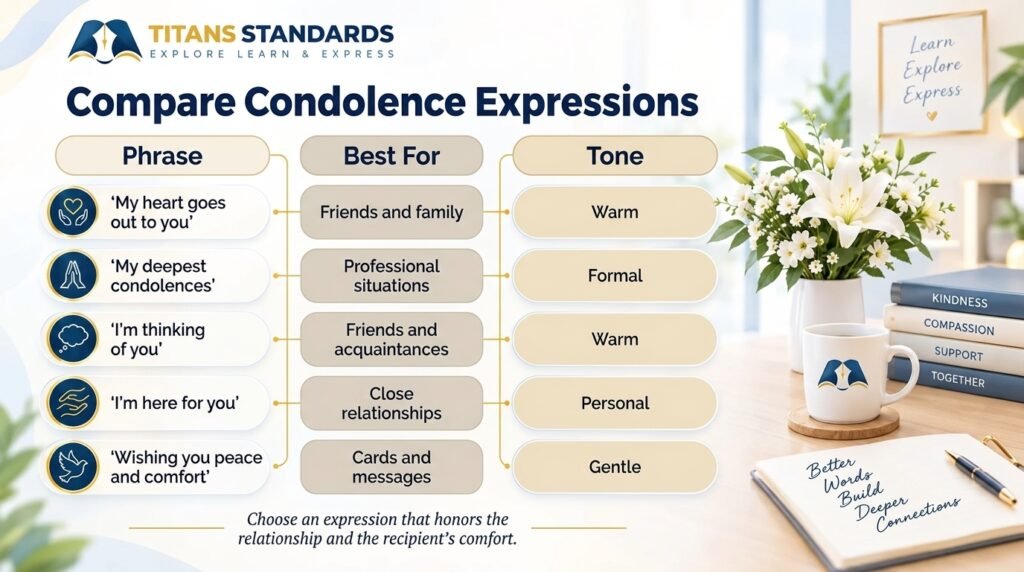
1. My heart goes out to you.
This is a warm and compassionate choice for someone you know personally. It communicates emotional support without trying to explain the person’s grief.
Example:
“My heart goes out to you and your family during this difficult time.”
Best for: Friends, relatives, and personal messages.
2. My deepest condolences.
This is more formal than “I’m sorry for your loss.” It works particularly well in sympathy cards, professional messages, or situations where you do not have a close relationship with the person.
Example:
“Please accept my deepest condolences to you and your family.”
Best for: Coworkers, acquaintances, clients, and formal messages.
3. I’m thinking of you and your family.
This phrase focuses on your continued care and support rather than simply acknowledging the death.
Example:
“I’m thinking of you and your family and wishing you comfort during this difficult time.”
Best for: Texts, cards, coworkers, friends, and acquaintances.
4. I’m so sorry you’re going through this.
This is a natural choice when you want to acknowledge the person’s difficult experience directly.
Example:
“I’m so sorry you’re going through this. I’m here if you need someone to talk to.”
Best for: Friends, family, and supportive personal conversations.
5. You have my heartfelt sympathy.
This expression is sincere and somewhat formal. “Heartfelt” adds warmth while keeping the message respectful.
Example:
“You have my heartfelt sympathy as you grieve the loss of your mother.”
Best for: Sympathy cards and semi-formal messages.
6. I’m here for you.
This does not directly replace “I’m sorry for your loss,” but it can be a meaningful way to offer support.
Example:
“I’m so sorry. I’m here for you, whatever you need.”
Best for: Close friends and family.
7. Wishing you peace and comfort.
This is gentle and appropriate when you want your message to focus on the person’s well-being.
Example:
“Wishing you peace and comfort in the days ahead.”
Best for: Cards, texts, and general sympathy messages.
8. Your loved one will be deeply missed.
Use this when you genuinely knew the person who died or when it is appropriate to acknowledge their absence.
Example:
“Your father was a wonderful person, and he will be deeply missed.”
Best for: Friends, family members, colleagues, and people who knew the deceased.
9. I’m keeping you in my thoughts.
This is a simple, low-pressure expression of support. It can work when you want to be caring without saying too much.
Example:
“I’m keeping you and your family in my thoughts during this difficult time.”
Best for: Acquaintances, coworkers, friends, and written messages.
10. May their memory be a blessing.
This has a spiritual or religious tone and can be especially appropriate when you know the recipient is comfortable with that kind of language.
Example:
“May his memory be a blessing to everyone who knew him.”
Best for: Faith-based or culturally appropriate situations.
11. I’ll always remember [Name].
A specific memory can make a condolence message feel much more personal than a general expression of sympathy.
Example:
“I’ll always remember how warmly David welcomed everyone. He will be greatly missed.”
Best for: Someone whose loved one you personally knew.
12. I’d like to help in any way I can.
This moves beyond sympathy and offers practical support. It becomes even more useful when you name something specific you can do.
Example:
“I’d like to help however I can. I can bring dinner by Thursday if that would make things easier.”
Best for: Close friends, relatives, neighbors, and coworkers you know well.
How to Choose the Right Expression
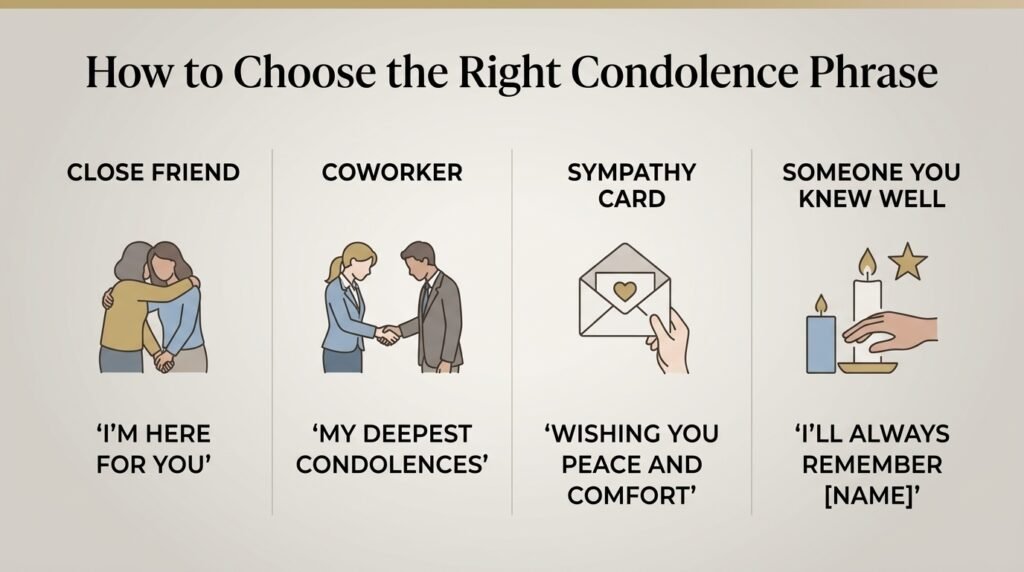
The best phrase depends largely on relationship, tone, and context.
| Alternative | Best Used In | Tone |
| My heart goes out to you | Friends and family | Warm |
| My deepest condolences | Professional or formal situations | Formal |
| I’m thinking of you and your family | Texts, cards, acquaintances | Warm/neutral |
| I’m so sorry you’re going through this | Personal conversations | Compassionate |
| Heartfelt sympathy | Cards and semi-formal messages | Warm/formal |
| I’m here for you | Close relationships | Personal |
| Wishing you peace and comfort | Cards and messages | Gentle |
| Your loved one will be deeply missed | When you knew the deceased | Respectful |
| Keeping you in my thoughts | General sympathy | Neutral/warm |
| May their memory be a blessing | Religious or spiritual settings | Spiritual |
| I’ll always remember [Name] | When you shared memories | Personal |
| I’d like to help in any way I can | When practical support is appropriate | Supportive |
What Should You Avoid Saying?
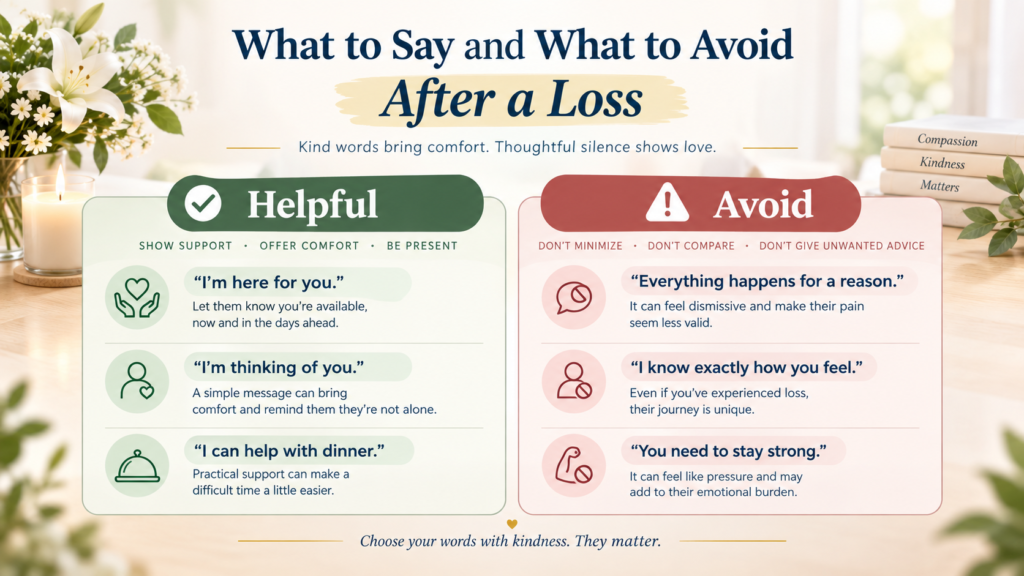
Good intentions do not always produce helpful words. When someone is grieving, avoid statements that minimize their loss or assume you know exactly how they feel.
1. “Everything happens for a reason.”
This may conflict with the grieving person’s beliefs or make their pain feel dismissed.
2. “They’re in a better place.”
This can be comforting to some people, but it assumes a religious or spiritual belief that the recipient may not share.
3. “I know exactly how you feel.”
Even if you have experienced loss yourself, grief is personal. A better approach is to acknowledge their experience without comparing it to yours.
4. “You need to stay strong.”
People grieve differently. They do not need to perform strength for others.
5. “Let me know if you need anything.”
This is kind, but it puts the responsibility on a grieving person to ask for help. When possible, offer something specific instead.
For example: “I can bring dinner on Thursday” is more actionable than “Let me know if you need anything.”
How to Make a Condolence Message More Personal
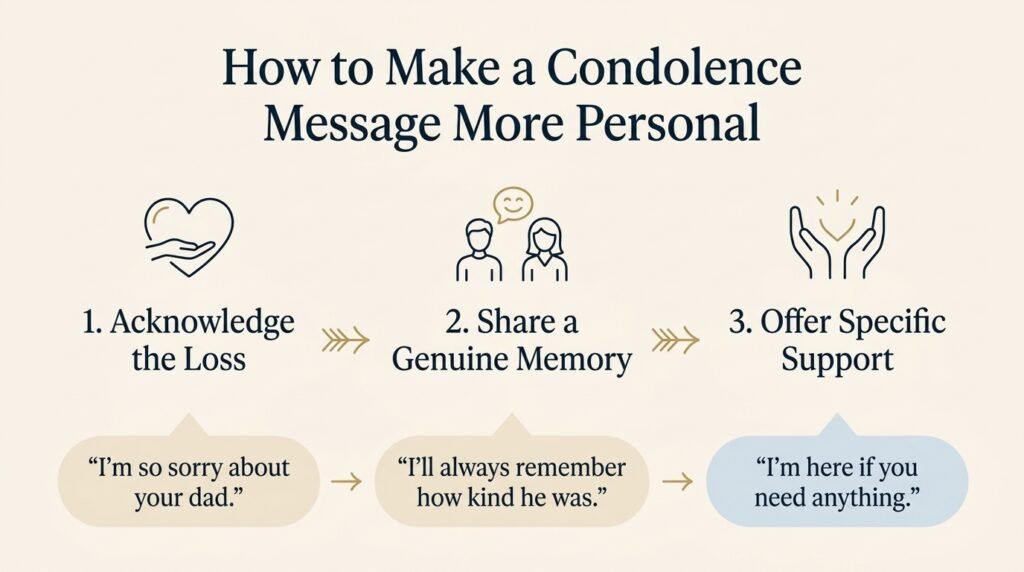
You do not need a long message to make your sympathy meaningful. One specific detail can make a short message feel much more genuine.
A simple formula is:
Acknowledge the loss + mention something specific + offer support.
For example:
“I’m so sorry about your dad. I’ll always remember how kind he was to everyone. I’m here for you, and I’d be glad to help with anything you need.”
If you did not know the person who died well, keep the message simple:
“I’m so sorry for your loss. I’m thinking of you and your family and wishing you peace and comfort.”
Common Mistakes
Using “sorry to hear your loss.”
The natural expression is “I’m sorry for your loss” or “I’m sorry to hear about your loss.”
Trying too hard to sound profound.
A complicated message is not necessarily more comforting. Simple and sincere wording is often easier to receive.
Assuming the person’s beliefs.
Religious expressions should be used when you know they are appropriate.
Making the message about your own experience.
Sharing a brief memory can help, but avoid turning the conversation into a comparison of grief.
Offering vague help.
If you genuinely want to help, consider offering something specific that the person can accept without having to organize it themselves.
FAQs
What is a good alternative to “I’m sorry for your loss”?
“My heart goes out to you,” “My deepest condolences,” and “I’m thinking of you and your family” are useful alternatives. The best choice depends on your relationship with the person and whether you want to sound personal, neutral, or formal.
What can I say instead of “sorry for your loss” to a friend?
For a close friend, try “I’m so sorry you’re going through this,” “My heart goes out to you,” or “I’m here for you.” You can also mention a genuine memory of the person who died to make your message more personal.
What is a professional way to say “I’m sorry for your loss”?
“My deepest condolences,” “Please accept my heartfelt condolences,” or “I’m thinking of you and your family during this difficult time” can work well professionally. Keep the message respectful and avoid overly personal language unless you know the colleague well.
Is “my condolences” the same as “I’m sorry for your loss”?
They both express sympathy, but they have slightly different tones. “I’m sorry for your loss” is conversational and broadly applicable, while “my condolences” sounds more formal and traditional.
What should I say in a sympathy card?
A short, sincere message is enough. You might write, “I’m thinking of you and your family and wishing you peace and comfort.” If you knew the deceased, adding a specific memory can make the card more personal.
What can I say to someone who lost a parent?
Acknowledge the loss directly and avoid trying to explain their grief. For example: “I’m so sorry about your mother. She was such a kind person, and I know how much she meant to you. I’m here for you.”
Is it okay to say “I’m sorry for your loss”?
Yes. It remains a natural and appropriate way to express sympathy. You do not need to avoid the phrase simply because it is common. If you want to make it more personal, add the person’s name, a genuine memory, or a specific offer of support.
Final Thought
There is no single perfect way to express sympathy. “I’m sorry for your loss” remains useful because it is simple, clear, and respectful. If you want something more personal, choose an expression that reflects your relationship with the grieving person rather than trying to find the most elaborate wording.
For a close friend, “I’m here for you” may feel natural. For a coworker, “My deepest condolences” may be more appropriate. If you knew the person who died, a brief and genuine memory can mean more than any standard phrase. The most important thing is to acknowledge the loss with sincerity and give the other person room to grieve in their own way. For more information about how people cope with grief and loss, the American Psychological Association offers an evidence-based overview of grief and bereavement.

Professional English Editor
Caleb Wrenford specializes in professional English, workplace communication, business writing, and formal expressions. His work helps readers communicate with greater clarity and confidence across emails, professional conversations, and written correspondence.