
Another Way to Say So: 10 Better Alternatives for Any Situation
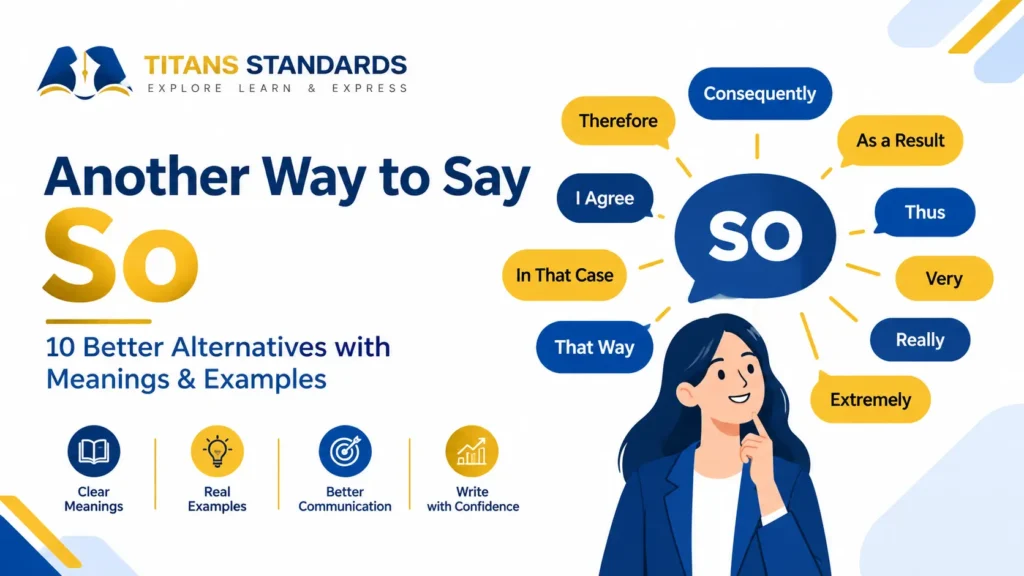
Another way to say “so” depends on the meaning and context. Use “therefore,” “consequently,” or “as a result” to show a conclusion. Choose “very,” “really,” or “extremely” to add emphasis. For agreement, phrases like “I agree” or “that’s right” may work better. The best alternative makes your sentence clear and natural. Key Takeaways What Does “So” Mean? The word “so” has several meanings in American English. It can show a result, add emphasis, express agreement, or describe a way of doing something. For example, “It was raining, so we stayed home” uses “so” to show a result. In “I’m so happy,” it adds emphasis. In “I think so,” it expresses agreement or a belief. Because “so” serves different purposes, no single synonym works in every sentence. Choosing the right alternative depends on what you want to communicate. Why Use Other Ways to Say “So”? Although “so” is common and natural, using it repeatedly can make your writing sound less precise. The right alternative can improve clarity and help you match your audience. Consider these benefits: 10 Best Alternatives to “So” 1. Therefore Meaning: “Therefore” introduces a conclusion based on information already presented. It is a useful alternative when “so” connects a reason with a result. Best For: Professional, Formal Example 1: The report contains several errors; therefore, we need to revise it before publication. Example 2: Sales declined this quarter; therefore, the team will review its marketing strategy. Quick Tip: Use “therefore” in reports, essays, and business documents when you want to make a logical connection. 2. Consequently Meaning: “Consequently” explains what happened because of a previous action or situation. It often sounds more formal than “so” and highlights the result of a decision or event. Best For: Professional, Formal Example 1: The supplier missed the deadline; consequently, production started two days late. Example 2: The company reduced operating costs, consequently improving its overall financial performance. Quick Tip: Choose “consequently” when the result follows clearly from the situation you described. 3. As a Result Meaning: “As a result” introduces an outcome caused by something mentioned earlier. It works well in everyday explanations, professional emails, and informative articles. Best For: Professional, Neutral Example 1: Maya practiced her presentation every day. As a result, she delivered it with confidence. Example 2: The road was closed for repairs. As a result, commuters had to take another route. Quick Tip: Use this phrase when you want to explain cause and effect without sounding overly formal. 4. Thus Meaning: “Thus” shows a conclusion or outcome. It is concise and often appears in academic writing, technical explanations, and formal discussions. Best For: Formal, Professional Example 1: The sample size was too small, thus limiting the study’s conclusions. Example 2: The team combined the two databases, thus creating a single source of customer information. Quick Tip: Use “thus” when a short, precise transition fits your writing. In casual conversation, “so” often sounds more natural. 5. Very Meaning: “Very” emphasizes the degree of an adjective or adverb. It can replace “so” when the word expresses intensity rather than a result. Best For: Neutral, Professional, Casual Example 1: The instructions were very clear, even for first-time users. Example 2: We are very pleased with the progress your team has made. Quick Tip: Compare “The room is so quiet” with “The room is very quiet.” Both express intensity, but “so” can carry more emotion or surprise. 6. Really Meaning: “Really” adds emphasis and can express sincerity, surprise, or a strong feeling. It is common in spoken American English and informal writing. Best For: Casual, Friendly, Warm Example 1: I really appreciate you staying late to help with the project. Example 2: That was a really thoughtful gift, and I’ll remember it for a long time. Quick Tip: Use “really” in friendly messages and natural conversations. In formal reports, a more precise description may be stronger. 7. Extremely Meaning: “Extremely” describes a very high degree of something. It often sounds stronger than “very” and is useful when you want to communicate intensity clearly. Best For: Professional, Formal, Neutral Example 1: The new software is extremely useful for organizing large amounts of data. Example 2: The hiking trail became extremely difficult after the rain. Quick Tip: Reserve “extremely” for situations where strong emphasis is justified. Overusing it can make your writing sound exaggerated. 8. That Way Meaning: “That way” describes a method or approach, often explaining how an action will help achieve a goal. It can replace “so” when the intended meaning is “by doing this.” Best For: Casual, Friendly, Professional Example 1: Save a copy of the file before editing it. That way, you can restore the original if needed. Example 2: Let’s send the agenda today. That way, everyone has time to prepare. Quick Tip: Use “that way” to explain the practical benefit of an action, especially when giving advice or instructions. 9. In That Case Meaning: “In that case” introduces a response or decision based on new information. It is useful when circumstances change or you need to adjust a plan. Best For: Polite, Professional, Casual Example 1: If your flight arrives after midnight, in that case, we can arrange a later pickup. Example 2: You already have a membership? In that case, you can access the course at no extra cost. Quick Tip: Use this phrase when reacting to a condition or new detail. Avoid adding it when the situation is already obvious. 10. I Agree Meaning: “I agree” communicates that you share someone’s opinion or support their point. It can replace “I think so” when you want to express agreement directly rather than uncertainty. Best For: Professional, Polite, Friendly Example 1: “Should we send the proposal before Friday?” “I agree; that gives the client enough time to review it.” Example 2: “The new schedule is easier to manage.” “I agree, especially with the shorter meetings.” Quick Tip: Use “I agree” when responding to an opinion or suggestion. If you are uncertain, phrases such as “I think
Another Way to Say A Lot :10 Batter Alternatives
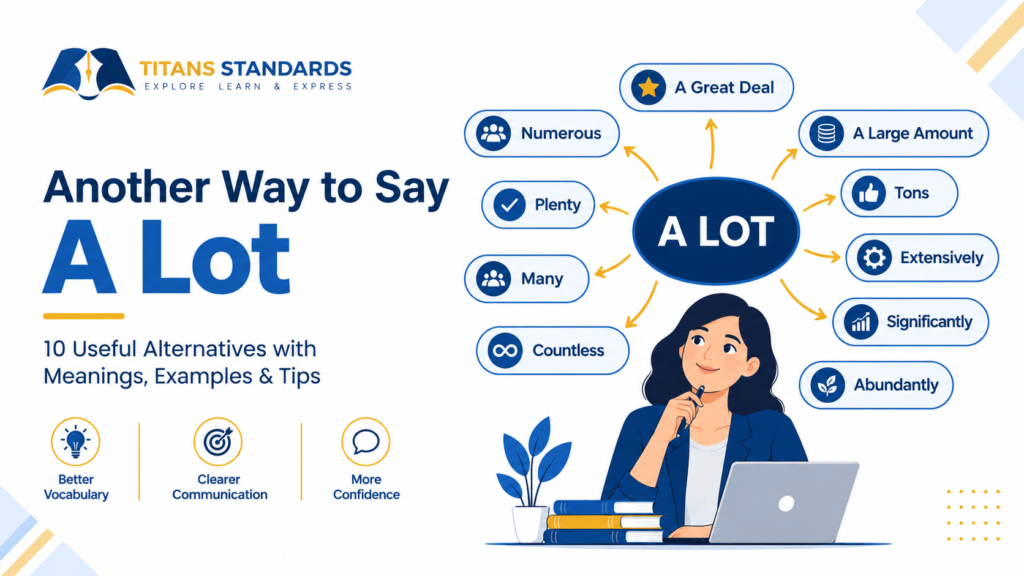
Sometimes, the phrase “a lot” feels too basic, especially when you want to write a professional email, improve an essay, or express an idea more clearly. Although it works well in everyday conversations, choosing a more specific expression can make your message sound more natural. The best alternative depends on what you mean. You might be describing a large quantity, a high number of people, strong feelings, or the extent of an action. In this guide, you’ll discover 10 useful alternatives to “a lot,” along with meanings, examples, and practical tips to help you choose the right expression. Key Takeaways What Does “A Lot” Mean? “A lot” means a large amount, a high number, or a considerable degree of something. People commonly use it in spoken English and informal writing to describe quantities, frequency, feelings, and actions. For example, “I learned a lot from the workshop” means you gained a great deal of knowledge. Similarly, “We have a lot of customers” means the business serves many customers. The phrase is versatile, but it can sound vague when used repeatedly. More precise alternatives help readers understand exactly what you mean. Why Use Other Ways to Say “A Lot”? Using different expressions can improve your vocabulary and make your writing more engaging. The right phrase also helps you communicate your meaning clearly in different situations. Consider these benefits: 10 Best Other Ways to Say “A Lot” 1. A Great Deal Meaning “A great deal” means a large amount or a considerable degree. It works especially well when discussing knowledge, effort, importance, or uncountable things. This expression sounds more polished than “a lot” and fits professional communication without feeling overly formal. Best For: Professional, Formal, Polite Example 1: We appreciate the great deal of effort you put into this project. Example 2: The training program taught me a great deal about customer service. Quick Tip: Use “a great deal of” before an uncountable noun, such as time, effort, or information. 2. Numerous Meaning “Numerous” means many or a large number of something. It is particularly useful when discussing people, opportunities, problems, examples, or other countable items. It gives writing a more formal tone and works well in academic assignments, business reports, and professional documents. Best For: Professional, Formal Example 1: Our team received numerous applications for the open position. Example 2: The report identifies numerous opportunities for improving customer satisfaction. Quick Tip: Use “numerous” with plural countable nouns, not uncountable nouns such as water or advice. 3. Plenty Meaning “Plenty” means more than enough or a sufficient amount. It often creates a reassuring, positive tone when discussing resources, time, opportunities, or available choices. The phrase “plenty of” is common in everyday American English and works in both casual and moderately professional situations. Best For: Casual, Friendly, Warm Example 1: We have plenty of time to review the proposal before Friday. Example 2: There are plenty of opportunities to develop your writing skills. Quick Tip: Use “plenty of” when you want to emphasize that something is available in a sufficient or generous amount. 4. A Large Amount Meaning “A large amount” describes a substantial quantity of something. It is useful when you want to sound clear and neutral without relying on informal language. This expression commonly appears in reports, explanations, research summaries, and discussions about money, time, energy, or other uncountable nouns. Best For: Professional, Formal Example 1: The company invested a large amount of money in employee training. Example 2: Preparing the presentation required a large amount of research. Quick Tip: Use “a large amount of” with uncountable nouns. For countable items, “a large number of” is usually more appropriate. 5. Tons Meaning “Tons” is an informal expression that means a very large amount or number. It is common in American conversations, text messages, and friendly online communication. Although it can make your language sound relaxed and enthusiastic, it is generally unsuitable for formal reports or highly professional correspondence. Best For: Casual, Friendly Example 1: Thanks for sharing tons of helpful advice before my interview. Example 2: We took tons of photos during our weekend trip. Quick Tip: Reserve “tons of” for relaxed settings where conversational language feels natural. 6. Countless Meaning “Countless” describes something so numerous that it is difficult to count. It can also add emphasis when discussing repeated experiences, possibilities, or memorable moments. This expression is more vivid than “a lot” and often works well in storytelling, essays, and persuasive writing. Best For: Formal, Friendly Example 1: She has helped countless students prepare for their college applications. Example 2: Countless hours of practice helped the team improve its performance. Quick Tip: Use “countless” when you want to emphasize an exceptionally high number rather than an ordinary quantity. 7. Extensively Meaning “Extensively” means thoroughly, widely, or to a considerable extent. Unlike “a lot,” which often describes quantity, this adverb usually explains how thoroughly an action was performed. It is particularly useful in professional, academic, and technical writing. Best For: Professional, Formal Example 1: The research team extensively reviewed the available evidence. Example 2: We tested the software extensively before releasing the update. Quick Tip: Use “extensively” to describe actions such as researching, reviewing, testing, or studying. It is not a direct replacement for every use of “a lot.” 8. Significantly Meaning “Significantly” means noticeably, considerably, or to an important degree. It works well when describing measurable changes, meaningful differences, or substantial improvements. The word is especially useful in reports, presentations, research, and business communication. Best For: Professional, Formal Example 1: Customer satisfaction improved significantly after the support team introduced live chat. Example 2: The new scheduling system significantly reduced waiting times. Quick Tip: Use “significantly” when describing an important change or effect. Do not use it merely to indicate a large number of objects. 9. Many Meaning “Many” means a large number of people, things, or events. It is one of the simplest and most natural alternatives to “a lot” when referring to countable nouns. Because it is widely understood
Another Way to Say Customer: 10 Best Alternatives
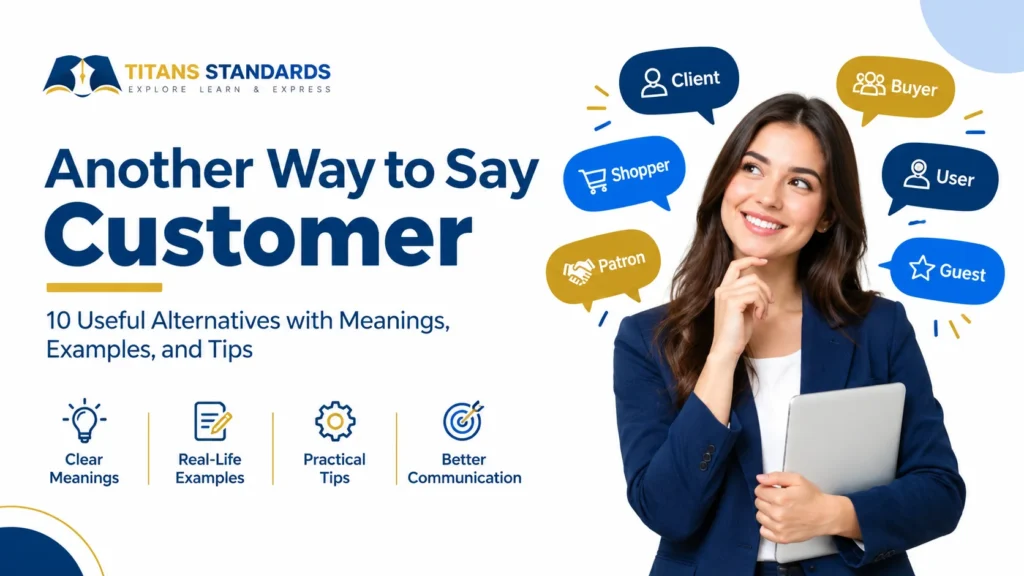
The word “customer” appears frequently in business emails, marketing materials, sales reports, and everyday conversations. Although it is clear and widely understood, using the same word repeatedly can make your writing feel predictable. Choosing another way to say customer helps you communicate more naturally and accurately. Whether you are writing a professional email, describing a target audience, or improving website content, the right alternative can make your message clearer. In this guide, you will discover 10 alternatives to “customer,” including their meanings, practical examples, and tips for choosing the right word. Another way to say customer includes client, consumer, buyer, purchaser, patron, shopper, user, guest, account, and clientele. The best alternative depends on the context. Use “client” for professional services, “consumer” for market research, “buyer” for sales, and “patron” for people who support businesses such as restaurants, theaters, or libraries. Key Takeaways What Does “Another Way to Say Customer” Mean? Another way to say customer refers to a different word or phrase that describes someone who buys, uses, or receives products and services from a business. Common alternatives include “client,” “consumer,” “buyer,” and “patron.” However, these words are not always interchangeable. A client may receive professional advice, while a consumer is often discussed in relation to products, markets, and buying behavior. People use these alternatives to avoid repetition, match different professional settings, and communicate more precisely. Why Use Other Ways to Say Customer? Using different words for “customer” can improve your writing and help you describe business relationships more accurately. Consider these benefits: The key is to choose a word that fits the situation rather than replacing “customer” simply for variety. 10 Best Other Ways to Say “Customer” 1. Client Meaning A client is someone who receives professional services, advice, or ongoing support from a person or business. The word often suggests an established relationship rather than a single purchase. Best For: Professional, Formal, Polite Example 1: Our agency helps each client develop a marketing strategy that fits their goals. Example 2: The attorney scheduled a meeting with her client to review the contract. Quick Tip: Use “client” for consultants, lawyers, accountants, designers, and other service professionals. 2. Consumer Meaning A consumer is someone who uses goods or services. The term often appears in discussions about markets, spending habits, product demand, and consumer behavior. Best For: Professional, Formal Example 1: Consumers increasingly compare product reviews before making a purchase. Example 2: The company surveyed 500 consumers to understand their shopping preferences. Quick Tip: Choose “consumer” for market research, business reports, and discussions about purchasing trends. 3. Buyer Meaning A buyer is someone who purchases or intends to purchase a product or service. This term emphasizes the buying decision and works well in sales, retail, and business transactions. Best For: Professional, Casual Example 1: The sales team offered first-time buyers a discount on selected products. Example 2: Buyers can compare different plans before choosing a subscription. Quick Tip: Use “buyer” when discussing purchasing decisions, sales leads, or people considering a purchase. 4. Purchaser Meaning A purchaser is a person or organization that buys something. It sounds slightly more formal than “buyer” and often appears in contracts, procurement documents, property transactions, and official business communication. Best For: Professional, Formal Example 1: The purchaser must complete the payment before the equipment ships. Example 2: Each property purchaser receives a copy of the signed agreement. Quick Tip: Choose “purchaser” for formal transactions and documents where precision matters. 5. Patron Meaning A patron is someone who regularly visits or supports an establishment, service, or organization. The word is particularly common in restaurants, theaters, libraries, museums, and arts organizations. Best For: Formal, Friendly, Warm Example 1: The restaurant thanked its patrons for supporting the new menu. Example 2: Library patrons can reserve books through the online catalog. Quick Tip: Use “patron” when you want to emphasize support for an establishment rather than a specific purchase. 6. Shopper Meaning A shopper is someone who looks for or buys products, especially in retail stores or online shops. The term can describe people who are browsing as well as those who are ready to purchase. Best For: Casual, Friendly, Professional Example 1: Online shoppers can filter products by price, size, and customer rating. Example 2: The store offers free gift wrapping to holiday shoppers. Quick Tip: Use “shopper” in retail marketing, e-commerce content, and discussions about shopping habits. 7. User Meaning A user is someone who uses a product, platform, application, or service. Unlike “buyer,” this term does not necessarily mean the person paid for it. Best For: Professional, Casual Example 1: The software update makes it easier for users to organize their files. Example 2: New users can create an account in less than two minutes. Quick Tip: Choose “user” for technology products, digital platforms, mobile apps, and subscription services. 8. Guest Meaning A guest is someone welcomed into a place or provided with hospitality. Hotels, resorts, restaurants, and event venues commonly use this term to create a welcoming and personal experience. Best For: Friendly, Warm, Polite Example 1: Every hotel guest receives complimentary breakfast during their stay. Example 2: Our team welcomes each guest with a personalized check-in experience. Quick Tip: Use “guest” in hospitality settings when emphasizing comfort, service, and a positive experience. 9. Account Meaning In business, “account” can refer to a customer relationship or the business record associated with it. Companies often use this term when discussing ongoing sales relationships, billing, or account management. Best For: Professional, Formal Example 1: Our account manager will contact you about the renewal next week. Example 2: The sales representative reviewed the account before preparing the proposal. Quick Tip: Use “account” when discussing business relationships or records, not as a universal replacement for an individual customer. 10. Clientele Meaning Clientele refers to the group of customers or clients served by a business or professional. Unlike the other alternatives on this list, it is a collective noun rather than a word for one individual. Best For: Professional, Formal