The word “customer” appears frequently in business emails, marketing materials, sales reports, and everyday conversations.
Although it is clear and widely understood, using the same word repeatedly can make your writing feel predictable.
Choosing another way to say customer helps you communicate more naturally and accurately. Whether you are writing a professional email, describing a target audience, or improving website content, the right alternative can make your message clearer.
In this guide, you will discover 10 alternatives to “customer,” including their meanings, practical examples, and tips for choosing the right word.
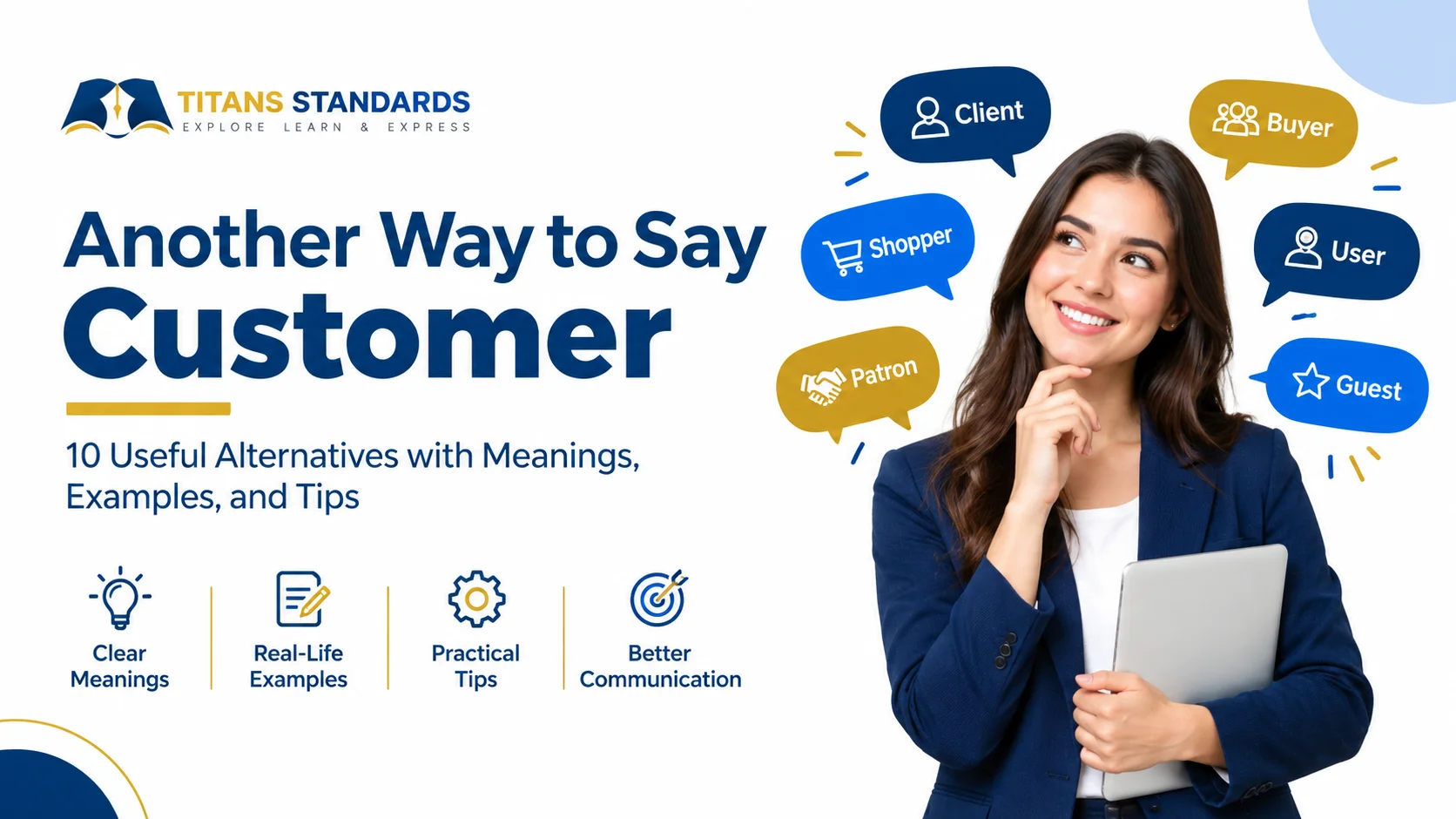
Another way to say customer includes client, consumer, buyer, purchaser, patron, shopper, user, guest, account, and clientele. The best alternative depends on the context. Use “client” for professional services, “consumer” for market research, “buyer” for sales, and “patron” for people who support businesses such as restaurants, theaters, or libraries.
Key Takeaways
- Client works best for professional services and long-term business relationships.
- Consumer is ideal for marketing, research, and discussions about buying habits.
- Buyer and purchaser describe people who buy products or services.
- Patron, shopper, and guest suit specific business settings.
- Choose an alternative based on your audience, writing style, and intended meaning.
What Does “Another Way to Say Customer” Mean?
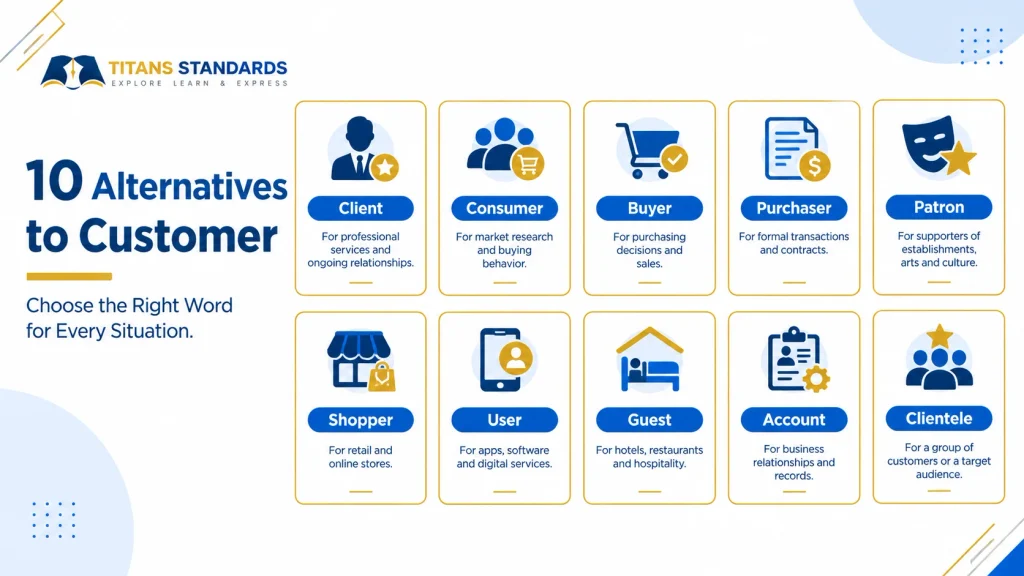
Another way to say customer refers to a different word or phrase that describes someone who buys, uses, or receives products and services from a business.
Common alternatives include “client,” “consumer,” “buyer,” and “patron.” However, these words are not always interchangeable. A client may receive professional advice, while a consumer is often discussed in relation to products, markets, and buying behavior.
People use these alternatives to avoid repetition, match different professional settings, and communicate more precisely.
Why Use Other Ways to Say Customer?
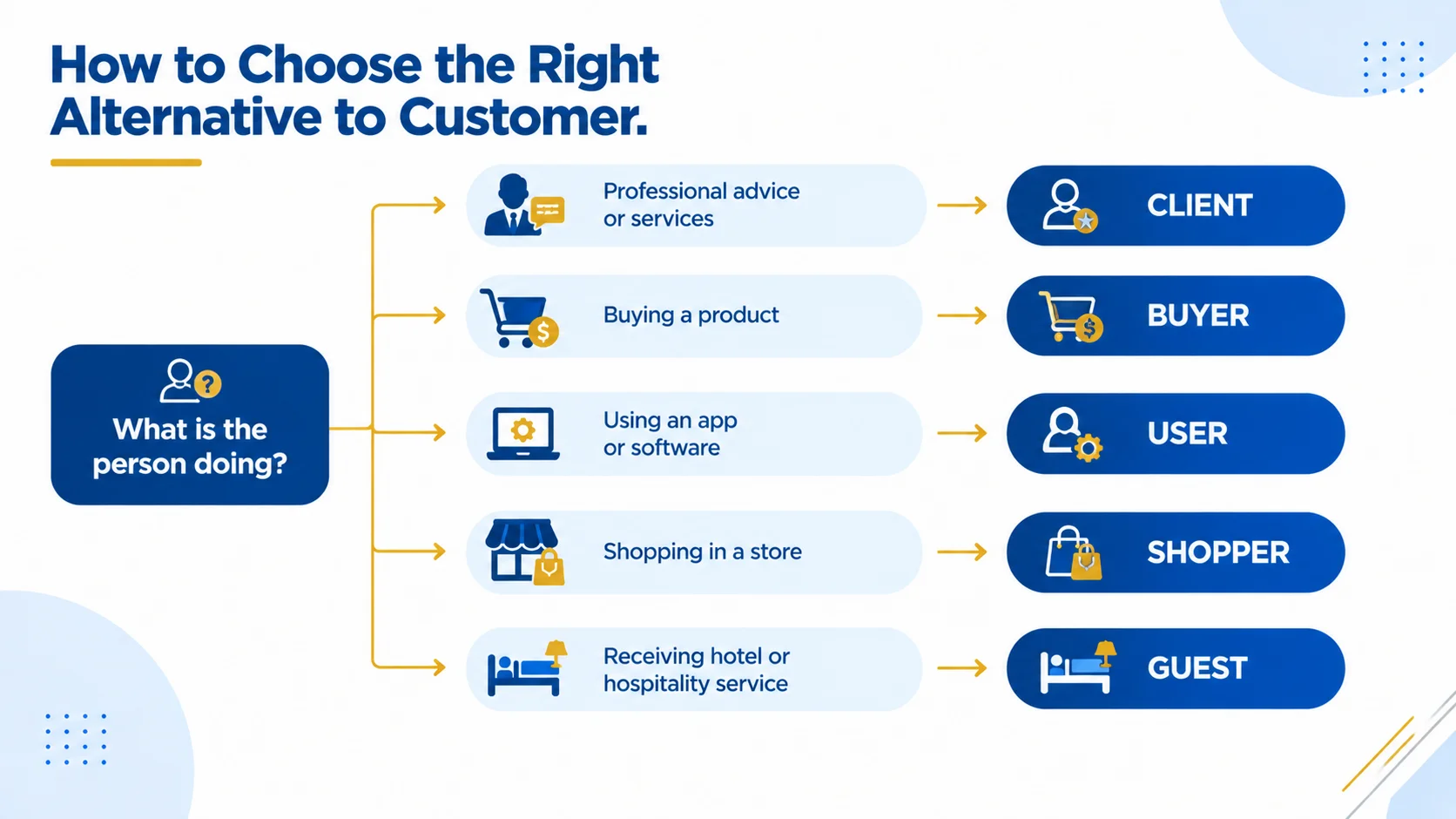
Using different words for “customer” can improve your writing and help you describe business relationships more accurately.
Consider these benefits:
- Avoid repetition: Make articles, reports, and emails more engaging.
- Sound professional: Choose language that suits your industry.
- Improve clarity: Distinguish between someone who buys, uses, or receives a service.
- Match your audience: Use familiar terms in marketing and customer service.
- Strengthen your message: Describe relationships with greater accuracy.
The key is to choose a word that fits the situation rather than replacing “customer” simply for variety.
10 Best Other Ways to Say “Customer”
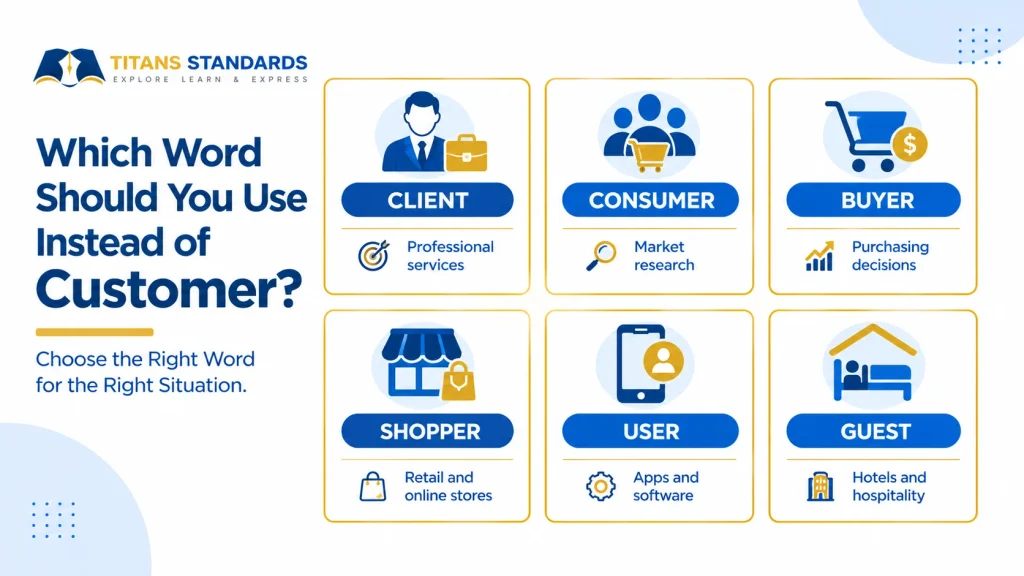
1. Client
Meaning
A client is someone who receives professional services, advice, or ongoing support from a person or business. The word often suggests an established relationship rather than a single purchase.
Best For: Professional, Formal, Polite
Example 1: Our agency helps each client develop a marketing strategy that fits their goals.
Example 2: The attorney scheduled a meeting with her client to review the contract.
Quick Tip: Use “client” for consultants, lawyers, accountants, designers, and other service professionals.
2. Consumer
Meaning
A consumer is someone who uses goods or services. The term often appears in discussions about markets, spending habits, product demand, and consumer behavior.
Best For: Professional, Formal
Example 1: Consumers increasingly compare product reviews before making a purchase.
Example 2: The company surveyed 500 consumers to understand their shopping preferences.
Quick Tip: Choose “consumer” for market research, business reports, and discussions about purchasing trends.
3. Buyer
Meaning
A buyer is someone who purchases or intends to purchase a product or service. This term emphasizes the buying decision and works well in sales, retail, and business transactions.
Best For: Professional, Casual
Example 1: The sales team offered first-time buyers a discount on selected products.
Example 2: Buyers can compare different plans before choosing a subscription.
Quick Tip: Use “buyer” when discussing purchasing decisions, sales leads, or people considering a purchase.
4. Purchaser
Meaning
A purchaser is a person or organization that buys something. It sounds slightly more formal than “buyer” and often appears in contracts, procurement documents, property transactions, and official business communication.
Best For: Professional, Formal
Example 1: The purchaser must complete the payment before the equipment ships.
Example 2: Each property purchaser receives a copy of the signed agreement.
Quick Tip: Choose “purchaser” for formal transactions and documents where precision matters.
5. Patron
Meaning
A patron is someone who regularly visits or supports an establishment, service, or organization. The word is particularly common in restaurants, theaters, libraries, museums, and arts organizations.
Best For: Formal, Friendly, Warm
Example 1: The restaurant thanked its patrons for supporting the new menu.
Example 2: Library patrons can reserve books through the online catalog.
Quick Tip: Use “patron” when you want to emphasize support for an establishment rather than a specific purchase.
6. Shopper
Meaning
A shopper is someone who looks for or buys products, especially in retail stores or online shops. The term can describe people who are browsing as well as those who are ready to purchase.
Best For: Casual, Friendly, Professional
Example 1: Online shoppers can filter products by price, size, and customer rating.
Example 2: The store offers free gift wrapping to holiday shoppers.
Quick Tip: Use “shopper” in retail marketing, e-commerce content, and discussions about shopping habits.
7. User
Meaning
A user is someone who uses a product, platform, application, or service. Unlike “buyer,” this term does not necessarily mean the person paid for it.
Best For: Professional, Casual
Example 1: The software update makes it easier for users to organize their files.
Example 2: New users can create an account in less than two minutes.
Quick Tip: Choose “user” for technology products, digital platforms, mobile apps, and subscription services.
8. Guest
Meaning
A guest is someone welcomed into a place or provided with hospitality. Hotels, resorts, restaurants, and event venues commonly use this term to create a welcoming and personal experience.
Best For: Friendly, Warm, Polite
Example 1: Every hotel guest receives complimentary breakfast during their stay.
Example 2: Our team welcomes each guest with a personalized check-in experience.
Quick Tip: Use “guest” in hospitality settings when emphasizing comfort, service, and a positive experience.
9. Account
Meaning
In business, “account” can refer to a customer relationship or the business record associated with it. Companies often use this term when discussing ongoing sales relationships, billing, or account management.
Best For: Professional, Formal
Example 1: Our account manager will contact you about the renewal next week.
Example 2: The sales representative reviewed the account before preparing the proposal.
Quick Tip: Use “account” when discussing business relationships or records, not as a universal replacement for an individual customer.
10. Clientele
Meaning
Clientele refers to the group of customers or clients served by a business or professional. Unlike the other alternatives on this list, it is a collective noun rather than a word for one individual.
Best For: Professional, Formal
Example 1: The boutique attracts a clientele that values personalized service.
Example 2: The restaurant expanded its menu to appeal to a younger clientele.
Quick Tip: Use “clientele” when describing a business’s overall customer base, target audience, or typical visitors.
Comparison Table
| Alternative | Best Used In | Tone |
| Client | Professional services | Professional |
| Consumer | Marketing and research | Formal |
| Buyer | Sales and retail | Direct |
| Purchaser | Contracts and transactions | Formal |
| Patron | Restaurants, libraries, theaters | Warm |
| Shopper | Retail and e-commerce | Casual |
| User | Software and digital services | Neutral |
| Guest | Hotels and hospitality | Friendly |
| Account | Sales and account management | Professional |
| Clientele | Business audience descriptions | Formal |
Common Mistakes
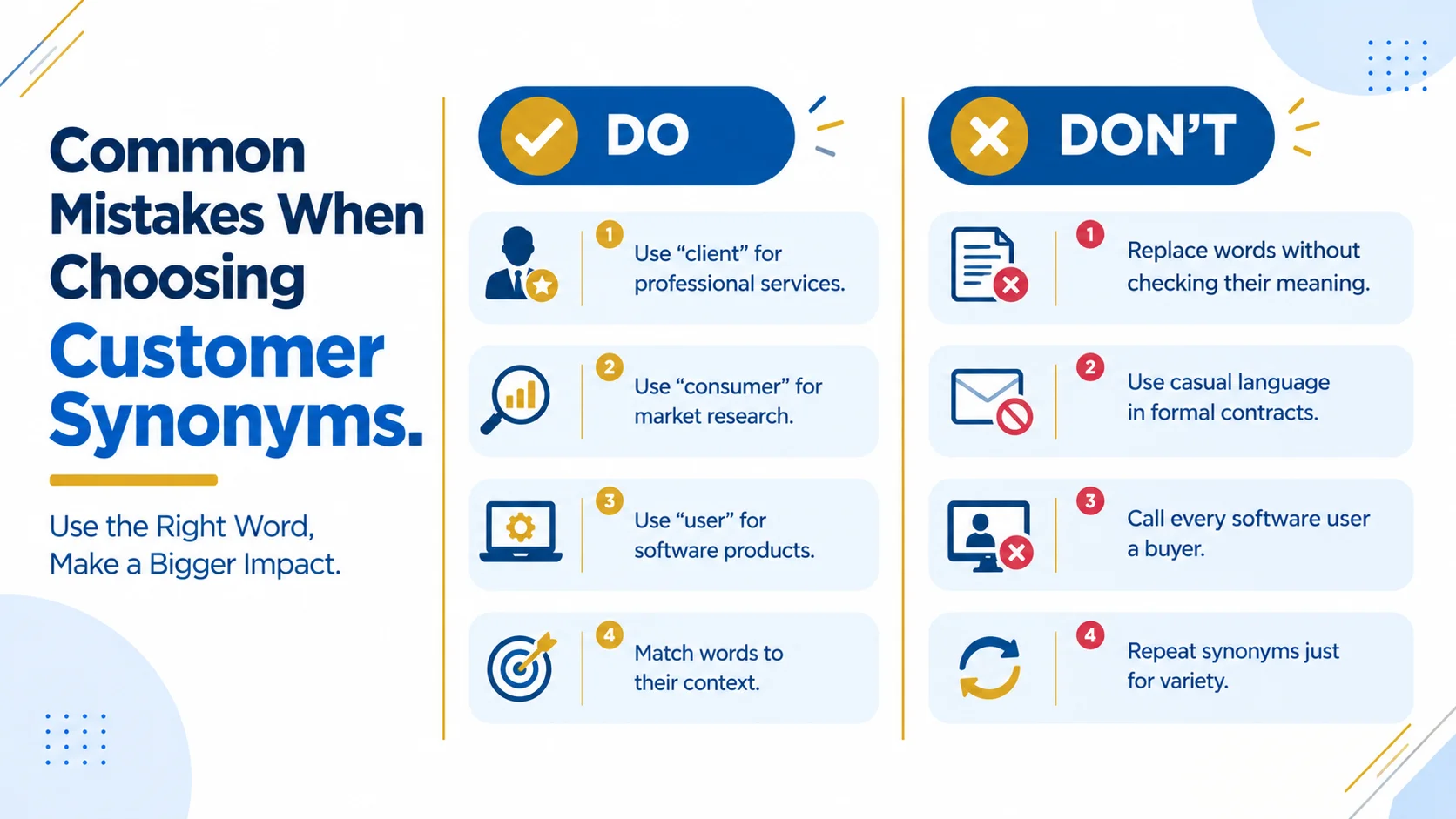
- Using casual language in formal communication. “Shopper” may suit a retail advertisement, but “purchaser” might be more appropriate in a formal transaction document.
- Treating every alternative as interchangeable. A software user may never purchase the product, while a buyer may not use it personally. Choose the word that accurately describes the relationship.
- Choosing overly formal wording. Terms such as “purchaser” can sound stiff in friendly customer service messages. Use simple language when it communicates your point more clearly.
- Repeating the same alternative too often. Replacing “customer” with “client” throughout an article can create the same repetition problem. Vary your vocabulary only when the meaning remains accurate.
- Ignoring your audience. A marketing report, hotel welcome message, and software guide serve different readers. Match your terminology to the industry and the reader’s expectations.
Frequently Asked Questions
1. What is the most professional word for customer?
“Client” is often the most professional alternative when discussing services, consulting, legal advice, or ongoing business relationships. However, “consumer” suits market research, while “purchaser” works well in formal transactions. The best choice depends on the industry and the relationship you want to describe.
2. What is another word for customer in business?
Common business alternatives include client, buyer, consumer, purchaser, and account. Use “client” for professional relationships, “buyer” for sales discussions, and “account” when referring to an ongoing business relationship or its associated records. Each term has a slightly different meaning, so consider the context before choosing one.
3. What is a polite way to say customer?
“Valued customer” is a polite expression commonly used in business emails and customer service messages. “Guest” is also welcoming in hospitality settings, while “client” works well for professional services. Choose a phrase that sounds sincere and reflects how your business interacts with the person.
4. What is another word for customer in marketing?
“Consumer,” “shopper,” and “buyer” are useful marketing alternatives. Consumer works well when discussing behavior and market trends, shopper suits retail campaigns, and buyer emphasizes purchasing decisions. Marketers should select the term that matches the audience segment or stage of the buying process they are describing.
5. Can I use client and customer interchangeably?
Sometimes, but the words are not always equivalent. A customer typically buys goods or services, while a client often receives ongoing or specialized professional services. For example, someone purchasing a shirt is usually a customer, while someone receiving legal advice is generally a client.
6. What is another word for a loyal customer?
“Repeat customer,” “regular customer,” and “returning customer” describe someone who buys from a business more than once. “Loyal customer” emphasizes an ongoing preference or relationship. These expressions are useful for loyalty programs, retention reports, marketing campaigns, and messages thanking people for their continued support.
7. What is the difference between a consumer and a buyer?
A buyer is someone who purchases something, while a consumer is someone who uses or consumes a product or service. These roles can belong to different people. For example, a parent may buy a toy, but the child is the consumer who uses it.
8. How can I avoid repeating the word customer in an article?
Start by identifying the exact meaning you need in each sentence. Replace “customer” with an appropriate term such as “client,” “shopper,” or “consumer” only when it fits. You can also restructure sentences, use specific descriptions, or refer to the audience as “people” when the meaning stays clear.
Conclusion
Choosing another way to say customer can make your writing more natural, professional, and precise. The best alternative depends on what the person does and the type of relationship they have with a business.
Use “client” for professional services, “consumer” for market research, and “buyer” or “purchaser” when discussing transactions. For retail content, “shopper” is a natural choice, while “user” fits digital products. Hotels and restaurants can use “guest” to create a welcoming tone, and “patron” works well for establishments that rely on community support.
Remember that these words have different meanings. Replacing “customer” simply to avoid repetition can confuse readers if the alternative does not fit the situation.
The best approach is to prioritize clarity over variety. Choose the word that accurately describes your audience, suits your tone, and helps readers understand your message immediately.

Editorial Desk
The Titan Standards Editorial Team develops, reviews, and maintains practical English-language resources. The team checks articles for clarity, accuracy, context, readability, and consistency with Titan Standards’ editorial guidelines.