
Another Way to Say Crucial: 10 Powerful Synonyms to Use

The word “crucial” helps you show that something matters a great deal. You might use it in a business email, a school assignment, a project update, or an everyday conversation. However, repeating the same word can make your writing feel less natural. Choosing another way to say crucial allows you to express importance more precisely. Some alternatives highlight necessity, while others emphasize urgency, influence, or value. Below are 10 useful options, with meanings, examples, and practical tips to help you choose the right phrase. Key Takeaways What Does “Another Way to Say Crucial” Mean? The phrase “another way to say crucial” refers to alternative words or expressions that communicate great importance. Common synonyms include essential, vital, critical, and significant. People search for these alternatives to improve their vocabulary, avoid repetition, and make their writing more effective. These words appear frequently in professional emails, academic papers, business reports, presentations, and everyday conversations. Although the alternatives share a similar meaning, they are not always interchangeable. For example, “critical” can suggest urgency, while “pivotal” highlights a turning point or a major influence on an outcome. Why Use Other Ways to Say Crucial? Using different words is crucial and helps you communicate clearly and match your language to the situation. The right alternative can make your message sound more natural, precise, and professional. Here are the main benefits: 10 Best Other Ways to Say Crucial 1. Essential Meaning: Essential describes something absolutely necessary or required for a particular purpose. It often suggests that a task, resource, or action cannot be left out without causing a problem. Best For: Professional, Formal, Polite Example 1: Clear communication is essential for keeping our remote team organized. Example 2: Regular practice is essential if you want to improve your writing skills. Quick Tip: Use “essential” when you want to emphasize necessity rather than urgency. 2. Vital Meaning: Vital means extremely important to the success, health, or proper functioning of something. It can carry more emotional weight than “important,” making it useful when the consequences really matter. Best For: Professional, Formal Example 1: Accurate data is vital to making informed business decisions. Example 2: Getting enough sleep is vital for maintaining good health. Quick Tip: Choose “vital” when the outcome depends heavily on a particular action, resource, or condition. 3. Critical Meaning: Critical describes something that has a major effect on an outcome or requires immediate attention. It is common in business, technology, healthcare, and situations involving deadlines or potential risks. Best For: Professional, Formal Example 1: Fixing the security issue is critical before the software launch. Example 2: The next two weeks will be critical to the project’s success. Quick Tip: Use “critical” when urgency, risk, or serious consequences are part of the message. 4. Important Meaning: Important is a broad, everyday alternative that communicates value or significance. It is less intense than “crucial” in many contexts, making it a good choice when you want to sound clear without overstating your point. Best For: Professional, Casual, Friendly Example 1: It’s important to confirm the meeting time with every participant. Example 2: Building trust is important in any long-term relationship. Quick Tip: Choose “important” for general statements when stronger language is unnecessary. 5. Significant Meaning: Significant refers to something that has considerable meaning, value, or influence. It works particularly well when describing measurable progress, meaningful changes, research findings, or developments that deserve attention. Best For: Professional, Formal Example 1: The updated training program led to a significant improvement in employee performance. Example 2: This policy change could have a significant effect on small businesses. Quick Tip: Use “significant” to highlight meaningful impact rather than an urgent need. 6. Indispensable Meaning: Indispensable describes someone or something that is so valuable or necessary that it is difficult to manage without it. The word emphasizes usefulness and the absence of a suitable replacement. Best For: Professional, Formal, Warm Example 1: Her experience has made her an indispensable member of our team. Example 2: Reliable customer feedback is indispensable when improving a new product. Quick Tip: Reserve “indispensable” for situations where something is truly difficult to replace or do without. 7. Key Meaning: Key means central to a goal, process, or result. It is a concise, natural alternative that fits professional communication without sounding overly formal. Best For: Professional, Casual, Friendly Example 1: Customer satisfaction is a key factor in our company’s growth. Example 2: Setting realistic goals is key to staying motivated throughout the semester. Quick Tip: Use “key” in phrases such as “key factor,” “key role,” and “key priority.” Remember that “key to” is followed by a noun or a gerund. 8. Imperative Meaning: Imperative means absolutely necessary or extremely important, often because a situation demands action. It sounds stronger and more formal than “important,” especially in instructions, policies, and official communications. Best For: Formal, Professional Example 1: It is imperative that all employees complete the security training by Friday. Example 2: Protecting customer information is imperative for maintaining public trust. Quick Tip: Use “imperative” when you need to communicate a firm requirement, not simply a preference. 9. Pivotal Meaning: Pivotal describes something that plays a central role in determining what happens next. It often refers to a decision, event, person, or moment that can change the direction of a situation. Best For: Professional, Formal Example 1: Her presentation played a pivotal role in securing the partnership. Example 2: The final interview was a pivotal moment in his career. Quick Tip: Choose “pivotal” when the focus is on influence, turning points, or changes in direction. 10. Consequential Meaning: Consequential describes something that produces important results or has lasting effects. Unlike “essential,” it does not necessarily mean something is required; instead, it emphasizes the seriousness or impact of what happens. Best For: Formal, Professional Example 1: The board made a consequential decision about the company’s future. Example 2: Small changes to the contract could have consequential effects on both parties. Quick Tip: Use “consequential” when discussing decisions, actions, or events with
Another Way to Say Example: Batter Alternatives
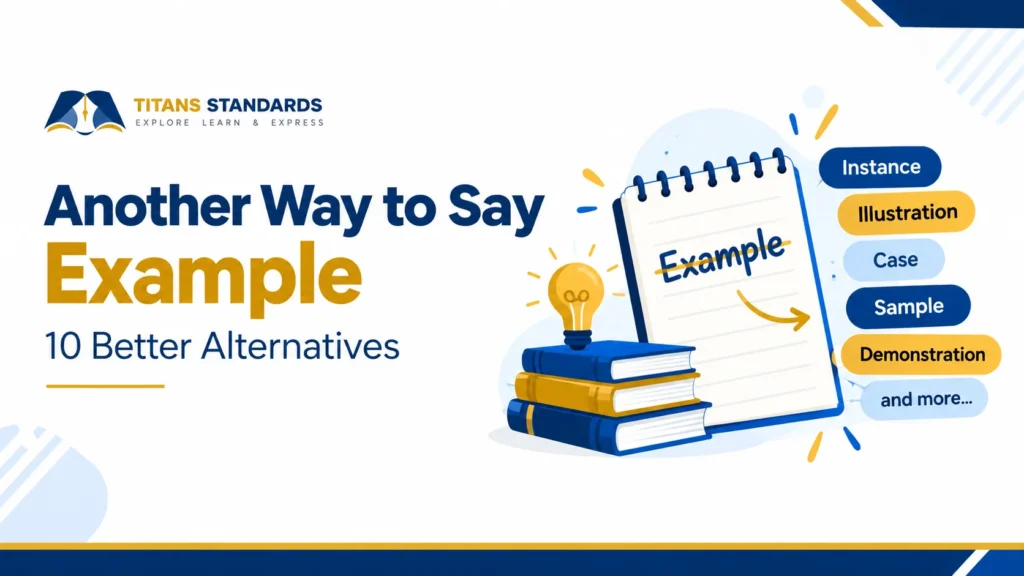
Featured Snippet Another way to say example includes instance, illustration, case, sample, demonstration, and model. The best alternative depends on your context. Use “instance” for a specific occurrence, “illustration” to explain an idea, “sample” for a representative piece, and “demonstration” to show how something works. These words help make your writing clearer and less repetitive. Key Takeaways What Does “Another Way to Say Example” Mean? The phrase “another way to say example” refers to alternative words or expressions you can use instead of example. People often search for these alternatives when writing essays, preparing presentations, composing emails, or trying to make their English sound more natural. The word example usually refers to something that helps explain an idea, prove a point, or show how something works. For instance, a teacher might give an example of a grammar rule, while a manager might share an example of successful teamwork. However, repeating the same word throughout a paragraph can make your writing sound dull. Words such as instance, illustration, and case offer variety, but each has a slightly different meaning. Choosing the right alternative makes your message more precise. Why Use Other Ways to Say “Example”? Using different words for example can improve your writing without changing your main message. The key is to choose a replacement that fits the sentence rather than swapping words just to avoid repetition. Here are the main benefits: 10 Best Other Ways to Say “Example” 1. Instance Meaning An instance is a particular occurrence of something. It works well when you want to refer to one specific situation or event rather than a general illustration. Best For: Professional, Formal, Neutral Example 1: This is one instance in which clear communication prevented a costly mistake. Example 2: Have you encountered an instance of this problem at work? Quick Tip: Use instance when discussing a specific occurrence, especially in reports, explanations, or analytical writing. 2. Illustration Meaning An illustration is something that helps explain or clarify an idea. It may be a written description, a real-life situation, a picture, or a detailed example. Best For: Formal, Professional, Friendly Example 1: The teacher used a simple illustration to explain how fractions work. Example 2: Her experience provides a useful illustration of the challenges new employees face. Quick Tip: Choose illustration when your main goal is to make an idea easier to understand. 3. Case Meaning A case refers to a particular situation, event, or set of circumstances. It is common in business, law, research, and problem-solving discussions. Best For: Professional, Formal Example 1: This case shows why companies need clear data protection policies. Example 2: In one case, the customer received a refund within an hour. Quick Tip: Use case when discussing a situation that supports an argument or demonstrates a particular outcome. 4. Sample Meaning A sample is a small or representative part of a larger group, collection, or product. It can also refer to a piece of writing or work used to demonstrate quality or style. Best For: Professional, Casual, Formal Example 1: Please review this sample before approving the final design. Example 2: The researcher tested a sample of 200 participants from the larger population. Quick Tip: Use sample when referring to a portion of something larger, not simply any situation that explains an idea. 5. Demonstration Meaning A demonstration shows how something works or how to perform a task. It often involves a practical display, a step-by-step explanation, or a visible action. Best For: Professional, Formal, Friendly Example 1: The trainer gave a demonstration of the new scheduling software. Example 2: Her successful campaign was a demonstration of effective community leadership. Quick Tip: Choose demonstration when someone shows a process, skill, method, or result in action. 6. Specimen Meaning A specimen is an individual item collected or examined as an example of a particular type. The word is especially common in science, medicine, and technical fields. Best For: Formal, Professional Example 1: The laboratory examined a specimen under a microscope. Example 2: The museum displayed a rare specimen of the plant species. Quick Tip: Use specimen in scientific or technical contexts. It usually sounds too specialized for everyday conversations. 7. Model Meaning A model is an example that people can follow, study, or use as a guide. It can refer to a successful approach, a sample of good work, or a representation of how something functions. Best For: Professional, Formal, Friendly Example 1: Her leadership style is a model for new team managers. Example 2: The company introduced a model proposal that other departments can adapt. Quick Tip: Use model when the example serves as a guide or standard that others can learn from. 8. Scenario Meaning A scenario describes a possible or imagined situation. It is particularly useful for explaining what might happen under certain conditions or for practicing how to respond to a challenge. Best For: Professional, Casual, Formal Example 1: Consider a scenario in which a customer cancels an order at the last minute. Example 2: The instructor created a realistic scenario to help students practice emergency procedures. Quick Tip: Choose scenario for hypothetical situations, planning exercises, and role-playing activities. 9. Representative Case Meaning A representative case is a situation that reflects a broader pattern or group. It helps readers understand a general trend through one relevant instance. Best For: Professional, Formal Example 1: This project is a representative case of how small teams can improve customer service. Example 2: The report examines a representative case from a larger group of successful businesses. Quick Tip: Use representative case when the situation reflects a wider pattern. Avoid calling a case representative unless the evidence supports that description. 10. Case in Point Meaning A case in point is a specific situation that clearly supports or demonstrates a statement. It often appears after a general claim to show why that claim makes sense. Best For: Professional, Formal, Friendly Example 1: Clear instructions save time; the recent onboarding project is a case in point. Example
Another Way to Say Throughout 10 Natural Alternative
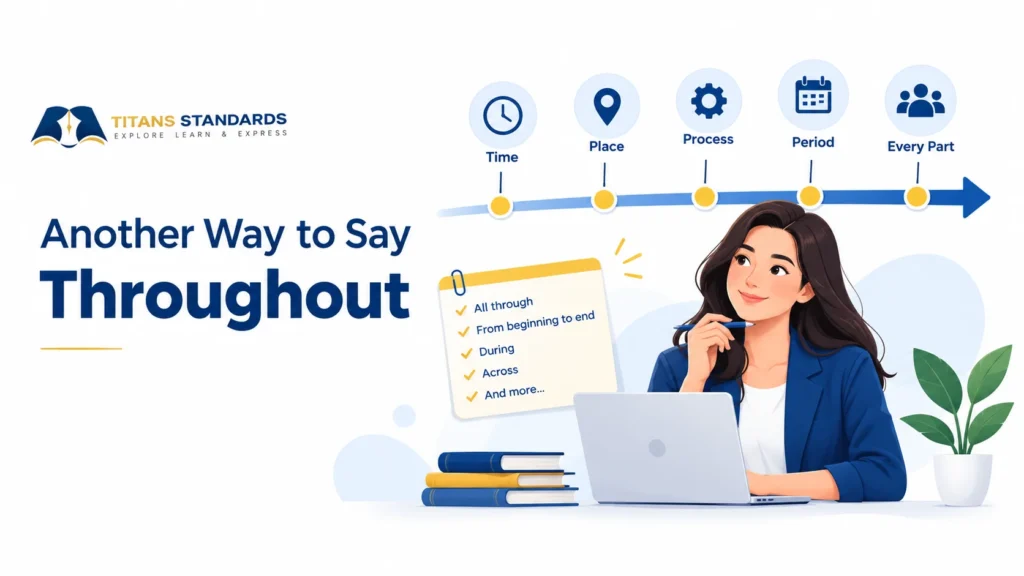
What Does “Another Way to Say Throughout” Mean? “Another way to say throughout” means looking for a different word or phrase that expresses the same general idea as throughout. The best alternative depends on what you are describing. “Throughout” commonly means during the whole period of something or in every part of something. For example, “She remained calm throughout the meeting” means she remained calm from the beginning of the meeting to the end. It can also describe location or distribution: “The same design appears throughout the building” means the design appears in many or all parts of the building. Because “throughout” has more than one use, replacing it with a synonym requires attention to context. Why Use Other Ways to Say “Throughout”? Using an alternative can make your writing more precise and prevent repetitive wording. It can also help you choose a phrase that better matches the tone of a sentence. You may want another way to say “throughout” to: 10 Best Other Ways to Say “Throughout” 1. All Through Meaning “All through” means during an entire period, from the beginning until the end. It is very close to “throughout,” but it often sounds more conversational and relaxed. Best For Example 1 She stayed awake all through the night to finish the project. Example 2 We could hear music all through the evening. Quick Tip Use “all through” when you want a natural, conversational alternative to “throughout,” especially in everyday speech. 2. From Beginning to End Meaning “From beginning to end” emphasizes that something continues across the complete length of an event, activity, or experience. It is especially useful when you want to stress completeness. Best For Example 1 The documentary kept me interested from beginning to end. Example 2 He supported the team from beginning to end of the campaign. Quick Tip Choose this phrase when the complete duration is more important than simply stating when something happened. 3. During Meaning “During” refers to something happening within a particular period or event. Unlike “throughout,” it does not necessarily mean that something continued for the entire period. Best For Example 1 Please keep your phone silent during the presentation. Example 2 We received several questions during the training session. Quick Tip Use “during” when you mean at some point within a period, rather than necessarily from its beginning to its end. 4. Over the Course of Meaning “Over the course of” describes something happening gradually or repeatedly during a particular period. It often works well when discussing changes, developments, or events. Best For Example 1 The company gained several new clients over the course of the year. Example 2 Her confidence improved over the course of the program. Quick Tip This phrase is particularly useful for professional writing when describing progress or development over time. 5. Across Meaning “Across” can replace “throughout” when you are talking about different places, groups, areas, or sections. It highlights distribution rather than continuous time. Best For Example 1 The policy applies across all departments. Example 2 The survey was conducted across several major cities. Quick Tip Use “across” when the meaning involves multiple locations, groups, or sections rather than an entire period of time. 6. For the Duration of Meaning “For the duration of” means for the entire length of a specified period or event. It is more formal than “throughout” and is common in instructions and professional communication. Best For Example 1 Employees must wear their identification badges for the duration of the event. Example 2 The equipment should remain switched off for the duration of the inspection. Quick Tip This phrase works best in formal instructions, policies, notices, and workplace communication. 7. From Start to Finish Meaning “From start to finish” means during the complete process or experience. It emphasizes that something covers every stage rather than only part of it. Best For Example 1 Our team handled the project from start to finish. Example 2 The guide explains the application process from start to finish. Quick Tip Use this expression when discussing a process, project, task, or experience with clear stages. 8. Over the Entire Period Meaning “Over the entire period” clearly indicates that something occurred across a complete, defined span of time. It is a useful option for precise or analytical writing. Best For Example 1 Sales remained stable over the entire period. Example 2 The researchers monitored the participants over the entire period of the study. Quick Tip This alternative is useful in reports, research writing, and business documents where clarity matters more than conversational style. 9. In Every Part of Meaning “In every part of” focuses on location or sections rather than time. It means something exists, appears, or occurs in all parts of a particular place, object, or subject. Best For Example 1 Natural light reaches almost every part of the house. Example 2 The author uses humor in every part of the book. Quick Tip Use this phrase when “throughout” means in all areas or sections, not “during an entire period.” 10. All the Way Through Meaning “All the way through” emphasizes continuation from one point to another or from the beginning of something to its end. It has a conversational tone and can describe both time and processes. Best For Example 1 She stayed focused all the way through the final exam. Example 2 The same theme appears all the way through the novel. Quick Tip Use “all the way through” when you want to emphasize continuous presence or progression in a natural, conversational way. Comparison Table Alternative Best Used In Tone All through Everyday conversations Casual From beginning to end Events and experiences Neutral During Specific time periods Neutral Over the course of Progress and development Professional Across Places, groups, and areas Neutral For the duration of Rules and formal instructions Formal From start to finish Processes and projects Neutral Over the entire period Reports and research Formal In every part of Locations and sections Neutral All the way through Continuous experiences
Another Way to Say In Summary 10 Natural Alternative
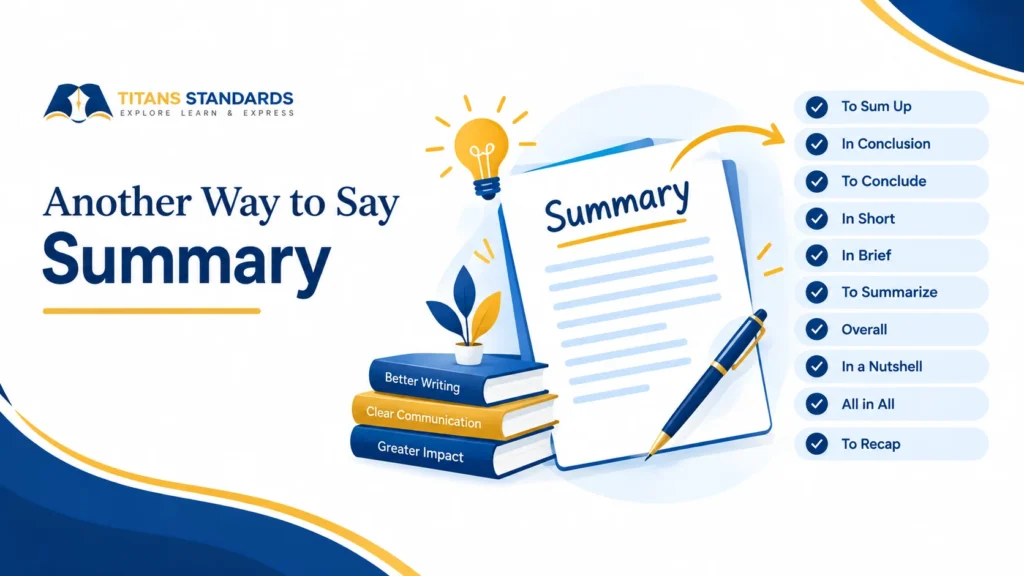
If you want another way to say “in summary,” you can use phrases such as “to sum up,” “in conclusion,” “in short,” “in brief,” “to summarize,” and “overall.” The best choice depends on your context, tone, and whether you are writing an essay, email, report, presentation, or casual message. What Does “Another Way to Say In Summary” Mean? “In summary” is a transition phrase used to introduce the main points or final idea of something that has already been discussed. It signals to the reader or listener that you are about to give a short version of the most important information. For example: “In summary, the project was completed on time and stayed within budget.” People often look for other ways to say “in summary” because repeating the same transition can make writing feel predictable. Using a suitable alternative can make your writing smoother, clearer, and better matched to the situation. You commonly see these phrases in essays, reports, business communication, presentations, articles, emails, and everyday conversations. Why Use Other Ways to Say “In Summary”? Using different concluding phrases can make your communication more natural and precise. The key is not simply to find a synonym. Choose the phrase that communicates the right level of formality and meaning. 10 Best Other Ways to Say “In Summary” 1. To Sum Up Meaning “To sum up” introduces a brief statement of the main points that were just discussed. It is natural, clear, and slightly less formal than “in summary.” Best For Example 1 To sum up, we need more time to test the new system before launch. Example 2 To sum up, the trip was affordable, comfortable, and easy to organize. Quick Tip Use “to sum up” when you want a natural transition that works well in both speech and writing. 2. In Conclusion Meaning “In conclusion” introduces the final thoughts or judgment after discussing several points. It is especially common in essays, reports, academic writing, and formal presentations. Best For Example 1 In conclusion, the research shows that regular exercise can improve overall well-being. Example 2 In conclusion, the proposal offers a practical solution to the current staffing problem. Quick Tip Use “in conclusion” when you are ending a structured piece of writing rather than simply giving a quick recap. 3. To Conclude Meaning “To conclude” serves a similar purpose to “in conclusion” and signals that you are presenting your final thoughts. It has a formal and polished tone. Best For Example 1 To conclude, both options have advantages, but the second plan is more affordable. Example 2 To conclude, our findings support the need for additional training. Quick Tip “To conclude” works particularly well at the beginning of the final paragraph of a formal document. 4. In Short Meaning “In short” means “in a few words” or “to state the main point briefly.” It is useful when you want to reduce a longer explanation to its most important idea. Best For Example 1 In short, the new policy gives employees more flexibility. Example 2 In short, we spent less money and achieved better results. Quick Tip Choose “in short” when brevity is the main goal rather than a formal conclusion. 5. In Brief Meaning “In brief” introduces a shortened version of information. It is concise and slightly more formal than “in short,” making it useful in professional and written communication. Best For Example 1 In brief, the company plans to expand its services next year. Example 2 In brief, the agreement protects both parties from unexpected costs. Quick Tip Use “in brief” when summarizing information in reports, business communication, or other concise written formats. 6. To Summarize Meaning “To summarize” directly tells the reader that you are about to restate the main points. It is clear and straightforward without sounding overly formal. Best For Example 1 To summarize, the team met all three major project goals. Example 2 To summarize, customers want faster delivery and simpler payment options. Quick Tip Use “to summarize” when clarity matters more than stylistic variety. 7. Overall Meaning “Overall” gives a general judgment or broad view after considering several details. Unlike “in summary,” it does not always introduce a complete recap. Best For Example 1 Overall, the conference was well organized and informative. Example 2 Overall, sales improved despite a difficult start to the quarter. Quick Tip Use “overall” when you want to give a general assessment rather than repeat every major point. 8. In a Nutshell Meaning “In a nutshell” means “in a very brief form.” It has a conversational tone and is useful when explaining a complicated idea in simple terms. Best For Example 1 In a nutshell, the new software saves time and reduces errors. Example 2 In a nutshell, we need a better plan before we move forward. Quick Tip Avoid “in a nutshell” in highly formal academic or corporate writing because it can sound too conversational. 9. All in All Meaning “All in all” gives an overall judgment after considering different aspects of a situation. It often sounds natural and conversational. Best For Example 1 All in all, the weekend was relaxing and enjoyable. Example 2 All in all, the changes have made the process much easier. Quick Tip Use “all in all” when giving a broad opinion, especially in conversational or personal writing. 10. To Recap Meaning “To recap” means to briefly review the important information that has already been covered. It is especially useful in meetings, presentations, lessons, and conversations. Best For Example 1 To recap, the meeting starts at 9 a.m., and everyone should bring the updated reports. Example 2 To recap, we chose the cheaper option because it offered better long-term value. Quick Tip Use “to recap” when you are reviewing previously discussed information rather than presenting a final conclusion. Comparison Table Alternative Best Used In Tone To Sum Up General writing and speech Natural In Conclusion Essays and formal writing Formal To Conclude Reports and formal writing Formal In Short Everyday communication Concise In
Another Way to Say Positive: 10 Natural Alternatives

Featured Snippet:Looking for another way to say positive? Depending on the context, you can use words such as optimistic, favorable, encouraging, upbeat, constructive, beneficial, promising, hopeful, affirmative, and supportive. The best choice depends on whether you are describing an attitude, result, opinion, response, or situation. Key Takeaways What Does “Another Way to Say Positive” Mean? When people search for another way to say positive, they usually want a more precise word or phrase for describing something good, hopeful, useful, or encouraging. The right alternative depends on what “positive” means in the sentence. For example, a person can be optimistic, a result can be favorable, feedback can be constructive, and a future outcome can be promising. Choosing a more specific word can make your writing sound clearer and more natural. Why Use Other Ways to Say “Positive”? The word positive is useful, but it can become repetitive or too general. A more specific alternative helps readers understand exactly what you mean. You might use another word to: 10 Best Other Ways to Say “Positive” 1. Optimistic Meaning Optimistic describes someone who expects good things to happen or focuses on favorable possibilities. It usually refers to a person’s attitude, outlook, or expectations. Best For Example 1 She remains optimistic about finding a solution to the problem. Example 2 His optimistic attitude helped the team stay focused during the difficult project. Quick Tip Use optimistic when “positive” refers to someone’s outlook or expectations. 2. Favorable Meaning Favorable means beneficial, advantageous, or likely to produce a good result. It is especially useful when discussing conditions, opinions, decisions, or outcomes. Best For Example 1 The company received favorable feedback from its customers. Example 2 The current market conditions are favorable for small businesses. Quick Tip Choose favorable when you are describing a situation, result, condition, or judgment rather than a person’s mood. 3. Encouraging Meaning Encouraging describes something that gives people confidence or suggests that a situation may improve. It is often used for signs, results, feedback, and progress. Best For Example 1 The early test results are encouraging. Example 2 Her manager gave her encouraging feedback after the presentation. Quick Tip Use encouraging when something provides hope or shows signs of progress. 4. Upbeat Meaning Upbeat means cheerful, confident, and positive in mood or attitude. It is more conversational than formal, so it works particularly well in everyday English. Best For Example 1 Despite the setback, he stayed upbeat and continued working. Example 2 The speaker kept the audience engaged with her upbeat personality. Quick Tip Use upbeat for a cheerful mood, attitude, tone, or personality. 5. Constructive Meaning Constructive means useful and intended to help improve something. It is commonly used when discussing feedback, criticism, suggestions, or conversations. Best For Example 1 The supervisor provided constructive feedback on my report. Example 2 We had a constructive conversation about how to improve the process. Quick Tip Use constructive instead of “positive” when you mean helpful rather than simply good. 6. Beneficial Meaning Beneficial means producing a useful or helpful effect. It is a strong choice when you want to explain that something provides an advantage or improves a situation. Best For Example 1 Regular exercise can have beneficial effects on your overall well-being. Example 2 The training program was beneficial for new employees. Quick Tip Use beneficial when “positive” means that something is helpful or advantageous. 7. Promising Meaning Promising describes something that shows signs of future success or improvement. It suggests that the current situation looks good, even though the final result is not certain. Best For Example 1 The new employee has shown promising results during the first month. Example 2 The project is showing promising signs of long-term growth. Quick Tip Use promising when you see evidence that something may succeed in the future. 8. Hopeful Meaning Hopeful expresses confidence or desire that something good will happen. It often focuses on a person’s feelings about a future event or outcome. Best For Example 1 We are hopeful that the negotiations will lead to an agreement. Example 2 She felt hopeful after receiving the latest update. Quick Tip Use hopeful when the positive feeling is connected to a desired future outcome. 9. Affirmative Meaning Affirmative means expressing agreement, confirmation, or approval. It is more formal than everyday alternatives and is often used in professional or official communication. Best For Example 1 The committee gave an affirmative response to the proposal. Example 2 He provided an affirmative answer when asked about the new policy. Quick Tip Use affirmative when “positive” means “yes,” “agreeing,” or “confirming.” 10. Supportive Meaning Supportive describes someone or something that provides encouragement, help, or approval. It is especially useful when talking about relationships, teams, workplaces, and personal interactions. Best For Example 1 Her coworkers were supportive when she took on the new responsibility. Example 2 A supportive manager can help employees feel confident about their work. Quick Tip Use supportive when the positive quality involves helping, encouraging, or standing behind someone. Comparison Table Alternative Best Used In Tone Optimistic Attitudes and outlooks Warm Favorable Results and conditions Formal Encouraging Progress and feedback Positive Upbeat Mood and personality Casual Constructive Feedback and suggestions Professional Beneficial Effects and advantages Formal Promising Future results Professional Hopeful Future expectations Warm Affirmative Agreement and confirmation Formal Supportive Relationships and teamwork Friendly Common Mistakes 1. Using “positive” when a more precise word is available Not every good situation is simply “positive.” If you mean helpful, beneficial may be clearer; if you mean hopeful about the future, optimistic may be more accurate. 2. Using casual language in professional writing Words such as upbeat can sound natural in conversation but may not fit every formal document. For professional communication, alternatives such as favorable, constructive, or beneficial may be more appropriate. 3. Confusing “optimistic” with “favorable” These words are related but do not mean exactly the same thing. Optimistic usually describes a person’s outlook, while favorable generally describes conditions, results, opinions, or circumstances. 4. Choosing a word
Another Way to Say Even Though

Featured Snippet:Looking for another way to say even though? Common alternatives include although, though, despite the fact that, in spite of the fact that, while, and notwithstanding the fact that. The best choice depends on your sentence, tone, and whether you want a casual, formal, or professional expression. Key Takeaways What Does “Another Way to Say Even Though” Mean? The phrase “another way to say even though” refers to different words or expressions that show contrast between two facts or situations. Even though introduces something that might seem surprising compared with the main statement. For example: “Even though it was raining, we went for a walk.” The rain created an expected reason to stay inside, but the person went out anyway. People look for alternatives to even though to avoid repetition, improve sentence flow, or match a specific tone. These alternatives are useful in everyday conversations, school writing, emails, essays, reports, and professional communication. Why Use Other Ways to Say “Even Though”? Using different contrast expressions can make your English more natural and precise. The right alternative can also help you adjust the tone of a sentence. You may want another way to say even though to: 10 Best Other Ways to Say “Even Though” 1. Although Meaning:Although is one of the closest alternatives to even though. It introduces a fact that contrasts with the main idea and works well in both everyday and professional English. Best For: Example 1:Although the project was difficult, the team completed it on time. Example 2:Although Sarah was tired, she stayed to help clean the office. Quick Tip:Use although when you want a clear, polished alternative that fits almost any type of writing. 2. Though Meaning:Though has almost the same meaning as although, but it often sounds more conversational. It is especially common in everyday speech and informal writing. Best For: Example 1:Though I was nervous, I decided to give the presentation. Example 2:Though the restaurant was crowded, we found a table quickly. Quick Tip:Choose though when you want your sentence to sound relaxed and natural. 3. Despite the Fact That Meaning:Despite the fact that introduces a complete clause and highlights a strong contrast. It is more formal and often appears in academic, professional, or carefully written English. Best For: Example 1:Despite the fact that sales were lower, the company continued its expansion. Example 2:Despite the fact that he had little experience, he performed well during the interview. Quick Tip:Use this phrase when you need despite but the next part of your sentence contains a subject and verb. 4. In Spite of the Fact That Meaning:In spite of the fact that has the same basic meaning as despite the fact that. It emphasizes that something happened despite an opposing circumstance. Best For: Example 1:In spite of the fact that the deadline was short, we finished the report. Example 2:In spite of the fact that the weather was poor, the event continued as planned. Quick Tip:Remember that in spite of is always written as three words. 5. Despite Meaning:Despite expresses contrast, but it is structured differently from even though. It is normally followed by a noun, pronoun, or verb ending in -ing, rather than a complete clause. Best For: Example 1:Despite the heavy traffic, we arrived before the meeting started. Example 2:Despite feeling exhausted, Maria finished her assignment. Quick Tip:Do not write “despite it was raining.” Instead, write “despite the rain” or use despite the fact that it was raining. 6. In Spite Of Meaning:In spite of has the same meaning and grammatical pattern as despite. It shows that an action or result happened despite an obstacle or unexpected condition. Best For: Example 1:In spite of the long line, we waited for our turn. Example 2:In spite of being busy, James called his parents that evening. Quick Tip:Use in spite of before a noun or -ing form, not directly before a complete clause. 7. While Meaning:While can introduce a contrasting idea when it means “although” or “whereas.” It is useful when comparing two different facts, opinions, or situations. Best For: Example 1:While the apartment is small, its location is excellent. Example 2:While I understand your concern, I think we should consider another option. Quick Tip:Use while carefully because it can also refer to time. Context determines whether it means contrast or “during the time that.” 8. Notwithstanding the Fact That Meaning:Notwithstanding the fact that is a highly formal way to express contrast. It is more common in legal, official, or formal written contexts than in everyday conversation. Best For: Example 1:Notwithstanding the fact that costs increased, the organization approved the proposal. Example 2:Notwithstanding the fact that demand was low, the store kept the product available. Quick Tip:Avoid this phrase in casual conversation because it can sound unnecessarily formal. 9. Even If Meaning:Even if is related to even though, but the two expressions are not interchangeable in every situation. Even if usually describes a condition that may or may not happen, while even though introduces a fact that is already true. Best For: Example 1:Even if the weather gets worse, the team will continue practicing. Example 2:I will attend the meeting even if my schedule becomes busy. Quick Tip:Use even if for a possible or hypothetical condition, not simply for a known fact. 10. Granted That Meaning:Granted that acknowledges one fact before presenting a contrasting point. It is useful when you want to admit something is true while moving toward a different conclusion. Best For: Example 1:Granted that the plan has some risks, it could still save the company money. Example 2:Granted that the course is challenging, the skills you gain are valuable. Quick Tip:Use granted that when you want to concede one point before making another point. Comparison Table Alternative Best Used In Tone Although Essays, emails, general writing Neutral Though Conversations, casual writing Casual Despite the fact that Formal writing, reports Formal In spite of the fact that Formal writing Formal Despite Professional and general writing Neutral/Formal In spite of Everyday and professional