Featured Snippet:
Looking for another way to say positive? Depending on the context, you can use words such as optimistic, favorable, encouraging, upbeat, constructive, beneficial, promising, hopeful, affirmative, and supportive. The best choice depends on whether you are describing an attitude, result, opinion, response, or situation.
Key Takeaways
- Optimistic and hopeful describe a positive attitude about the future.
- Favorable works well for results, opinions, conditions, and professional writing.
- Encouraging is useful when something gives confidence or suggests a good outcome.
- Constructive is best for useful feedback, criticism, or suggestions.
- Choose an alternative based on the exact meaning and tone you want.
What Does “Another Way to Say Positive” Mean?
When people search for another way to say positive, they usually want a more precise word or phrase for describing something good, hopeful, useful, or encouraging. The right alternative depends on what “positive” means in the sentence.
For example, a person can be optimistic, a result can be favorable, feedback can be constructive, and a future outcome can be promising. Choosing a more specific word can make your writing sound clearer and more natural.
Why Use Other Ways to Say “Positive”?
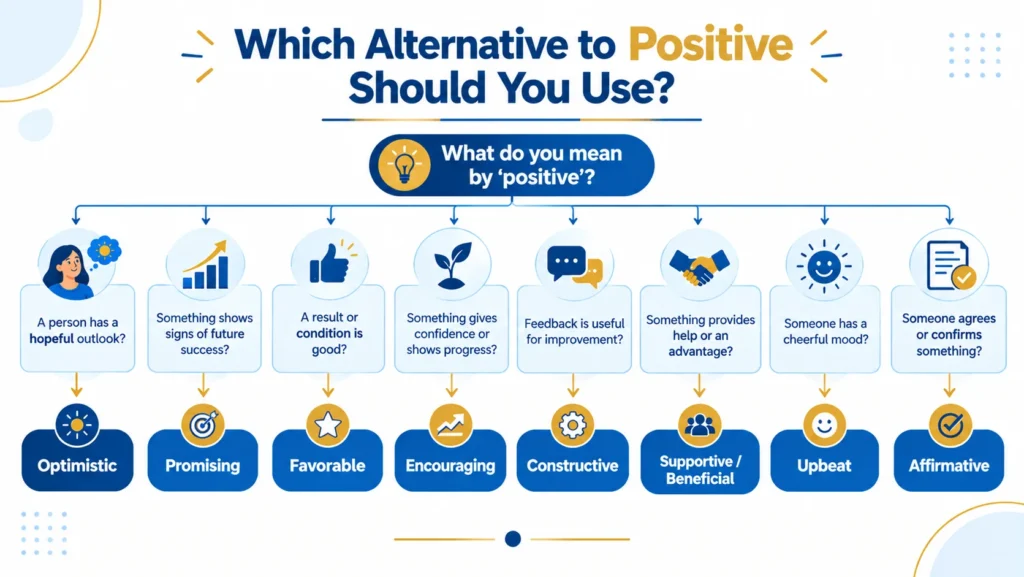
The word positive is useful, but it can become repetitive or too general. A more specific alternative helps readers understand exactly what you mean.
You might use another word to:
- Avoid repeating “positive” in your writing.
- Make your meaning more precise.
- Match formal or casual situations.
- Improve professional communication.
- Describe emotions, opinions, results, or situations more accurately.
- Make your writing sound more natural.
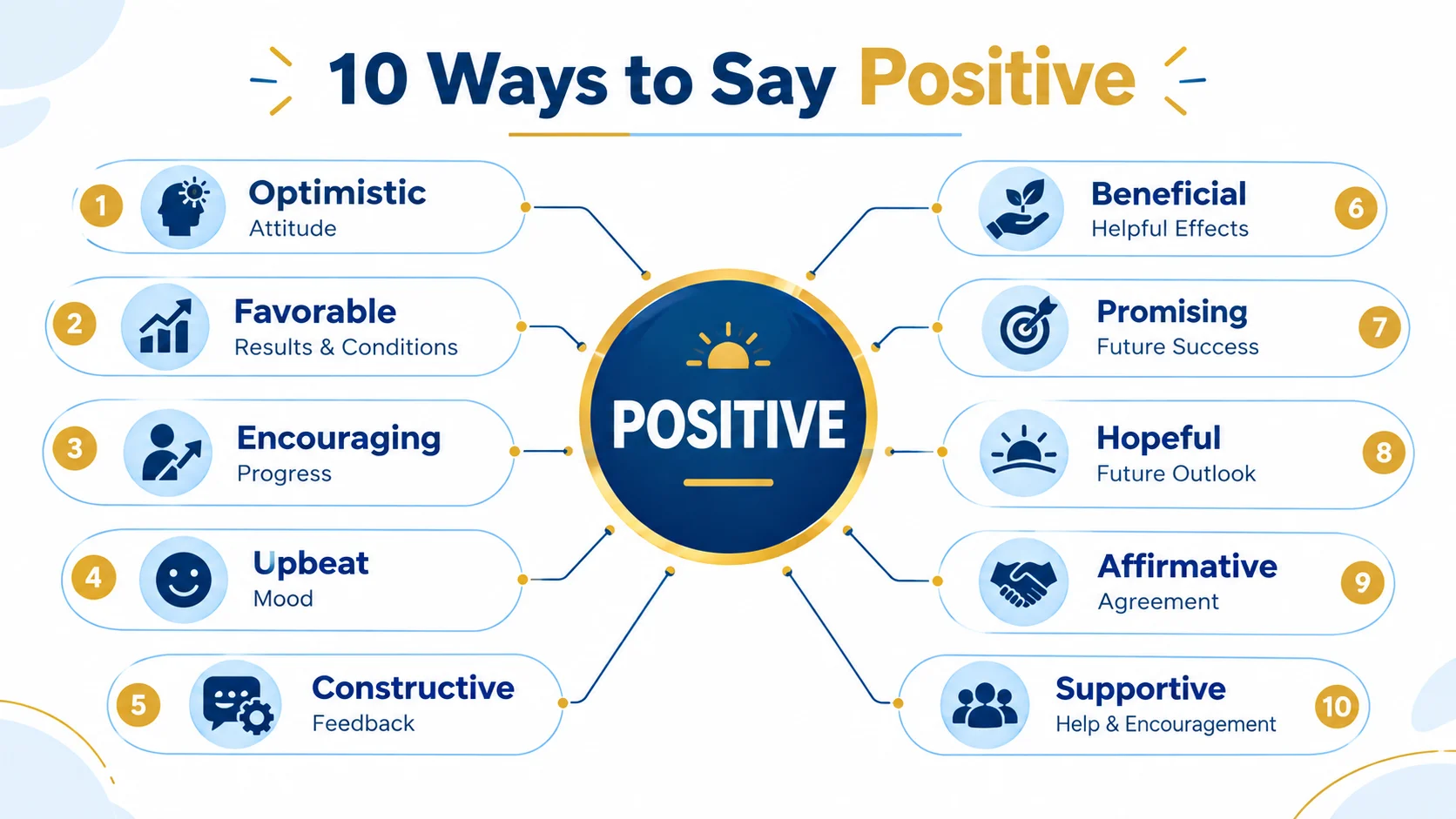
10 Best Other Ways to Say “Positive”
1. Optimistic
Meaning
Optimistic describes someone who expects good things to happen or focuses on favorable possibilities. It usually refers to a person’s attitude, outlook, or expectations.
Best For
- Professional
- Friendly
- Warm
Example 1
She remains optimistic about finding a solution to the problem.
Example 2
His optimistic attitude helped the team stay focused during the difficult project.
Quick Tip
Use optimistic when “positive” refers to someone’s outlook or expectations.
2. Favorable
Meaning
Favorable means beneficial, advantageous, or likely to produce a good result. It is especially useful when discussing conditions, opinions, decisions, or outcomes.
Best For
- Professional
- Formal
Example 1
The company received favorable feedback from its customers.
Example 2
The current market conditions are favorable for small businesses.
Quick Tip
Choose favorable when you are describing a situation, result, condition, or judgment rather than a person’s mood.
3. Encouraging
Meaning
Encouraging describes something that gives people confidence or suggests that a situation may improve. It is often used for signs, results, feedback, and progress.
Best For
- Professional
- Friendly
- Warm
Example 1
The early test results are encouraging.
Example 2
Her manager gave her encouraging feedback after the presentation.
Quick Tip
Use encouraging when something provides hope or shows signs of progress.
4. Upbeat
Meaning
Upbeat means cheerful, confident, and positive in mood or attitude. It is more conversational than formal, so it works particularly well in everyday English.
Best For
- Casual
- Friendly
- Warm
Example 1
Despite the setback, he stayed upbeat and continued working.
Example 2
The speaker kept the audience engaged with her upbeat personality.
Quick Tip
Use upbeat for a cheerful mood, attitude, tone, or personality.
5. Constructive
Meaning
Constructive means useful and intended to help improve something. It is commonly used when discussing feedback, criticism, suggestions, or conversations.
Best For
- Professional
- Formal
- Polite
Example 1
The supervisor provided constructive feedback on my report.
Example 2
We had a constructive conversation about how to improve the process.
Quick Tip
Use constructive instead of “positive” when you mean helpful rather than simply good.
6. Beneficial
Meaning
Beneficial means producing a useful or helpful effect. It is a strong choice when you want to explain that something provides an advantage or improves a situation.
Best For
- Professional
- Formal
Example 1
Regular exercise can have beneficial effects on your overall well-being.
Example 2
The training program was beneficial for new employees.
Quick Tip
Use beneficial when “positive” means that something is helpful or advantageous.
7. Promising
Meaning
Promising describes something that shows signs of future success or improvement. It suggests that the current situation looks good, even though the final result is not certain.
Best For
- Professional
- Formal
- Friendly
Example 1
The new employee has shown promising results during the first month.
Example 2
The project is showing promising signs of long-term growth.
Quick Tip
Use promising when you see evidence that something may succeed in the future.
8. Hopeful
Meaning
Hopeful expresses confidence or desire that something good will happen. It often focuses on a person’s feelings about a future event or outcome.
Best For
- Casual
- Friendly
- Warm
Example 1
We are hopeful that the negotiations will lead to an agreement.
Example 2
She felt hopeful after receiving the latest update.
Quick Tip
Use hopeful when the positive feeling is connected to a desired future outcome.
9. Affirmative
Meaning
Affirmative means expressing agreement, confirmation, or approval. It is more formal than everyday alternatives and is often used in professional or official communication.
Best For
- Formal
- Professional
- Polite
Example 1
The committee gave an affirmative response to the proposal.
Example 2
He provided an affirmative answer when asked about the new policy.
Quick Tip
Use affirmative when “positive” means “yes,” “agreeing,” or “confirming.”
10. Supportive
Meaning
Supportive describes someone or something that provides encouragement, help, or approval. It is especially useful when talking about relationships, teams, workplaces, and personal interactions.
Best For
- Friendly
- Warm
- Professional
Example 1
Her coworkers were supportive when she took on the new responsibility.
Example 2
A supportive manager can help employees feel confident about their work.
Quick Tip
Use supportive when the positive quality involves helping, encouraging, or standing behind someone.
Comparison Table
| Alternative | Best Used In | Tone |
| Optimistic | Attitudes and outlooks | Warm |
| Favorable | Results and conditions | Formal |
| Encouraging | Progress and feedback | Positive |
| Upbeat | Mood and personality | Casual |
| Constructive | Feedback and suggestions | Professional |
| Beneficial | Effects and advantages | Formal |
| Promising | Future results | Professional |
| Hopeful | Future expectations | Warm |
| Affirmative | Agreement and confirmation | Formal |
| Supportive | Relationships and teamwork | Friendly |
Common Mistakes
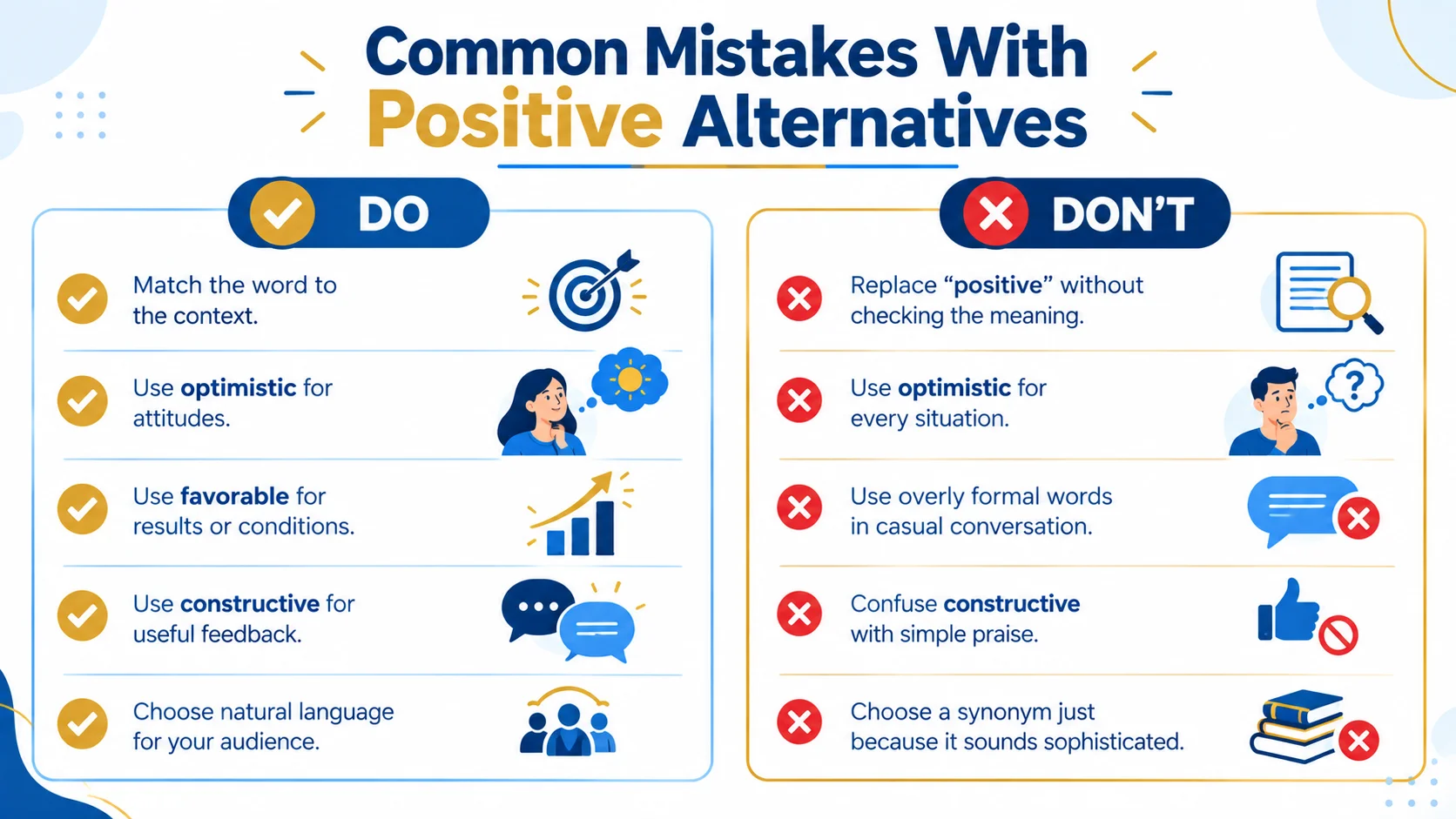
1. Using “positive” when a more precise word is available
Not every good situation is simply “positive.” If you mean helpful, beneficial may be clearer; if you mean hopeful about the future, optimistic may be more accurate.
2. Using casual language in professional writing
Words such as upbeat can sound natural in conversation but may not fit every formal document. For professional communication, alternatives such as favorable, constructive, or beneficial may be more appropriate.
3. Confusing “optimistic” with “favorable”
These words are related but do not mean exactly the same thing. Optimistic usually describes a person’s outlook, while favorable generally describes conditions, results, opinions, or circumstances.
4. Choosing a word without considering context
The sentence determines the best alternative. For example, supportive works well for a helpful colleague, while affirmative is more appropriate when describing an answer that means “yes.”
5. Making positive language sound insincere
Using overly strong words can make a message feel unnatural. Choose a word that accurately reflects the situation instead of replacing “positive” simply to sound more sophisticated.
Frequently Asked Questions
What is another way to say positive?
Some common alternatives to positive include optimistic, favorable, encouraging, upbeat, constructive, beneficial, promising, hopeful, affirmative, and supportive. The best choice depends on context. For example, “optimistic” works well for an attitude, while “favorable” is better for conditions or results.
What is a professional way to say positive?
In professional writing, useful alternatives include favorable, constructive, beneficial, encouraging, and promising. The correct word depends on the meaning. For example, “constructive feedback” suggests helpful suggestions for improvement, while “favorable results” indicates that the results are good or advantageous.
What is another word for positive attitude?
Optimistic is one of the most natural alternatives for “positive attitude.” Other possibilities include upbeat, hopeful, confident, and encouraging, depending on the sentence. “Optimistic” is especially useful when someone expects a good outcome or focuses on possibilities rather than problems.
What is another way to say positive feedback?
Depending on the meaning, you can say encouraging feedback, favorable feedback, supportive feedback, or constructive feedback. “Constructive feedback” is particularly useful when the feedback includes practical suggestions that help someone improve, rather than simply praising their performance.
What is a formal synonym for positive?
Formal alternatives include favorable, beneficial, affirmative, constructive, and advantageous. The choice depends on context. “Favorable” can describe an outcome or condition, “beneficial” describes something helpful, and “affirmative” often refers to agreement or confirmation.
What is another way to say positive results?
You can use phrases such as favorable results, encouraging results, promising results, beneficial outcomes, or successful outcomes. “Favorable results” is a flexible professional option, while “promising results” suggests that the results indicate potential for continued success.
What is another word for positive in a good sense?
Words such as favorable, beneficial, helpful, advantageous, encouraging, and desirable can replace “positive” when you mean something good or useful. The best choice depends on the noun. For example, you might describe an effect as “beneficial” and a decision as “favorable.”
Can I use “positive” and “optimistic” interchangeably?
Not always. Positive has several meanings and can describe results, opinions, attitudes, effects, or responses. Optimistic specifically focuses on a hopeful outlook or expectation about the future. Therefore, “positive results” and “optimistic results” do not normally mean the same thing.
Conclusion
Finding another way to say positive can make your writing more precise and natural. The best alternative depends on exactly what you want to express.
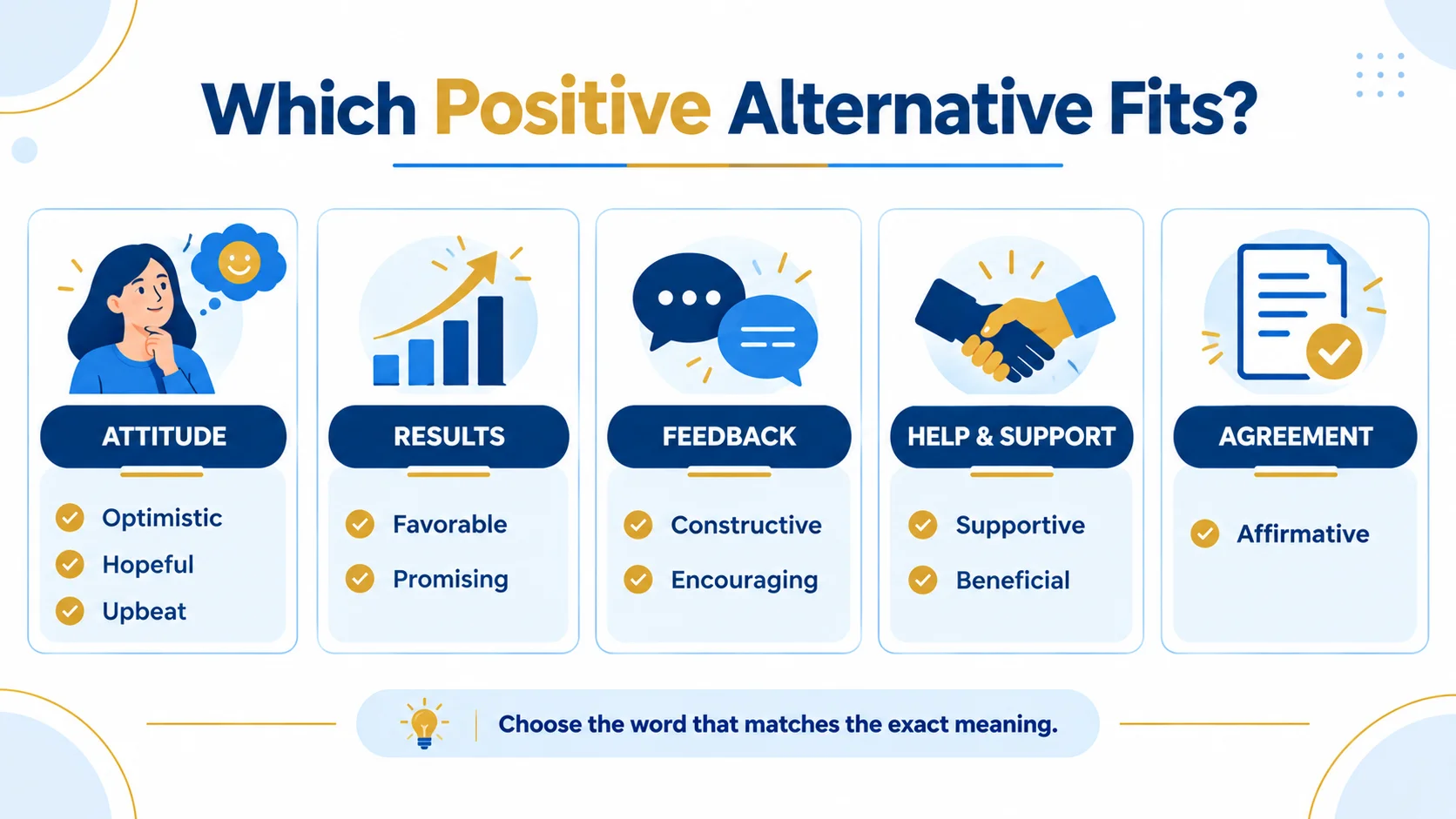
Use optimistic for a hopeful attitude, favorable for good conditions or results, and encouraging for signs of progress. Choose constructive for useful feedback, beneficial for helpful effects, and promising when something suggests future success. For everyday conversations, upbeat, hopeful, and supportive can sound warm and natural.
You do not need to replace “positive” every time you use it. Instead, consider the meaning, audience, and tone first. A specific word usually communicates your idea more clearly than a general synonym.

English Usage Specialist
Elliot Harrow specializes in English usage, grammar, phrasing, and word choice. His editorial work focuses on explaining subtle differences between similar words and helping readers choose language that is precise, natural, and appropriate for the context.