
The phrase “rest in peace” expresses sympathy and the hope that someone who has died will find peace.
It is commonly shortened to RIP and appears in funeral messages, sympathy cards, obituaries, memorial services, and social media tributes.
Key Takeaways
- Choose a phrase that reflects your feelings and relationship with the deceased.
- “Forever in our hearts” works well for personal tributes and memorial posts.
- “May they rest peacefully” offers a gentle, respectful alternative.
- Religious phrases are best when they match the beliefs of the deceased or their family.
- Keep condolence messages sincere, brief, and thoughtful.
What Does “What Is Another Way to Say Rest in Peace” Mean?
People use this expression to honor the deceased, acknowledge a loss, and show respect for the grieving family. However, some people prefer different words that sound more personal, comforting, religious, or appropriate for a particular situation.
Choosing another way to say “rest in peace” lets you express your feelings in a more meaningful way.
Why Use Other Ways to Say “Rest in Peace”?

Although “rest in peace” is widely understood, using a different expression can make your message feel more personal and sincere.
Consider using an alternative to:
- Avoid repeating the same phrase in memorial posts.
- Express sympathy in a more heartfelt way.
- Respect different religious and cultural beliefs.
- Write thoughtful funeral messages and sympathy cards.
- Honor a loved one with words that reflect their life and legacy.
The best phrase depends on the occasion, your relationship with the deceased, and the message you want to share.
10 Best Other Ways to Say “Rest in Peace”
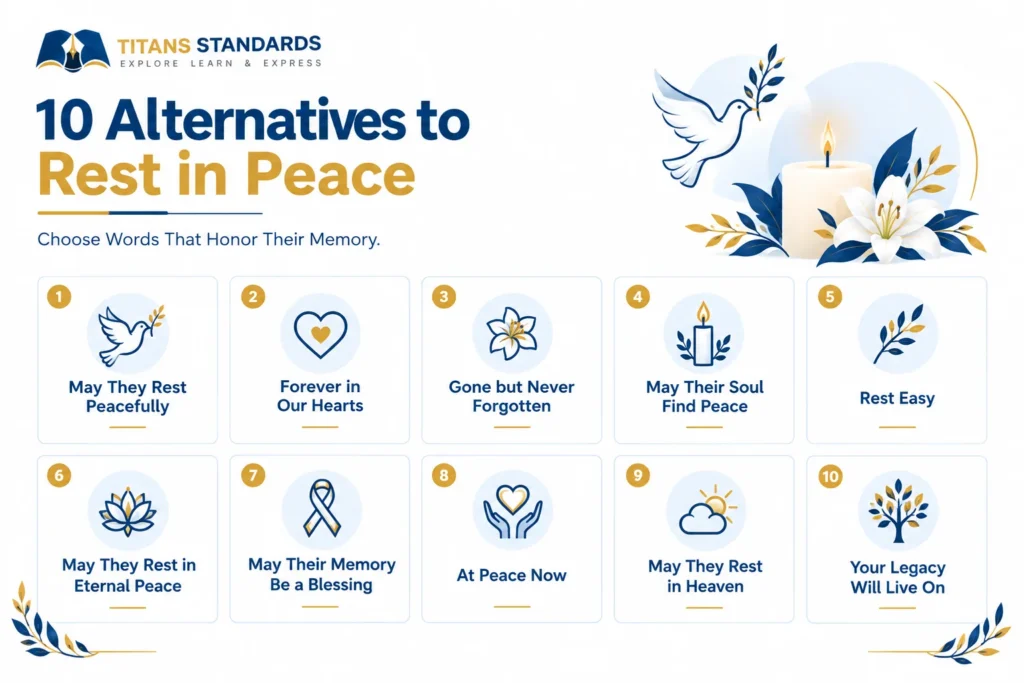
1. May They Rest Peacefully
Meaning
This phrase expresses the hope that someone who has died will be at peace. It is a gentle alternative to “rest in peace” and keeps the same respectful meaning without sounding overly formal.
Best For: Formal, Warm, Polite
Example 1: May she rest peacefully after a life filled with kindness and love.
Example 2: We will always remember his generosity. May he rest peacefully.
Quick Tip: Use this phrase in funeral messages, sympathy cards, and respectful memorial tributes.
2. Forever in Our Hearts
Meaning
This expression honors someone whose memory will continue to live on in the hearts of family and friends. It focuses on love, remembrance, and the lasting impact the person made on others.
Best For: Warm, Friendly, Casual
Example 1: Grandma, you will be forever in our hearts and never forgotten.
Example 2: Though we cannot see him anymore, he will remain forever in our hearts.
Quick Tip: This phrase works especially well for social media tributes, memorial photos, and messages about close family members.
3. Gone but Never Forgotten
Meaning
This phrase recognizes that someone has passed away while emphasizing that their memory will remain alive. It offers comfort by focusing on the person’s lasting influence, cherished moments, and meaningful relationships.
Best For: Warm, Casual, Friendly
Example 1: Our beloved coach is gone but never forgotten by the players he inspired.
Example 2: Gone but never forgotten, Dad. Your lessons still guide us every day.
Quick Tip: Choose this expression when you want to celebrate someone’s legacy rather than focus only on their passing.
4. May Their Soul Find Peace
Meaning
This expression conveys a heartfelt wish for peace after death. It has a spiritual tone and may suit people who believe the soul continues beyond physical life.
Best For: Formal, Warm, Polite
Example 1: We are deeply saddened by your loss. May your mother’s soul find peace.
Example 2: May his soul find peace, and may his family find comfort during this difficult time.
Quick Tip: Consider the family’s spiritual beliefs before using language about the soul.
5. Rest Easy
Meaning
“Rest easy” is a short, gentle expression that communicates peace and farewell. It sounds more conversational than “rest in peace,” making it suitable for personal messages and informal tributes.
Best For: Casual, Friendly, Warm
Example 1: Rest easy, Uncle Mike. Thank you for all the wonderful memories.
Example 2: You fought bravely through so much. Rest easy, my friend.
Quick Tip: Use this phrase for a personal tribute when a simple, sincere message feels more natural than formal wording.
6. May They Rest in Eternal Peace
Meaning
This phrase expresses a wish for lasting peace after death. The word “eternal” adds a solemn, timeless quality, making it suitable for formal memorials and traditional funeral messages.
Best For: Formal, Professional, Polite
Example 1: May she rest in eternal peace, remembered for her compassion and courage.
Example 2: We honor his years of service and pray that he rests in eternal peace.
Quick Tip: This expression is more formal than “rest easy,” so use it when the occasion calls for a dignified tone.
7. May Their Memory Be a Blessing
Meaning
This expression honors the positive influence of someone who has died and wishes that their memory brings comfort and goodness to others. It is associated with Jewish mourning traditions but can also be used in appropriate contexts beyond them.
Best For: Formal, Warm, Polite
Example 1: She devoted her life to helping others. May her memory be a blessing to everyone she touched.
Example 2: We are grateful for the kindness he shared with our community. May his memory be a blessing.
Quick Tip: Use this phrase thoughtfully, especially when you know it aligns with the family’s traditions or beliefs.
8. At Peace Now
Meaning
“At peace now” suggests that a person is no longer experiencing pain or hardship. People often use it when someone has faced a long illness or a difficult period, although the wording may not fit every loss.
Best For: Casual, Warm, Polite
Example 1: After a long and difficult illness, we hope she is at peace now.
Example 2: He endured so much with courage. May his loved ones find comfort knowing he is at peace now.
Quick Tip: Use this phrase with care. Avoid assuming that the death was peaceful or that grieving family members share your interpretation.
9. May They Rest in Heaven
Meaning
This phrase expresses the hope that someone who has died is resting peacefully in heaven. It reflects a belief in an afterlife and is most appropriate when that belief fits the deceased or their family’s faith.
Best For: Warm, Formal, Polite
Example 1: May your father rest in heaven, surrounded by everlasting peace.
Example 2: She brought so much joy into our lives. May she rest in heaven.
Quick Tip: If you are unsure about someone’s religious beliefs, choose a nonreligious phrase such as “forever in our hearts.”
10. Your Legacy Will Live On
Meaning
This expression focuses on the lasting influence someone leaves behind. It honors their achievements, values, kindness, or contributions instead of directly referring to death.
Best For: Professional, Formal, Warm
Example 1: Your dedication to education changed countless lives, and your legacy will live on.
Example 2: His generosity shaped our community. His legacy will live on through everyone he inspired.
Quick Tip: This phrase is especially suitable for public tributes, workplace announcements, community memorials, and obituaries.
Comparison Table
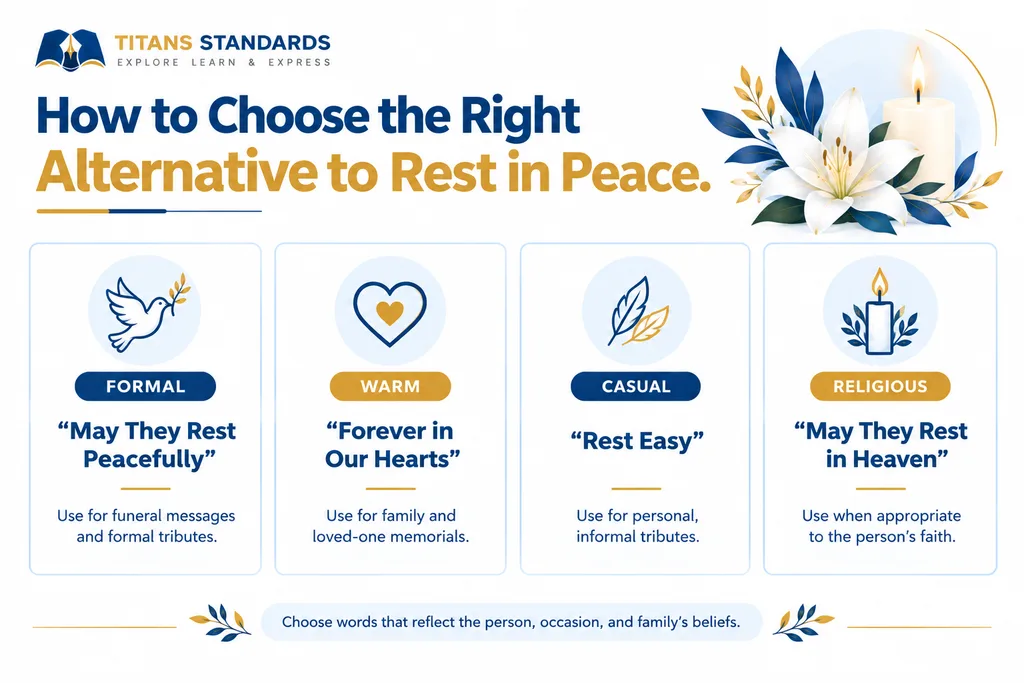
| Alternative | Best Used In | Tone |
| May They Rest Peacefully | Sympathy cards, funerals | Gentle, respectful |
| Forever in Our Hearts | Family tributes, memorial posts | Loving, emotional |
| Gone but Never Forgotten | Social media, personal tributes | Heartfelt, reflective |
| May Their Soul Find Peace | Sympathy messages, spiritual tributes | Solemn, spiritual |
| Rest Easy | Personal messages, informal tributes | Casual, comforting |
| May They Rest in Eternal Peace | Formal memorials, funeral messages | Dignified, solemn |
| May Their Memory Be a Blessing | Memorials, traditional mourning messages | Thoughtful, meaningful |
| At Peace Now | Personal condolences | Gentle, reassuring |
| May They Rest in Heaven | Faith-based tributes | Religious, comforting |
| Your Legacy Will Live On | Obituaries, workplace tributes | Respectful, inspiring |
Common Mistakes
- Using casual phrases in formal situations. “Rest easy” may feel too informal for an official condolence letter. Choose “May they rest peacefully” for a more respectful tone.
- Choosing overly religious language. Expressions about heaven or the soul may not reflect everyone’s beliefs. Consider a neutral alternative when you are unsure.
- Repeating the same phrase too often. Using “rest in peace” in every tribute can make messages feel less personal. Select words that reflect the individual’s life and your relationship with them.
- Ignoring the context. A message to a grieving friend may need more warmth than a public workplace announcement. Match your wording to the audience and occasion.
- Sounding insincere. Complicated or dramatic language can distract from your feelings. A simple, honest sentence often offers more comfort than an elaborate tribute.
Frequently Asked Questions
1. What is the best alternative to “rest in peace”?
“May they rest peacefully” is one of the closest alternatives because it carries the same respectful meaning. If you want something more personal, “forever in our hearts” highlights lasting love, while “gone but never forgotten” focuses on remembrance. Choose the phrase that best fits your relationship with the deceased.
2. How do you say “rest in peace” in a heartfelt way?
You can write, “You will always hold a special place in our hearts,” or “Your kindness will never be forgotten.” These phrases express love and remembrance rather than simply acknowledging a death. Adding one genuine memory or mentioning a quality you admired can make your message even more meaningful.
3. What is a short way to say “rest in peace”?
“Rest easy,” “RIP,” and “forever remembered” are short alternatives. “Rest easy” sounds conversational, while “forever remembered” emphasizes a lasting legacy. For a social media caption or memorial photo, a brief phrase is often enough, especially when the image or surrounding message already communicates your feelings.
4. What can I write instead of RIP on social media?
You can write “Gone but never forgotten,” “Forever in our hearts,” or “Your memory will live on.” These expressions work well with memorial photographs and tribute posts. If you knew the person, consider adding a short personal memory to make the post more sincere and meaningful.
5. What is a respectful alternative to “rest in peace” in a sympathy card?
“May you find comfort in the beautiful memories you shared” is a thoughtful choice for a sympathy card. You can also write, “Thinking of you and your family during this difficult time.” These messages acknowledge the family’s grief and offer support without making assumptions about religious beliefs.
6. Is “rest easy” the same as “rest in peace”?
Both phrases express a wish for peace after death, but their tone differs slightly. “Rest in peace” is traditional and widely used in formal memorials. “Rest easy” feels more conversational and personal. Either can work, depending on your relationship with the deceased and the kind of tribute you want to write.
7. What is a religious way to say “rest in peace”?
“May they rest in heaven” and “May their soul find peace” are religious or spiritual alternatives. Another option is “May their memory be a blessing,” which is associated with Jewish mourning traditions. Choose wording that respects the deceased’s faith and the family’s beliefs rather than assuming everyone shares the same views.
8. Can I say “rest in peace” to someone who is not religious?
Yes. Although “rest in peace” has historical religious associations, many people use it as a general expression of respect and remembrance. If you prefer language that avoids spiritual implications, try “forever in our hearts,” “gone but never forgotten,” or “your legacy will live on.”
Conclusion
Choosing another way to say “rest in peace” can help you express sympathy, love, and remembrance in a more personal way. The best alternative depends on the situation and the feelings you want to communicate.
For a traditional memorial, “may they rest peacefully” offers a respectful choice. For a loved one, “forever in our hearts” expresses lasting affection, while “gone but never forgotten” honors a person’s memory. If the occasion is religious, “may they rest in heaven” may be appropriate. For professional tributes, “your legacy will live on” recognizes someone’s lasting contributions.
Above all, consider the family’s beliefs, your relationship with the deceased, and the tone of the occasion. You do not need elaborate words to offer comfort. A short, sincere message that comes from the heart can be more meaningful than any perfect phrase.
Helpful takeaway: Choose words that honor the person who has passed away and offer genuine comfort to those who remember them.

Communication Editor
Nadia Ellery is a communication editor focused on everyday English, conversational expressions, common phrases, and natural ways to communicate. She helps turn complicated language questions into practical guidance readers can use in everyday situations.