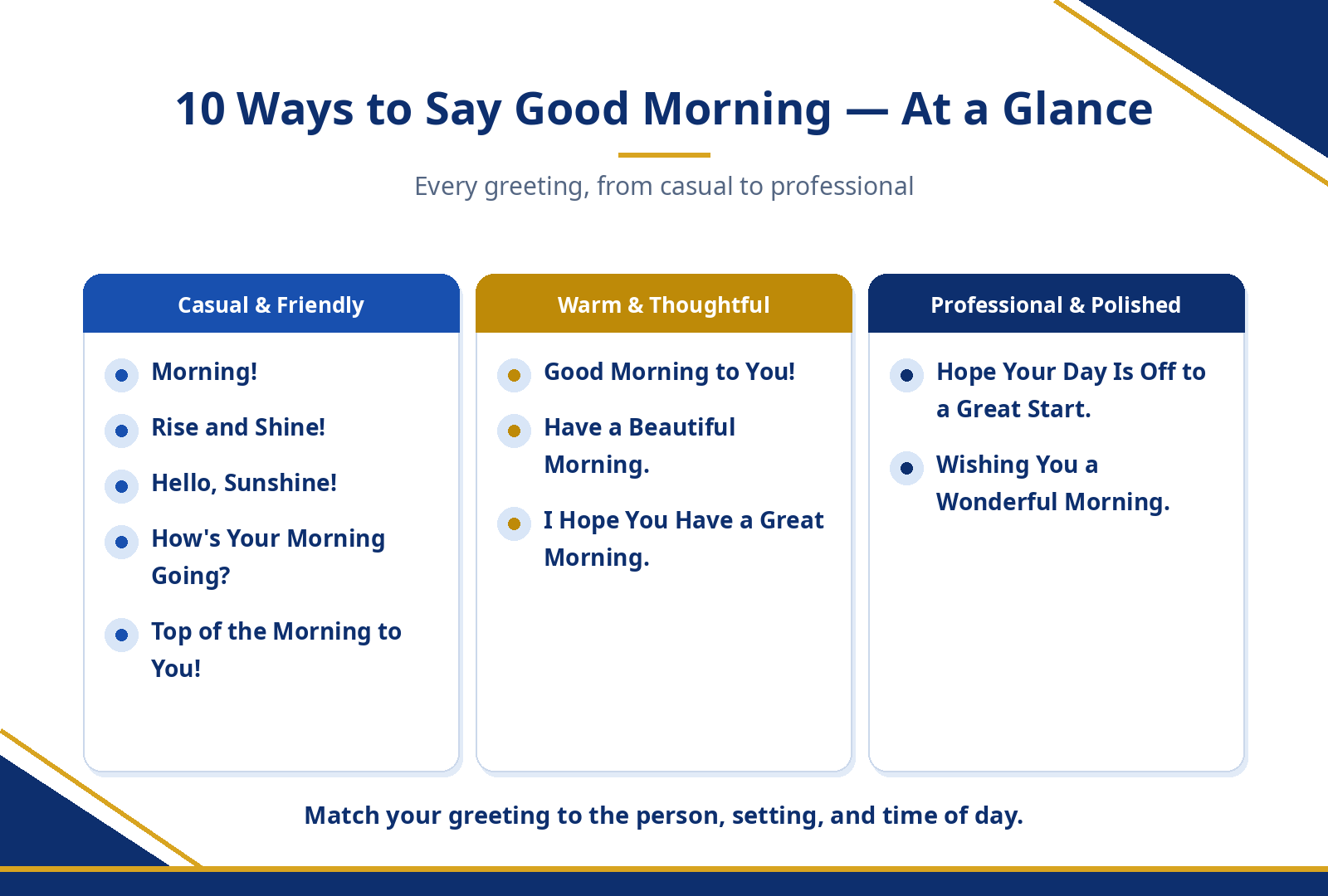
Another way to say good morning is “Morning!”, “Rise and shine,” “Hello, sunshine,” or “I hope you have a great morning.”
For professional situations, try “Good morning, everyone” or “I hope your day is off to a great start.” The best phrase depends on your relationship with the person and the tone you want to express.
Key Takeaways
- Use “Morning!” for a quick, casual greeting.
- Choose “Rise and shine” to encourage someone to wake up.
- Try “Hello, sunshine” for a warm, affectionate greeting.
- Use polite, complete greetings in professional emails and meetings.
- Match your greeting to the person, setting, and time of day.
What Does “What’s Another Way to Say Good Morning” Mean?
The phrase “what’s another way to say good morning” refers to looking for different expressions to greet someone at the start of the day. These alternatives can sound friendly, cheerful, affectionate, humorous, or professional.
People use morning greetings when they meet coworkers, message friends, talk to family members, or start a conversation with someone new. The right expression helps set the tone for the interaction.
For example, “Morning!” works well with a coworker you know, while “I hope your morning is going well” may suit a professional email. Both communicate a positive greeting, but they create slightly different impressions.
You can also check the Cambridge Dictionary for the standard meaning and usage of good morning.
Why Use Other Ways to Say Good Morning?
Although “good morning” is polite and widely understood, using different greetings can make everyday conversations feel more natural and personal.
Here are a few reasons to try another expression:
- Avoid repetition: Keep your daily messages from sounding identical.
- Sound more natural: Choose language that fits your usual speaking style.
- Show warmth: Make friends, family members, or partners feel appreciated.
- Communicate professionally: Start emails and meetings with an appropriate greeting.
- Set the mood: Use a cheerful expression to encourage someone at the beginning of the day.
The goal isn’t to replace “good morning” every time. It’s to choose an expression that fits the situation.
10 Best Other Ways to Say “What’s Another Way to Say Good Morning”
1. Morning!
Meaning: “Morning!” is a shortened, casual version of “good morning.” It’s common in American English and works well when greeting people you see regularly.
Best For: Casual, Friendly, Polite
Example 1: “Morning, Jake! Did you get a chance to look at the schedule?”
Example 2: “Morning, everyone. Coffee is ready in the break room.”
Quick Tip: Use this phrase with friends and familiar coworkers. In formal introductions, the complete “Good morning” may sound more appropriate.
2. Rise and Shine!
Meaning: “Rise and shine” is a cheerful expression that encourages someone to wake up and start the day. It often sounds playful, especially when used with children, family members, or close friends.
Best For: Casual, Friendly, Warm
Example 1: “Rise and shine, kids! Breakfast is on the table.”
Example 2: “Come on, Maya, rise and shine. We don’t want to miss the early train.”
Quick Tip: Use this phrase when someone is waking up or needs encouragement. It can sound pushy if the person isn’t in the mood for enthusiasm.
3. Hello, Sunshine!
Meaning: “Hello, sunshine” is a warm, affectionate greeting that makes someone feel welcome. It can express fondness, happiness, or playful friendliness, depending on your relationship.
Best For: Friendly, Warm, Casual
Example 1: “Hello, sunshine! I saved you a seat by the window.”
Example 2: “Hey, sunshine, ready for our Saturday morning walk?”
Quick Tip: This expression works best with people you know well. It may sound overly familiar when used with a client, supervisor, or new acquaintance.
4. I Hope You Have a Great Morning.
Meaning: This phrase expresses a positive wish for someone’s morning. It’s polite and considerate without being overly emotional, making it useful for personal messages and workplace communication.
Best For: Professional, Friendly, Polite, Warm
Example 1: “Thanks for sending the report. I hope you have a great morning!”
Example 2: “I hope you have a great morning and enjoy your first day at the new job.”
Quick Tip: Use this expression when you want your greeting to feel thoughtful. It’s especially suitable for texts and emails.
5. Hope Your Day Is Off to a Great Start.
Meaning: This greeting expresses the hope that someone’s day is beginning well. It sounds natural in American professional communication and can lead smoothly into the main point of a message.
Best For: Professional, Polite, Friendly
Example 1: “Hi, Daniel. Hope your day is off to a great start. Could you review the attached proposal?”
Example 2: “Hope your day is off to a great start! The team meeting has moved to 10 a.m.”
Quick Tip: This is a useful email opener when you want to sound approachable without being too casual.
6. Good Morning to You!
Meaning: “Good morning to you” is a slightly more expressive version of the standard greeting. It can sound cheerful, courteous, or playful depending on your tone.
Best For: Friendly, Polite, Warm
Example 1: “Good morning to you! It’s wonderful to see you back at the office.”
Example 2: “Good morning to you, Mrs. Carter. How was your weekend?”
Quick Tip: Use it when you want to add a little warmth to a familiar greeting. In everyday conversation, the shorter “Good morning” is often enough.
7. How’s Your Morning Going?
Meaning: This question greets someone while inviting them to share how their day is starting. It’s more conversational than a simple greeting because it gives the other person an easy way to respond.
Best For: Casual, Friendly, Polite
Example 1: “Hey, Chris, how’s your morning going? Have things settled down at work?”
Example 2: “Good morning, Olivia! How’s your morning going so far?”
Quick Tip: Use this expression when you have time to listen to the answer. It works well with coworkers, friends, and people you see regularly.
8. Wishing You a Wonderful Morning.
Meaning: This phrase conveys a thoughtful wish for someone to enjoy the beginning of the day. It sounds more polished than a casual greeting and works particularly well in written messages.
Best For: Formal, Professional, Warm, Polite
Example 1: “Wishing you a wonderful morning and a productive day ahead.”
Example 2: “Wishing you a wonderful morning filled with good news and happy moments.”
Quick Tip: Save this phrase for greeting cards, thoughtful texts, and messages where a slightly polished tone feels natural.
9. Top of the Morning to You!
Meaning: This traditional greeting expresses cheerful goodwill at the start of the day. It is often associated with Irish expressions, although many people use it playfully in other English-speaking settings.
Best For: Casual, Friendly, Warm
Example 1: “Top of the morning to you, folks! The farmers market opens in ten minutes.”
Example 2: “Well, top of the morning to you! You’re certainly up early today.”
Quick Tip: This phrase can sound old-fashioned or theatrical in everyday American conversation. Use it playfully rather than as your default professional greeting.
10. Have a Beautiful Morning.
Meaning: “Have a beautiful morning” is a positive, warm expression that wishes someone a pleasant start to the day. It feels more personal than a basic greeting and can communicate kindness without requiring an emotional message.
Best For: Friendly, Warm, Polite
Example 1: “Thanks for checking in on me. Have a beautiful morning!”
Example 2: “Have a beautiful morning, everyone. I’ll see you at the community garden later.”
Quick Tip: This phrase works well in friendly texts and social messages. For a formal business email, a simpler greeting may be more suitable.
Comparison Table
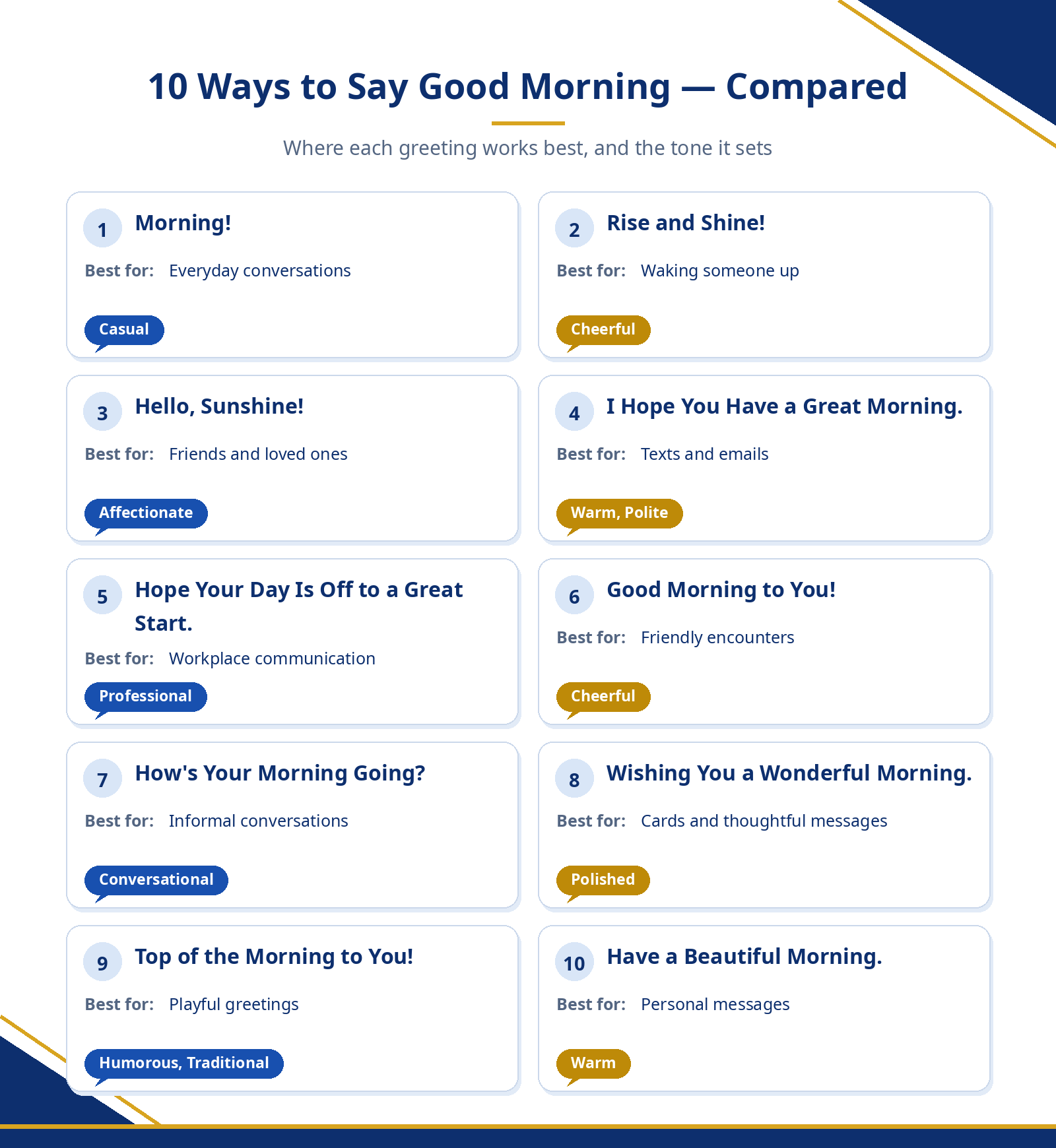
| Alternative | Best Used In | Tone |
| Morning! | Everyday conversations | Casual |
| Rise and shine! | Waking someone up | Cheerful |
| Hello, sunshine! | Friends and loved ones | Affectionate |
| I hope you have a great morning. | Texts and emails | Warm, polite |
| Hope your day is off to a great start. | Workplace communication | Professional |
| Good morning to you! | Friendly encounters | Cheerful |
| How’s your morning going? | Informal conversations | Conversational |
| Wishing you a wonderful morning. | Cards and thoughtful messages | Polished |
| Top of the morning to you! | Playful greetings | Humorous, traditional |
| Have a beautiful morning. | Personal messages | Warm |
Common Mistakes When Choosing Another Way to Say Good Morning
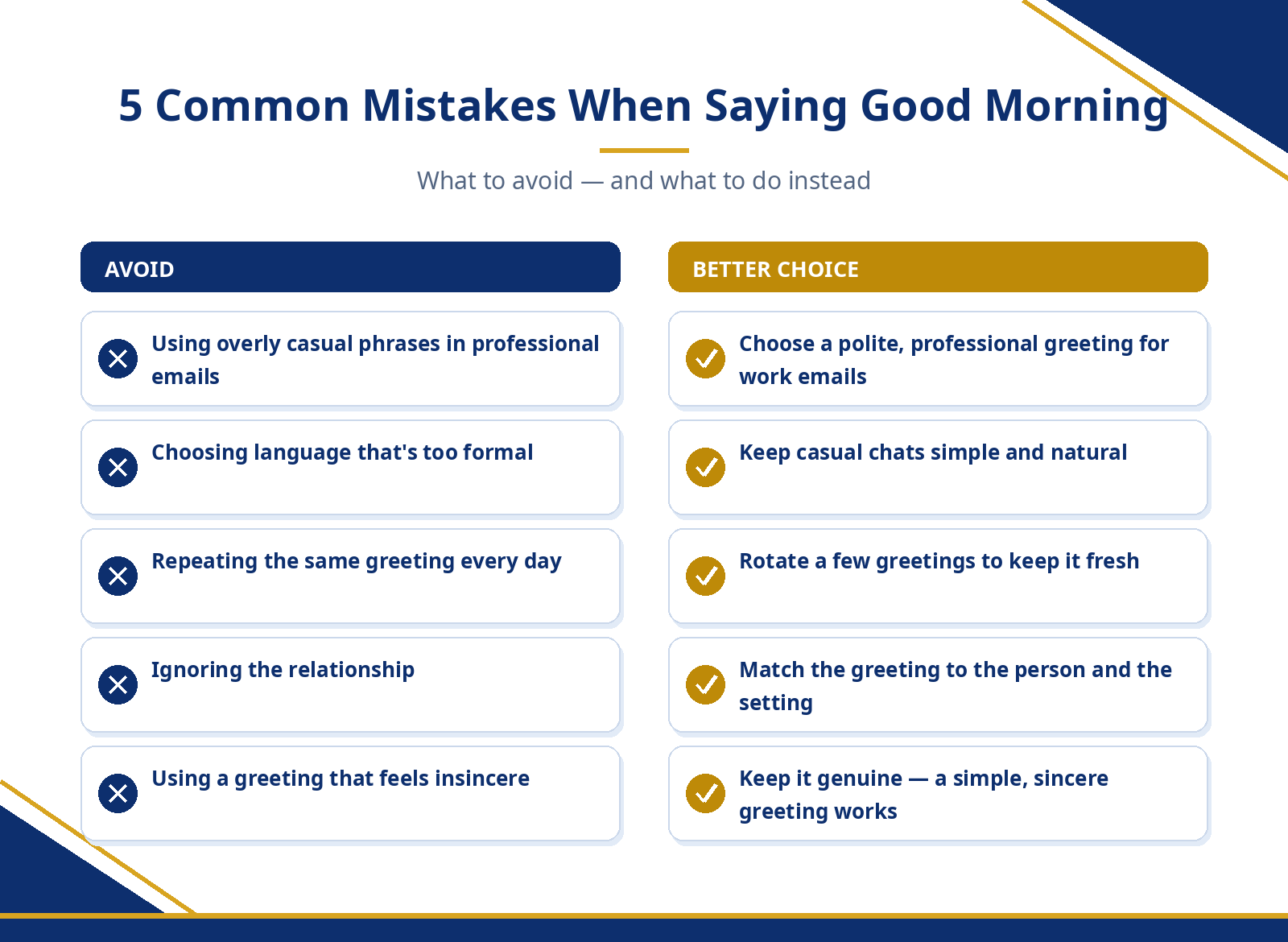
Even a simple greeting can sound awkward if it doesn’t fit the situation. Avoid these five common mistakes.
1. Using overly casual phrases in professional emails. Expressions such as “Rise and shine!” may feel too familiar when writing to a new client. Choose “Good morning” or “I hope your day is off to a great start” instead.
2. Choosing language that’s too formal. A phrase like “Wishing you a wonderful morning” may sound stiff in a quick text to a close friend. Simple greetings often feel more natural in casual conversations.
3. Repeating the same greeting every day. You don’t need a new expression every time, but occasionally changing your wording can make messages feel more personal.
4. Ignoring the relationship. “Hello, sunshine” may be welcome between close friends but uncomfortable with a coworker you barely know. Consider how well you know the person before choosing an affectionate greeting.
5. Using a greeting that feels insincere. A cheerful phrase won’t feel genuine if it doesn’t match your tone. Choose words you would naturally say, and keep your greeting simple when that’s more comfortable.
Frequently Asked Questions
1. What’s another way to say good morning?
You can say “Morning!”, “Rise and shine,” “Hello, sunshine,” or “Have a beautiful morning.” For professional communication, try “I hope your day is off to a great start.” Choose an expression that matches your relationship with the person and the setting in which you’re speaking.
2. How do you say good morning in a unique way?
To make your greeting more distinctive, try “Hello, sunshine,” “Wishing you a wonderful morning,” or “Hope today brings you something to smile about.” These phrases add personality to a regular greeting. For the best results, choose words that suit the person rather than using an elaborate expression just to sound different.
3. What’s a professional way to say good morning?
“Good morning, everyone,” “Good morning, [Name],” and “I hope your day is off to a great start” work well in professional settings. Use the standard greeting for meetings and formal introductions. In emails, a short, courteous opening followed by your main point usually sounds more natural than an overly enthusiastic greeting.
4. How can I say good morning to a friend?
You can greet a friend with “Morning!”, “Hey, how’s your morning going?” or “Hello, sunshine!” If you share a playful relationship, “Rise and shine!” may also work. The best option depends on your friend’s personality and your usual communication style. A familiar, relaxed greeting often feels more genuine than a formal one.
5. What’s a sweet way to say good morning?
“Hello, sunshine,” “Have a beautiful morning,” and “I hope your morning brings you happiness” are sweet ways to greet someone. They express warmth without requiring a long message. Use affectionate expressions with people who are comfortable with that tone, such as close friends, family members, or a romantic partner.
6. How do you say good morning in a text message?
For a casual text, try “Morning! How did you sleep?” or “Hey! Hope you have a great day.” For a thoughtful message, write “Wishing you a wonderful morning.” Keep the wording natural and consider what the recipient would appreciate. You can also add a personal detail to make the message feel less generic.
7. Is “Morning” the same as “Good morning”?
Yes. “Morning” is a common shortened form of “good morning” in everyday American English. Both phrases greet someone at the beginning of the day. “Morning” usually sounds more casual, while “Good morning” works in both professional and personal settings. Your tone and the situation help determine which expression fits best.
8. What’s another way to say good morning without using the word “morning”?
You can say “Rise and shine,” “Hello, sunshine,” or “Hope your day is off to a great start.” These expressions greet someone or communicate a positive wish without using the word “morning.” If you need a professional alternative, “I hope your day is off to a great start” is a particularly useful choice.
Conclusion
Finding another way to say good morning is an easy way to make your conversations feel more natural, friendly, and thoughtful. The best expression depends on who you’re greeting and the impression you want to create.
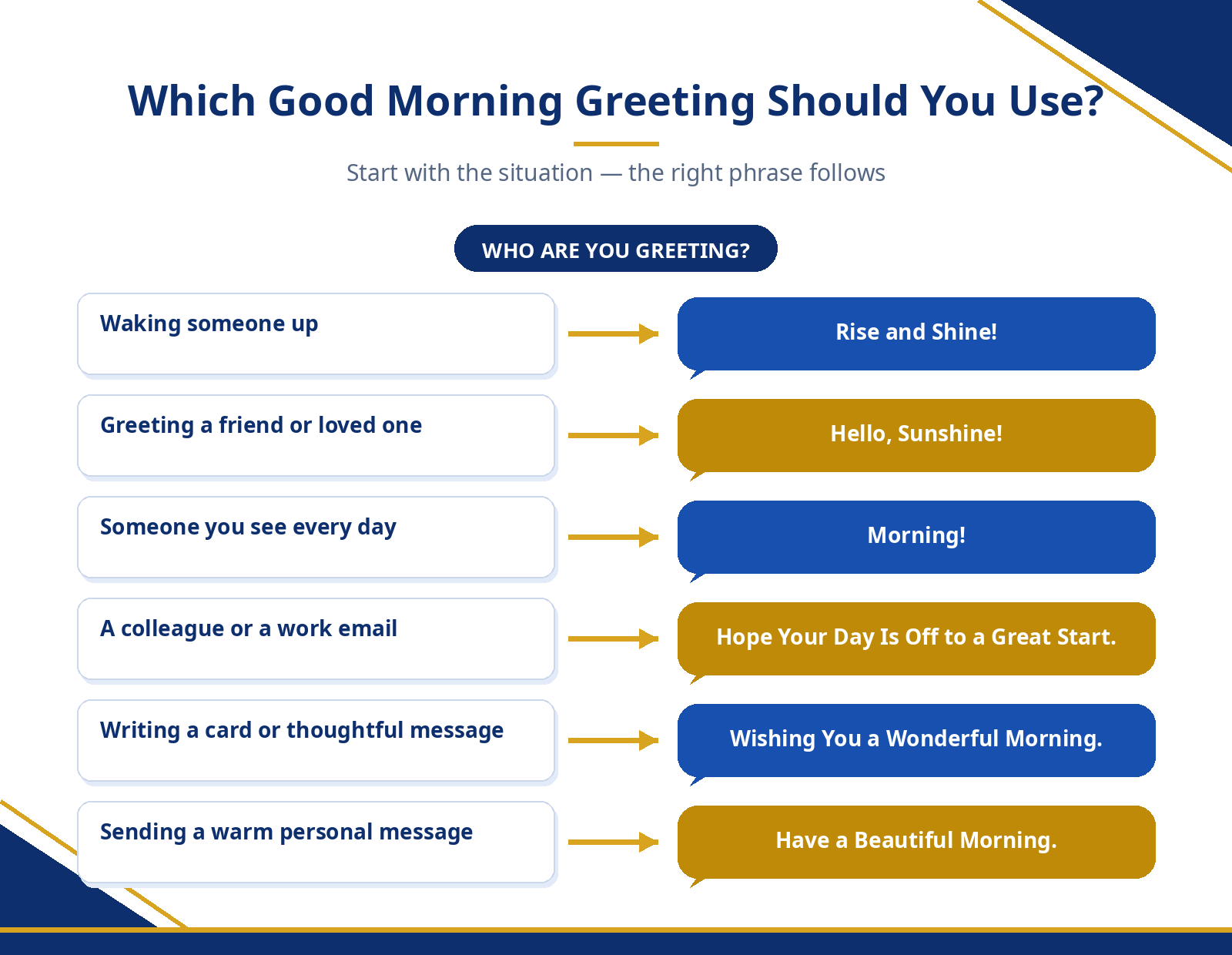
For everyday conversations, “Morning!” is simple and relaxed. If you want to encourage someone to start the day, “Rise and shine” adds energy. “Hello, sunshine” offers warmth to someone you know well, while “I hope your day is off to a great start” suits professional emails and workplace messages.
You can also use “Have a beautiful morning” or “Wishing you a wonderful morning” when you want to express kindness in a personal message.
Remember, you don’t need to make every greeting different. Choose words that feel genuine, respect the situation, and help the other person feel welcome. A thoughtful greeting, even a short one, can set a positive tone for the day.
Looking for more ways to refresh everyday phrases? Explore our guides to fresher ways to say said and done.

Editorial Desk
The Titan Standards Editorial Team develops, reviews, and maintains practical English-language resources. The team checks articles for clarity, accuracy, context, readability, and consistency with Titan Standards’ editorial guidelines.