
Another Way to Say By: 10 Best Alternatives

Another way to say “by” depends on the sentence. You can use “through” or “via” to describe a method, “before” or “no later than” for a deadline, and “next to” for location. The best alternative preserves the original meaning and fits the context, tone, and purpose of your sentence. Key Takeaways What Does “Another Way to Say By” Mean? Looking for another way to say “by” means finding a word or phrase that communicates the same idea in a particular sentence. Because “by” has several meanings, its replacement must match the intended context. For example, “Send the report by email” can become “Send the report via email.” However, “Finish the report by Friday” has a different meaning and may be rewritten as “Finish the report no later than Friday.” People look for alternatives to avoid repetition, improve clarity, and choose language that fits everyday conversations, academic assignments, and professional writing. Why Use Other Ways to Say “By”? Although “by” is common and grammatically correct, repeating it too often can make writing feel less precise. Choosing a suitable alternative helps readers understand exactly what you mean. Here are a few reasons to consider another phrase: 10 Best Other Ways to Say “By” 1. Through Meaning “Through” often describes the method, process, or means used to achieve something. It can also refer to movement from one side of something to another. It works well when you want to emphasize the process behind a result. Best For: Professional, Formal, Casual Example 1: She found a new job through a former colleague. Example 2: We resolved the issue through careful planning. Quick Tip: Use “through” when you want to emphasize a process, relationship, or means of achieving a result. 2. Via Meaning “Via” means by way of or using a particular route or channel. It is common in business communication, travel instructions, and digital messages. It often sounds concise and professional. Best For: Professional, Formal Example 1: Please send your application via the online portal. Example 2: The package reached us via Chicago. Quick Tip: Use “via” for communication channels, delivery routes, and concise professional writing. 3. Using Meaning “Using” explains the tool, resource, or method someone employs to complete an action. It is especially useful when you want to make a sentence direct and easy to understand. Best For: Professional, Casual, Friendly Example 1: He created the presentation using free design software. Example 2: You can calculate the total using a spreadsheet. Quick Tip: Choose “using” when you can name the specific tool or resource involved. 4. Before Meaning “Before” can replace “by” when you mean that something should happen earlier than a particular time or event. However, the two words do not always have identical meanings. “By Friday” normally includes Friday as the deadline, while “before Friday” usually means earlier than Friday. Best For: Professional, Formal, Casual Example 1: Please submit your application before the office closes. Example 2: We need to leave before the meeting begins. Quick Tip: Check the deadline carefully because “before” may set an earlier limit than “by.” 5. No Later Than Meaning “No later than” clearly states the latest acceptable time for completing an action. It is useful when instructions, appointments, or deadlines need to be understood without confusion. Best For: Professional, Formal, Polite Example 1: All registration forms must arrive no later than September 15. Example 2: Please confirm your attendance no later than noon tomorrow. Quick Tip: Use this phrase when you want to make a deadline explicit, especially in formal instructions. 6. Beside Meaning “Beside” means at the side of something or someone. It can replace “by” when “by” describes a physical location, such as an object placed near another object. Best For: Casual, Friendly, Formal Example 1: A small table stood beside the living room window. Example 2: Please leave your shoes beside the front door. Quick Tip: Use “beside” for physical placement, not to describe a method or deadline. 7. Next To Meaning “Next to” describes something positioned immediately beside another person or object. It is a natural choice in everyday American English and is often more conversational than “adjacent to.” Best For: Casual, Friendly Example 1: I saved a seat for you next to the aisle. Example 2: The pharmacy is next to the grocery store. Quick Tip: Choose “next to” when giving simple directions or describing nearby objects and places. 8. With the Help of Meaning “With the help of” emphasizes assistance from a person, group, or resource. It can replace “by” when the original sentence describes how someone completed a task with support. Best For: Friendly, Warm, Professional Example 1: She completed the research with the help of her classmates. Example 2: We organized the fundraiser with the help of local volunteers. Quick Tip: Use this phrase when you want to acknowledge support instead of suggesting that someone worked entirely alone. 9. According to Meaning “According to” identifies the source of information, an opinion, or a statement. It can sometimes replace “by” in sentences that refer to a report, expert, or published source, but the sentence may need restructuring. Best For: Professional, Formal Example 1: According to the latest report, customer satisfaction has improved. Example 2: According to our instructor, the final project is due next week. Quick Tip: Use “according to” to attribute information to a source, not to describe every action performed by someone. 10. Per Meaning “Per” means for each or in accordance with a stated rule or instruction. It appears frequently in business writing, rates, measurements, and formal directions. It can replace “by” in certain expressions, but it does not work as a universal substitute. Best For: Professional, Formal Example 1: The service costs $25 per person. Example 2: Per company policy, all receipts must be submitted within 30 days. Quick Tip: Use “per” for rates, quantities, and established rules. Avoid it when a simpler phrase would sound more natural. Comparison Table Alternative Best Used In Tone Through Processes and methods Neutral Via Routes
What Is Another Way to Say “This Shows”? 10 Better Alternatives

Another way to say “this shows” includes “this indicates,” “this demonstrates,” “this suggests,” “this reveals,” and “this illustrates.” These phrases help explain evidence, support an argument, or highlight a result. The best alternative depends on your meaning, the strength of your evidence, and whether you are writing an essay, report, email, or everyday message. Key Takeaways What Does “This Shows” Mean? The phrase “this shows” explains what a fact, example, action, or piece of evidence tells us. Writers commonly use it to connect supporting information with a main idea or conclusion. For example: In each sentence, “shows” helps readers understand the meaning of the information that comes before it. People use this expression in academic essays, business reports, presentations, literary analysis, and everyday conversations. Although it is clear and natural, repeating it too often can make writing sound predictable. Why Use Other Ways to Say “This Shows”? Using different expressions can make your writing more precise and engaging. The right alternative also helps readers understand how strongly your evidence supports your point. Consider these benefits: The goal is not to replace every instance of “this shows.” Instead, choose a phrase that communicates your intended meaning more accurately. 10 Best Other Ways to Say “This Shows” 1. This Indicates Meaning “This indicates” means that a fact or piece of evidence points toward a particular conclusion. It works well when information supports an interpretation without necessarily proving it beyond doubt. Best For: Professional, Formal Example 1: The increase in website traffic indicates that the new marketing campaign is attracting more visitors. Example 2: Her improved test scores indicate that the additional practice is helping. Quick Tip: Use “this indicates” when your evidence points toward a conclusion but does not establish it with complete certainty. 2. This Demonstrates Meaning “This demonstrates” emphasizes that evidence clearly illustrates or establishes a point. It is particularly useful when discussing results, skills, methods, or arguments supported by strong evidence. Best For: Professional, Formal Example 1: The successful trial demonstrates that the updated process can reduce production time. Example 2: His detailed explanation demonstrates a strong understanding of the subject. Quick Tip: Choose “this demonstrates” when you can provide clear evidence that supports your claim. 3. This Suggests Meaning “This suggests” introduces an interpretation or possibility supported by available information. It is less definite than “this proves” and helps writers avoid making claims that go beyond their evidence. Best For: Professional, Formal, Polite Example 1: The survey suggests that employees would benefit from more flexible schedules. Example 2: The character’s silence suggests that he is hiding something from his friends. Quick Tip: Use this phrase when your evidence supports a reasonable interpretation but leaves room for other explanations. 4. This Reveals Meaning “This reveals” highlights information that becomes apparent through evidence, behavior, or closer examination. It is useful when discussing hidden details, unexpected findings, or a person’s motivations. Best For: Formal, Professional Example 1: The customer feedback reveals several problems with the checkout process. Example 2: Her response reveals how much she values the team’s contribution. Quick Tip: Use “this reveals” when the information uncovers something important that readers may not have noticed before. 5. This Illustrates Meaning “This illustrates” means that an example, situation, or detail helps explain a broader idea. It is especially effective when connecting a specific example to a general principle. Best For: Formal, Professional, Friendly Example 1: The case study illustrates how small businesses can benefit from customer feedback. Example 2: This classroom activity illustrates the importance of teamwork. Quick Tip: Choose “this illustrates” when you want an example to make an idea easier to understand. 6. This Highlights Meaning “This highlights” draws attention to a particular fact, issue, or feature. It works well when you want readers to focus on an important detail rather than simply understand a general conclusion. Best For: Professional, Formal Example 1: The final report highlights the need for better communication between departments. Example 2: Her presentation highlights the benefits of investing in employee training. Quick Tip: Use this expression to emphasize an important point that deserves attention. 7. This Reflects Meaning “This reflects” suggests that a fact, action, or result represents a broader condition, attitude, or pattern. It is common in professional reports, personal observations, and discussions about behavior. Best For: Professional, Formal, Warm Example 1: The team’s strong performance reflects months of careful preparation. Example 2: His willingness to help reflects his commitment to the community. Quick Tip: Use “this reflects” when connecting an observable result with a broader quality, attitude, or situation. 8. This Makes Clear Meaning “This makes clear” emphasizes that information removes confusion or helps readers understand a point. It works well when explaining a conclusion supported by straightforward evidence. Best For: Professional, Formal, Polite Example 1: The revised schedule makes clear which tasks must be completed before Friday. Example 2: Her explanation makes clear why the original plan needed to change. Quick Tip: Choose this phrase when you want to emphasize clarity rather than simply introduce another piece of evidence. 9. This Points To Meaning “This points to” means that available facts suggest a possible explanation, result, or direction. It is useful when identifying patterns or discussing findings that may need further investigation. Best For: Professional, Formal, Casual Example 1: The repeated delivery delays point to a problem with the current shipping process. Example 2: These early results point to a possible improvement in customer satisfaction. Quick Tip: Use “this points to” when evidence suggests a conclusion but further confirmation may be necessary. 10. This Confirms Meaning “This confirms” means that new information supports or verifies something already suspected, reported, or established. It communicates a stronger level of certainty than “this suggests,” so use it only when the evidence justifies that confidence. Best For: Professional, Formal Example 1: The final inspection confirms that the equipment meets the required safety standards. Example 2: The latest figures confirm that sales increased during the second quarter. Quick Tip: Reserve “this confirms” for evidence that
Another Way to Say He Says: 10 Verbs for Reporting Speech
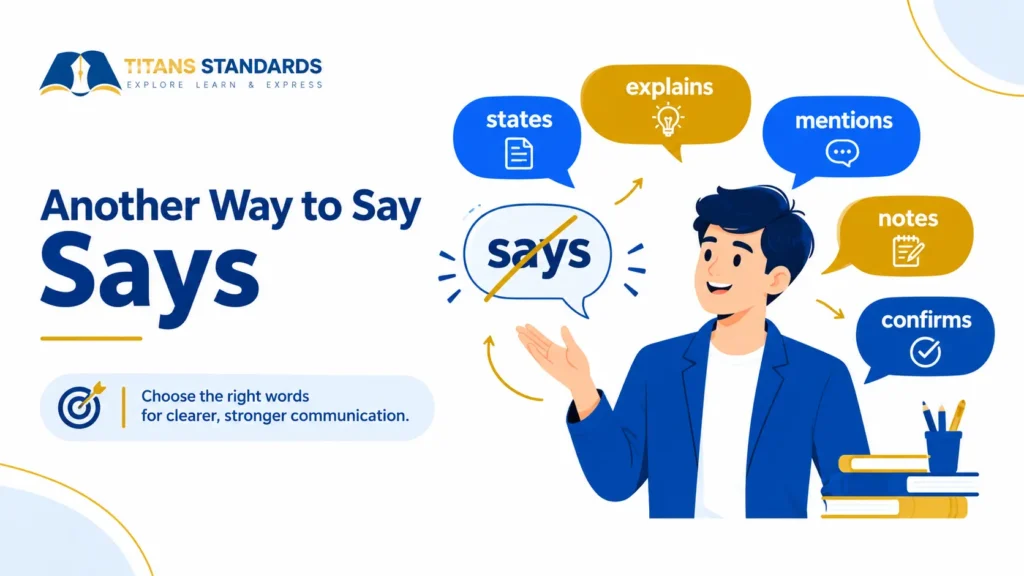
Another way to say ‘he says’ includes he states, he explains, he notes and more. Learn 10 reporting verbs with meanings, examples and quick tips.
Another Way to Say Appreciate: 10 Better Words to Express Gratitude
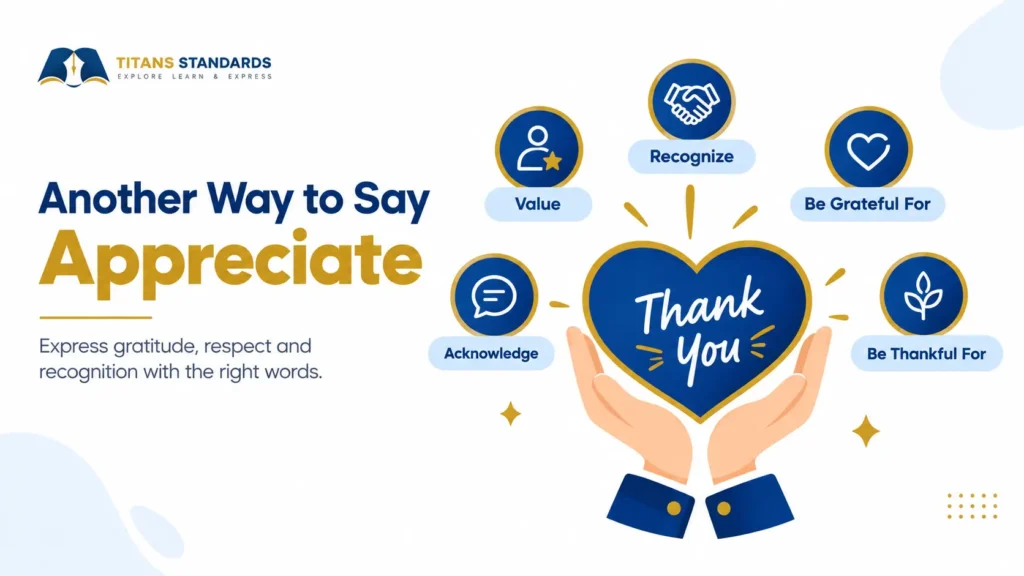
The word “appreciate” is useful in everyday conversations, workplace emails, and personal messages. However, using it repeatedly can make your writing sound less natural or your gratitude feel less personal. Learning other ways to say appreciate helps you express gratitude, recognize someone’s effort, and explain what matters to you. The right phrase can make a thank-you message warmer, a business email more professional, or a personal conversation more meaningful. Another way to say appreciate is be grateful for, value, be thankful for, recognize, or acknowledge. The best alternative depends on your meaning and tone. Use “value” to express importance, “be grateful for” to show thankfulness, and “acknowledge” to recognize someone’s effort in professional or formal communication. Key Takeaways What Does “Another Way to Say Appreciate” Mean? The phrase “another way to say appreciate” refers to alternative words or expressions that communicate gratitude, recognition, respect, or value. The best choice depends on what you want to express. For example, you might say “I appreciate your help” to thank someone, or “I value your opinion” to explain why their thoughts matter. People use these alternatives in professional emails, conversations, thank-you notes, and personal messages to communicate more clearly. Why Use Other Ways to Say “Appreciate”? Using different expressions helps you communicate gratitude and respect without repeating the same word. It also allows you to choose a tone that suits your audience. Consider these benefits: 10 Best Other Ways to Say “Appreciate” 1. Be Grateful For Meaning “Be grateful for” expresses sincere thankfulness for someone’s help, kindness, time, or support. It often sounds more personal and heartfelt than “appreciate.” Best For: Warm, Friendly, Polite Example 1: I’m grateful for your support during my first week at work. Example 2: We’re grateful for everyone who helped make the event successful. Quick Tip: Use this phrase when you want to emphasize genuine gratitude rather than simply acknowledge a favor. 2. Be Thankful For Meaning “Be thankful for” communicates that you feel glad or fortunate because of something someone has done or something you have. It works well in casual conversations and personal messages. Best For: Casual, Warm, Friendly Example 1: I’m thankful for the extra time you gave me to finish the project. Example 2: She’s thankful for her friends’ encouragement during a difficult week. Quick Tip: Choose “thankful” for personal situations where you want to express warmth and sincerity. 3. Value Meaning “Value” means to consider someone or something important or worthwhile. Unlike “appreciate,” which can express gratitude, “value” often emphasizes importance, trust, or respect. Best For: Professional, Formal, Polite Example 1: We value your feedback and will use it to improve our service. Example 2: I value the time you took to explain the new process. Quick Tip: Use “value” when you want to show that someone’s contribution, opinion, or relationship matters to you. 4. Recognize Meaning “Recognize” means to notice and acknowledge someone’s work, effort, skill, or achievement. It is especially useful when you want to give credit for a specific contribution. Best For: Professional, Formal, Polite Example 1: Our team recognizes your dedication to meeting the deadline. Example 2: The company recognized her leadership during the product launch. Quick Tip: Use “recognize” when highlighting an achievement or contribution rather than expressing general gratitude. 5. Acknowledge Meaning “Acknowledge” means to show that you have noticed or accepted the importance of something. It can communicate respect for someone’s effort, concern, or contribution without sounding overly emotional. Best For: Professional, Formal, Polite Example 1: I’d like to acknowledge your help with the client presentation. Example 2: The manager acknowledged everyone’s efforts during the busy season. Quick Tip: Choose this phrase for workplace updates, formal messages, and situations where clear recognition is important. 6. Admire Meaning “Admire” expresses respect or approval for someone’s qualities, abilities, or actions. It communicates a stronger sense of respect than a simple thank-you and works particularly well in personal or professional messages. Best For: Warm, Friendly, Professional Example 1: I admire the patience you showed while training the new employees. Example 2: We admire your commitment to helping the local community. Quick Tip: Use “admire” when you respect a person’s character or abilities, not simply because they did you a favor. 7. Treasure Meaning “Treasure” means to consider someone, something, or an experience deeply precious. It expresses emotional value and is often more intimate than “appreciate.” Best For: Warm, Friendly Example 1: I treasure the memories we made during our family vacation. Example 2: She treasures the advice her grandmother shared with her. Quick Tip: Reserve “treasure” for meaningful relationships, special experiences, and things with lasting emotional importance. 8. Respect Meaning “Respect” communicates that you hold someone in high regard because of their choices, qualities, knowledge, or behavior. It focuses more on esteem than gratitude. Best For: Professional, Formal, Polite Example 1: I respect the thoughtful approach you took to solving the problem. Example 2: We respect your decision to focus on your family’s needs. Quick Tip: Use “respect” when recognizing someone’s judgment, boundaries, or principles rather than thanking them for a specific action. 9. Be Indebted To Meaning “Be indebted to” expresses a strong sense of gratitude for help that made a meaningful difference. It can sound formal or serious because it suggests that someone’s support created a lasting obligation or debt of gratitude. Best For: Formal, Professional, Warm Example 1: I’m indebted to my mentor for the guidance that shaped my career. Example 2: The organization is indebted to its volunteers for their years of service. Quick Tip: Use this phrase for significant help, not ordinary favors, because it can sound overly dramatic in casual situations. 10. Hold in High Regard Meaning “Hold in high regard” means to think very highly of someone because of their character, experience, or achievements. It is a polished expression of respect that suits professional and formal communication. Best For: Formal, Professional, Polite Example 1: Our department holds your expertise in high regard. Example 2: I hold her judgment in high regard
Another Way to Say Good Morning? 10 Fresh Ideas

Another way to say good morning is “Morning!”, “Rise and shine,” “Hello, sunshine,” or “I hope you have a great morning.” For professional situations, try “Good morning, everyone” or “I hope your day is off to a great start.” The best phrase depends on your relationship with the person and the tone you want to express. Key Takeaways What Does “What’s Another Way to Say Good Morning” Mean? The phrase “what’s another way to say good morning” refers to looking for different expressions to greet someone at the start of the day. These alternatives can sound friendly, cheerful, affectionate, humorous, or professional. People use morning greetings when they meet coworkers, message friends, talk to family members, or start a conversation with someone new. The right expression helps set the tone for the interaction. For example, “Morning!” works well with a coworker you know, while “I hope your morning is going well” may suit a professional email. Both communicate a positive greeting, but they create slightly different impressions. You can also check the Cambridge Dictionary for the standard meaning and usage of good morning. Why Use Other Ways to Say Good Morning? Although “good morning” is polite and widely understood, using different greetings can make everyday conversations feel more natural and personal. Here are a few reasons to try another expression: The goal isn’t to replace “good morning” every time. It’s to choose an expression that fits the situation. 10 Best Other Ways to Say “What’s Another Way to Say Good Morning” 1. Morning! Meaning: “Morning!” is a shortened, casual version of “good morning.” It’s common in American English and works well when greeting people you see regularly. Best For: Casual, Friendly, Polite Example 1: “Morning, Jake! Did you get a chance to look at the schedule?” Example 2: “Morning, everyone. Coffee is ready in the break room.” Quick Tip: Use this phrase with friends and familiar coworkers. In formal introductions, the complete “Good morning” may sound more appropriate. 2. Rise and Shine! Meaning: “Rise and shine” is a cheerful expression that encourages someone to wake up and start the day. It often sounds playful, especially when used with children, family members, or close friends. Best For: Casual, Friendly, Warm Example 1: “Rise and shine, kids! Breakfast is on the table.” Example 2: “Come on, Maya, rise and shine. We don’t want to miss the early train.” Quick Tip: Use this phrase when someone is waking up or needs encouragement. It can sound pushy if the person isn’t in the mood for enthusiasm. 3. Hello, Sunshine! Meaning: “Hello, sunshine” is a warm, affectionate greeting that makes someone feel welcome. It can express fondness, happiness, or playful friendliness, depending on your relationship. Best For: Friendly, Warm, Casual Example 1: “Hello, sunshine! I saved you a seat by the window.” Example 2: “Hey, sunshine, ready for our Saturday morning walk?” Quick Tip: This expression works best with people you know well. It may sound overly familiar when used with a client, supervisor, or new acquaintance. 4. I Hope You Have a Great Morning. Meaning: This phrase expresses a positive wish for someone’s morning. It’s polite and considerate without being overly emotional, making it useful for personal messages and workplace communication. Best For: Professional, Friendly, Polite, Warm Example 1: “Thanks for sending the report. I hope you have a great morning!” Example 2: “I hope you have a great morning and enjoy your first day at the new job.” Quick Tip: Use this expression when you want your greeting to feel thoughtful. It’s especially suitable for texts and emails. 5. Hope Your Day Is Off to a Great Start. Meaning: This greeting expresses the hope that someone’s day is beginning well. It sounds natural in American professional communication and can lead smoothly into the main point of a message. Best For: Professional, Polite, Friendly Example 1: “Hi, Daniel. Hope your day is off to a great start. Could you review the attached proposal?” Example 2: “Hope your day is off to a great start! The team meeting has moved to 10 a.m.” Quick Tip: This is a useful email opener when you want to sound approachable without being too casual. 6. Good Morning to You! Meaning: “Good morning to you” is a slightly more expressive version of the standard greeting. It can sound cheerful, courteous, or playful depending on your tone. Best For: Friendly, Polite, Warm Example 1: “Good morning to you! It’s wonderful to see you back at the office.” Example 2: “Good morning to you, Mrs. Carter. How was your weekend?” Quick Tip: Use it when you want to add a little warmth to a familiar greeting. In everyday conversation, the shorter “Good morning” is often enough. 7. How’s Your Morning Going? Meaning: This question greets someone while inviting them to share how their day is starting. It’s more conversational than a simple greeting because it gives the other person an easy way to respond. Best For: Casual, Friendly, Polite Example 1: “Hey, Chris, how’s your morning going? Have things settled down at work?” Example 2: “Good morning, Olivia! How’s your morning going so far?” Quick Tip: Use this expression when you have time to listen to the answer. It works well with coworkers, friends, and people you see regularly. 8. Wishing You a Wonderful Morning. Meaning: This phrase conveys a thoughtful wish for someone to enjoy the beginning of the day. It sounds more polished than a casual greeting and works particularly well in written messages. Best For: Formal, Professional, Warm, Polite Example 1: “Wishing you a wonderful morning and a productive day ahead.” Example 2: “Wishing you a wonderful morning filled with good news and happy moments.” Quick Tip: Save this phrase for greeting cards, thoughtful texts, and messages where a slightly polished tone feels natural. 9. Top of the Morning to You! Meaning: This traditional greeting expresses cheerful goodwill at the start of the day. It is often associated with Irish expressions, although many people use it playfully
Another Way to Say I Love You More: 10 Heartfelt Alternatives

Another way to say “I love you more” is to use heartfelt phrases such as “I care about you even more,” “You mean everything to me,” or “My love for you keeps growing.” These alternatives help you express deeper affection, strengthen your relationship, and make romantic messages, texts, and everyday conversations more meaningful. Sometimes, “I love you more” is the perfect response to someone you love. However, using different words can make your messages feel more personal, romantic, and memorable. Whether you’re texting your partner, writing an anniversary card, or sharing a sweet moment, the right phrase can help you express your feelings in a fresh way. Here are 10 natural alternatives, with meanings, examples, and tips to help you choose the best expression. Key Takeaways What Does “Another Way to Say I Love You More” Mean? The phrase refers to different ways of expressing deep affection for someone. People often say “I love you more” during playful conversations, romantic exchanges, and heartfelt moments with their partners. It can communicate strong feelings, emotional closeness, and a desire to show that your love continues to grow. Alternative expressions let you share the same sentiment with words that better fit your personality and relationship. You can use these phrases in text messages, love letters, social media captions, anniversary cards, or face-to-face conversations. Why Use Other Ways to Say “I Love You More”? Using different expressions can make romantic communication feel more natural and sincere. Instead of repeating the same words, you can choose a phrase that reflects your feelings and the moment. Benefits include: 10 Best Other Ways to Say “I Love You More” 1. I Care About You Even More Meaning: This phrase expresses growing affection and concern for someone. It suggests that your feelings have become stronger and that the person’s happiness matters deeply to you. Best For: Casual, Friendly, Warm Example 1: Every day, I find another reason why I care about you even more. Example 2: After everything we’ve shared, I care about you more than ever. Quick Tip: Use this phrase when you want to express sincere affection without sounding overly dramatic. 2. You Mean Even More to Me Meaning: This expression tells someone that their importance in your life continues to grow. It emphasizes emotional closeness and appreciation rather than turning the conversation into a competition over who loves whom more. Best For: Casual, Friendly, Warm Example 1: The longer we’re together, the more you mean to me. Example 2: You mean even more to me with every memory we make. Quick Tip: This works especially well in heartfelt messages and conversations about your relationship. 3. My Love for You Keeps Growing Meaning: This romantic phrase suggests that your feelings become stronger over time. It communicates lasting affection and shows that your relationship continues to deepen. Best For: Romantic, Warm, Casual Example 1: My love for you keeps growing with every passing day. Example 2: No matter what life brings, my love for you keeps growing. Quick Tip: Choose this expression for anniversaries, love letters, or messages celebrating your relationship. 4. I’m More in Love With You Meaning: This phrase expresses the feeling of falling more deeply in love with someone. It is direct, intimate, and easy to use when you want to emphasize how your feelings have changed. Best For: Romantic, Casual, Friendly Example 1: After our weekend together, I’m even more in love with you. Example 2: Every time you make me laugh, I fall a little more in love with you. Quick Tip: Add a personal reason to make the message feel more genuine. 5. You’re My Everything Meaning: This expression tells someone that they hold a special place in your life. It communicates deep emotional attachment and can make a romantic message feel especially affectionate. Best For: Romantic, Warm, Casual Example 1: You’re my everything, and I’m grateful to have you in my life. Example 2: No matter where life takes us, you’ll always be my everything. Quick Tip: Use this phrase when you want to express strong affection, but make sure it reflects your genuine feelings. 6. I Love You More Than Words Can Say Meaning: This phrase suggests that your love is so deep that words cannot fully describe it. It emphasizes the strength of your emotions and the limits of language when expressing affection. Best For: Romantic, Warm, Polite Example 1: I love you more than words can say, and I hope you feel it every day. Example 2: You have changed my life in beautiful ways, and I love you more than words can say. Quick Tip: This expression is ideal for romantic letters, meaningful cards, and special occasions. 7. You’re Always in My Heart Meaning: This phrase communicates lasting affection and emotional closeness. It reassures someone that they remain important to you, even when you’re apart. Best For: Casual, Friendly, Warm Example 1: Even when we’re miles apart, you’re always in my heart. Example 2: Wherever life takes us, you’ll always have a place in my heart. Quick Tip: Use this phrase for long-distance relationships or messages to someone you miss. 8. I Choose You, Always Meaning: This expression emphasizes commitment, loyalty, and the decision to keep loving someone. It suggests that your relationship matters to you beyond temporary feelings or romantic moments. Best For: Romantic, Formal, Warm Example 1: Through every challenge and every celebration, I choose you, always. Example 2: If I could start my story all over again, I’d still choose you. Quick Tip: This phrase is particularly meaningful when discussing your future together or celebrating an important milestone. 9. You’re More Special to Me Meaning: This phrase communicates that someone holds a unique and meaningful place in your life. It expresses appreciation and affection without directly comparing the amount of love each person feels. Best For: Casual, Friendly, Warm Example 1: The more I get to know you, the more special you become to me. Example 2: You make ordinary days feel
Another Way to Say Said: 10 Better Alternatives With Examples

Another way to say said depends on the context and the speaker’s intention. Useful alternatives include replied, answered, stated, explained, remarked, noted, added, whispered, shouted, and declared. These words help you avoid repetition, describe how someone speaks, and make stories, conversations, emails, and professional writing more precise. Key Takeaways What Does “Another Way to Say Said ” Mean? The phrase “another way to say said” refers to alternative words that communicate the same general idea as said. Writers use these words to describe speech more clearly, avoid repetitive dialogue tags, and show how a person delivers a message. For example, instead of writing, “She said she needed help,” you could write, “She explained that she needed help.” The second sentence suggests that she provided information or clarification. These alternatives appear in fiction, school assignments, workplace emails, articles, reports, and everyday conversations. However, they are not always interchangeable. The best choice depends on what the speaker communicates and how the message is delivered. Why Use Other Ways to Say Said? Using different speech verbs makes your writing more natural and informative. Repeating said in every sentence can make a long conversation feel monotonous, while choosing precise alternatives helps readers understand the exchange. Here are the main benefits: Remember that said remains a useful and natural word. You do not need to replace it every time; use alternatives when they add meaningful information. 10 Best Other Ways to Say Said 1. Replied Meaning Replied means to respond to something another person has said, asked, or written. It works well when a conversation involves a clear response. Best For: Casual, Friendly, Professional, Polite Example 1: “I’ll send you the updated schedule this afternoon,” Maria replied. Example 2: “That sounds like a great idea,” he replied with a smile. Quick Tip: Use replied when the sentence focuses on a response rather than the original statement. 2. Answered Meaning Answered means to respond to a question, request, or situation. It is especially useful when a character provides specific information or resolves someone’s uncertainty. Best For: Casual, Friendly, Professional, Polite Example 1: “The meeting starts at nine,” Daniel answered. Example 2: “I chose the blue one because it matches the room,” she answered. Quick Tip: Choose answered when someone directly addresses a question or provides the information another person needs. 3. Stated Meaning Stated means to express information clearly and directly. It often sounds more formal than said, making it appropriate for professional communication, official records, and factual statements. Best For: Professional, Formal Example 1: The manager stated that all reports must be submitted by Friday. Example 2: “Our office will remain closed on Monday,” the announcement stated. Quick Tip: Use stated for clear information, policies, or positions rather than casual conversation. 4. Explained Meaning Explained means to make something easier to understand by providing details, reasons, or clarification. It is a strong choice when a speaker helps someone understand a process, decision, or idea. Best For: Professional, Friendly, Polite Example 1: “You need to restart the computer before installing the update,” the technician explained. Example 2: Olivia explained why the team needed an extra day to finish the project. Quick Tip: Choose explained when the speaker gives reasons or details, not merely when someone makes a brief statement. 5. Remarked Meaning Remarked means to make a comment or observation about something. It can sound conversational, thoughtful, or slightly formal, depending on the surrounding sentence. Best For: Formal, Casual, Friendly Example 1: “The new library looks much brighter,” the teacher remarked. Example 2: He remarked that the restaurant had changed considerably since his last visit. Quick Tip: Use remarked when someone comments on a situation, detail, or observation. 6. Noted Meaning Noted means to mention or point out something worth attention. It works well in professional writing and situations where a speaker highlights an important fact or detail. Best For: Professional, Formal, Polite Example 1: “The final report includes the revised figures,” the analyst noted. Example 2: The supervisor noted that two documents were missing from the application. Quick Tip: Choose noted when the information is relevant or noteworthy, especially in reports and business discussions. 7. Added Meaning Added means to contribute another thought or piece of information to something already being discussed. It is useful when a speaker continues an explanation or introduces an additional point. Best For: Professional, Casual, Friendly Example 1: “We should review the budget before approving the plan,” James added. Example 2: “Don’t forget to bring your identification,” the receptionist added. Quick Tip: Use added when a person contributes something extra to an ongoing conversation. 8. Whispered Meaning Whispered means to speak very softly, usually so that only nearby people can hear. It can suggest secrecy, privacy, nervousness, or a desire not to disturb others. Best For: Casual, Friendly, Warm Example 1: “The baby is finally asleep,” Emma whispered. Example 2: He whispered that he had planned a surprise for her birthday. Quick Tip: Choose whispered when the volume or quiet nature of the speech matters to the scene. 9. Shouted Meaning Shouted means to speak in a very loud voice, often to be heard over noise or from a distance. Depending on the situation, it may communicate excitement, urgency, anger, or fear. Best For: Casual, Friendly Example 1: “The bus is leaving!” Sarah shouted from the doorway. Example 2: “We won the championship!” the captain shouted to the crowd. Quick Tip: Use shouted when loudness is important. Do not automatically use it to suggest anger because people also shout with excitement or urgency. 10. Declared Meaning Declared means to announce something firmly or confidently. It often suggests a strong position, an official announcement, or a statement intended to make the speaker’s intentions clear. Best For: Formal, Professional Example 1: “We will complete this project before the deadline,” the director declared. Example 2: “I am ready to take responsibility for my decision,” she declared. Quick Tip: Use declared when the statement sounds firm, important, or decisive. For ordinary conversation, said
Another Way to Say Done: 10 Better Alternatives

Another way to say done includes finished, completed, all set, taken care of, wrapped up, accomplished, finalized, ready, through, and submitted. The best alternative depends on the context. Use “completed” for professional tasks, “all set” in casual conversations, and “finalized” when you have made a decision or finished the last details of a project. Key Takeaways What Does “Another Way to Say Done” Mean? The phrase “another way to say done” refers to alternative words and expressions that communicate completion, readiness, or the end of a task. People often search for these alternatives to avoid repeating the same word or to find language that fits a particular situation. “Done” is a common word in American English. You might say, “I’m done with my homework,” “The report is done,” or “Are you done?” However, the best replacement changes with the meaning. A completed assignment, a prepared meal, and a finalized business agreement may each call for a different expression. You will hear these alternatives in everyday conversations, text messages, school assignments, workplace emails, and business meetings. Why Use Other Ways to Say “Done”? Although “done” is clear and natural, using different expressions can make your communication more precise. The right phrase can also help you sound more professional, friendly, or confident. Consider these benefits: 10 Best Other Ways to Say “Done” 1. Finished Meaning “Finished” means you have completed an activity, task, or process. It is one of the closest and most natural alternatives to “done” in everyday American English. Best For: Casual, Friendly, Professional Example 1: I’ve finished the presentation, so we can review it this afternoon. Example 2: She finished her book before the flight landed. Quick Tip: Use “finished” when you want a simple, direct expression that works in most situations. 2. Completed Meaning “Completed” means that you have carried out all the required parts of a task or activity. It sounds slightly more formal than “finished,” making it useful for workplace updates, schoolwork, and official communication. Best For: Professional, Formal, Polite Example 1: I completed the employee training course yesterday. Example 2: The team completed its review of the customer feedback. Quick Tip: Choose “completed” for reports, project updates, and other situations where you need a clear, professional tone. 3. All Set Meaning “All set” means you are ready, prepared, or have everything you need. People also use it to indicate that a task or arrangement is taken care of. Best For: Casual, Friendly, Polite Example 1: I’m all set for the interview tomorrow. Example 2: Your table is ready, and you’re all set for dinner. Quick Tip: Use “all set” in conversations and friendly messages, but choose a more precise phrase when documenting formal work. 4. Taken Care Of Meaning “Taken care of” means that a responsibility, problem, or practical matter has been handled. It often communicates that someone has addressed an issue and that no further action is needed from the listener. Best For: Professional, Casual, Polite Example 1: Don’t worry about the hotel reservation; I’ve taken care of it. Example 2: The billing issue has been taken care of by our support team. Quick Tip: Use this phrase when you want to reassure someone that you have handled a specific responsibility. 5. Wrapped Up Meaning “Wrapped up” means that an activity, meeting, project, or discussion has come to an end. It is conversational and often suggests that the work has reached a natural stopping point. Best For: Casual, Friendly, Professional Example 1: We wrapped up the meeting ten minutes ahead of schedule. Example 2: I’ll send the files once I’ve wrapped up the final edits. Quick Tip: This expression works particularly well for meetings, projects, and activities. Avoid it in highly formal writing when “completed” would be clearer. 6. Accomplished Meaning “Accomplished” emphasizes that you achieved something through effort or action. Unlike “done,” which simply indicates completion, this word can highlight the value or success of the result. Best For: Formal, Professional, Warm Example 1: The team accomplished its main goal before the deadline. Example 2: She felt proud of everything she had accomplished during the semester. Quick Tip: Choose “accomplished” when you want to emphasize an achievement rather than merely state that a task has ended. 7. Finalized Meaning “Finalized” means that the details of a plan, document, decision, or agreement have been settled. It is especially useful when a project has moved beyond drafting or discussion and is ready for its next stage. Best For: Professional, Formal, Polite Example 1: We finalized the event schedule after reviewing everyone’s availability. Example 2: The legal team finalized the agreement on Friday. Quick Tip: Use “finalized” when the last details have been resolved. Do not use it if a document is merely drafted or still awaiting approval. 8. Ready Meaning “Ready” means prepared for use, action, or the next step. It can sometimes replace “done,” but it focuses on preparedness rather than the act of completing a task. Best For: Casual, Friendly, Professional Example 1: The updated website is ready for testing. Example 2: Your coffee is ready, so you can pick it up at the counter. Quick Tip: Use “ready” when the important point is that something can now be used or acted on, not simply that work has ended. 9. Through Meaning “Through” can mean that you have finished an activity, reached the end of a process, or completed a difficult experience. In American English, “I’m through with this assignment” is a natural way to say you have finished it. Best For: Casual, Friendly Example 1: I’m through with the paperwork and can finally take a break. Example 2: Once we’re through with the inspection, we can reopen the office. Quick Tip: Use “through” in informal speech. In a professional report, “completed” may sound more neutral and precise. 10. Submitted Meaning “Submitted” means that you have sent or formally presented something to another person or organization for review, approval, or consideration. It does not always mean the work has been approved or
Another Way to Say In Loving Memory: 10 Heartfelt Alternatives

Another way to say “in loving memory” includes “forever in our hearts,” “in cherished memory of,” “remembering with love,” and “gone but never forgotten.” These heartfelt alternatives honor someone who has passed away and work well in memorial messages, obituaries, sympathy cards, funeral programs, social media tributes, and commemorative plaques.Finding the right words to honor someone who has passed away can be difficult. Whether you’re writing an obituary, creating a memorial plaque, or sharing a tribute online, a thoughtful phrase can express love, respect, and remembrance. The phrase “in loving memory” is meaningful, but other expressions can make your message feel more personal. Below are 10 alternatives, with meanings, examples, and practical tips to help you choose the right wording. Key Takeaways What Does “In Loving Memory” Mean? “In loving memory” is an expression used to honor and remember someone who has died. It communicates affection, respect, and the lasting importance of that person’s life. People commonly use this phrase on funeral programs, headstones, memorial gifts, anniversary tributes, and social media posts. It can also introduce a dedication in a book or a charitable contribution made in someone’s name. Why Use Other Ways to Say “In Loving Memory”? Alternative phrases help you express your feelings in a way that suits the person and occasion. Some sound deeply personal, while others are more formal or suitable for public tributes. Consider using another expression to: 10 Best Other Ways to Say “In Loving Memory” 1. Forever in Our Hearts Meaning: This phrase expresses the idea that someone remains deeply loved even after death. It emphasizes an enduring emotional connection rather than focusing on loss alone. Best For: Warm, Friendly, Formal Example 1: Forever in our hearts, Grandma, whose kindness made every family gathering special. Example 2: You may be gone from our sight, but you will remain forever in our hearts. Quick Tip: Use this expression for family tributes, memorial jewelry, or personalized keepsakes. 2. In Cherished Memory Of Meaning: This expression honors someone whose life and presence remain deeply valued. The word “cherished” adds a sense of affection and appreciation. Best For: Formal, Warm, Polite Example 1: In cherished memory of Robert Miller, a devoted father and loyal friend. Example 2: This garden was created in cherished memory of our beloved teacher, Mrs. Wilson. Quick Tip: This wording works especially well on memorial plaques, dedication pages, and printed programs. 3. Remembering With Love Meaning: This phrase communicates affection while reflecting on someone’s life. It feels gentle and personal, making it appropriate for messages that celebrate meaningful memories. Best For: Warm, Friendly, Casual Example 1: Remembering with love the wonderful years we shared with Aunt Linda. Example 2: Today, we are remembering Dad with love and gratitude for everything he taught us. Quick Tip: Choose this phrase for social media tributes, family messages, and remembrance anniversaries. 4. In Honor Of Meaning: “In honor of” recognizes someone’s life, contributions, or influence. It can also celebrate a person’s values and achievements rather than focusing only on their passing. Best For: Professional, Formal, Polite Example 1: The scholarship was established in honor of Dr. James Carter and his dedication to education. Example 2: Our community planted fifty trees in honor of the late Susan Bennett. Quick Tip: This is a strong choice for charitable donations, scholarships, community projects, and organized memorial events. 5. With Loving Remembrance Meaning: This expression combines affection with respectful remembrance. Its slightly formal tone makes it suitable for commemorative messages that need warmth without sounding overly casual. Best For: Formal, Warm, Polite Example 1: With loving remembrance of a mother whose generosity touched countless lives. Example 2: We dedicate this memorial bench with loving remembrance of our dear friend, Michael. Quick Tip: Use it when you want a traditional, dignified phrase for a plaque, memorial card, or printed tribute. 6. Gone but Never Forgotten Meaning: This familiar expression acknowledges someone’s death while emphasizing that their memory continues. It highlights the lasting impression a person leaves on family, friends, and the wider community. Best For: Warm, Casual, Friendly Example 1: Gone but never forgotten, our beloved brother will always be part of our family story. Example 2: Her laughter and generous spirit remind us that she is gone but never forgotten. Quick Tip: This phrase works well for personal tributes, but consider gentler wording if the audience prefers a more understated message. 7. Always Remembered Meaning: “Always remembered” promises that a person’s life and influence will not be forgotten. It is short, clear, and respectful without requiring an emotional or elaborate statement. Best For: Formal, Warm, Polite Example 1: A loving husband, devoted father, and loyal friend, always remembered. Example 2: Your courage, compassion, and wisdom will be always remembered by everyone you inspired. Quick Tip: Use this concise phrase for memorial inscriptions, remembrance ribbons, and short tribute captions. 8. A Life Lovingly Remembered Meaning: This phrase celebrates a person’s life and the affection they inspired. It shifts attention toward the person’s story, relationships, and positive influence. Best For: Formal, Warm, Polite Example 1: A life lovingly remembered, filled with family, friendship, and countless acts of kindness. Example 2: Today, we celebrate a life lovingly remembered by generations of students and colleagues. Quick Tip: Choose this expression for obituary headings, funeral programs, or memorial announcements that celebrate a person’s life. 9. We Remember With Gratitude Meaning: This expression focuses on appreciation for the time, lessons, and experiences shared with someone who has died. It expresses respect while recognizing the lasting value of that person’s presence. Best For: Professional, Formal, Warm Example 1: We remember with gratitude our former principal, whose leadership helped generations of students succeed. Example 2: As we celebrate her life, we remember with gratitude the generosity she showed our community. Quick Tip: This phrase is especially appropriate for workplace tributes, school memorials, and community announcements. 10. In Memory and Tribute To Meaning: This phrase formally recognizes someone who has passed away and introduces a dedication or commemorative act.
10 Other Ways to Say Problem: Meanings & Examples
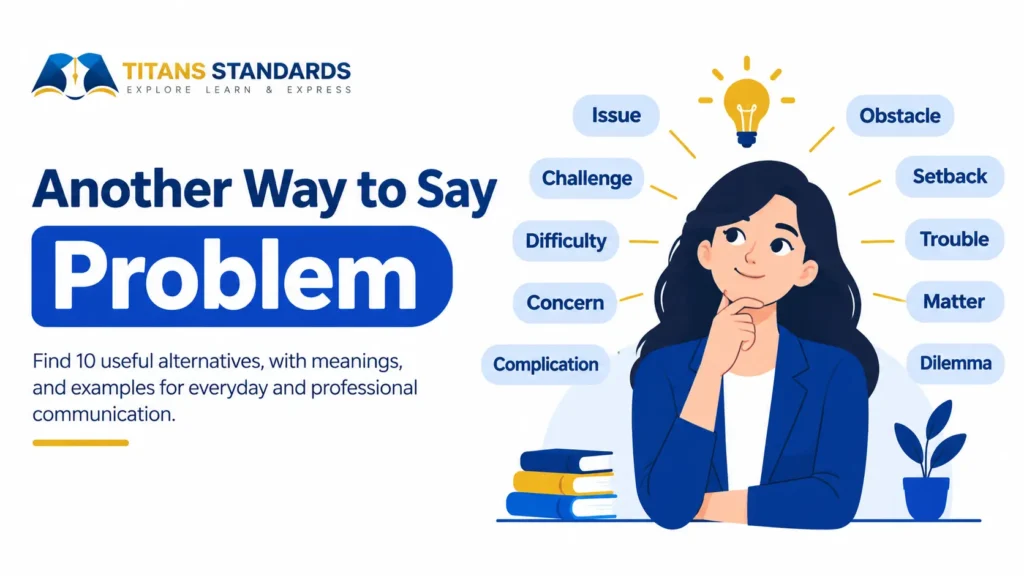
Another way to say the problem is issue, challenge, difficulty, concern, complication, obstacle, setback, trouble, matter, or dilemma. The best alternative depends on the context. Use “issue” in professional communication, “challenge” for something that requires effort, and “obstacle” for something that blocks progress. Key Takeaways What Does “Another Way to Say Problem” Mean? The phrase “another way to say problem” refers to finding a different word or expression that communicates a difficulty, concern, or unwanted situation. People search for these alternatives to improve their vocabulary, avoid repetition, and make their writing sound more natural. The word “problem” appears in many settings, including business emails, school assignments, workplace discussions, customer service messages, and everyday conversations. Choosing a more precise word can help you explain the situation clearly without sounding too negative or formal. For example, you might describe a technical problem as an “issue,” a difficult assignment as a “challenge,” or a barrier to success as an “obstacle.” Why Use Other Ways to Say a Problem? Using synonyms for problems helps you communicate more precisely and adapt your language to different situations. Here are the main benefits: 10 Best Other Ways to Say Problem 1. Issue Meaning: An issue is a matter that needs attention, discussion, or resolution. It is a neutral alternative to problem and works well in professional and everyday communication. Best For: Professional, Formal, Polite Example 1: We need to resolve the issue with the payment system before Friday. Example 2: Please let me know if you experience any issues while using the website. Quick Tip: Use “issue” in business emails when you want to sound professional without making a situation seem worse than it is. 2. Challenge Meaning: A challenge is something that requires effort, skill, or careful thought to overcome. Unlike problem, it often presents an opportunity to learn or improve. Best For: Professional, Formal, Friendly Example 1: Managing a remote team across different time zones can be a challenge. Example 2: Our biggest challenge is finding a solution that fits everyone’s budget. Quick Tip: Choose “challenge” when you want to emphasize effort, growth, or problem-solving rather than failure. 3. Difficulty Meaning: A difficulty is a situation that makes an activity or task harder to complete. It is especially useful when explaining delays, struggles, or obstacles in a neutral way. Best For: Professional, Formal, Polite Example 1: We experienced some difficulty accessing the shared files yesterday. Example 2: She had difficulty explaining the new process to the team. Quick Tip: Use “difficulty” when describing something that is hard to do, especially in reports, explanations, or formal messages. 4. Concern Meaning: A concern is something that causes worry or deserves attention. It is a good alternative when you want to highlight a possible risk or express uneasiness without making a strong accusation. Best For: Professional, Formal, Polite Example 1: My main concern is whether we can finish the project on time. Example 2: The manager raised a concern about the accuracy of the latest report. Quick Tip: Use “concern” when discussing risks, expectations, or sensitive matters diplomatically. 5. Complication Meaning: A complication is an unexpected development that makes a situation more difficult to manage. It often suggests that something has interrupted an otherwise straightforward plan. Best For: Professional, Formal Example 1: A shipping delay created a complication for our product launch. Example 2: The unexpected software update added another complication to the installation process. Quick Tip: Choose “complication” when an additional difficulty makes an existing situation harder to resolve. 6. Obstacle Meaning: An obstacle is something that stands in the way of progress or prevents someone from reaching a goal. It emphasizes a barrier that must be addressed or overcome. Best For: Professional, Formal, Friendly Example 1: Limited funding remains the biggest obstacle to expanding our services. Example 2: She overcame several obstacles before starting her own business. Quick Tip: Use “obstacle” when discussing goals, progress, achievements, or barriers to success. 7. Setback Meaning: A setback is an unexpected difficulty that delays progress or interrupts a plan. It does not necessarily mean failure, but it may require extra time or effort to recover. Best For: Professional, Casual, Friendly Example 1: The equipment failure caused a setback in our production schedule. Example 2: Missing the deadline was a setback, but the team quickly developed a new plan. Quick Tip: Choose “setback” when progress has been delayed but recovery is still possible. 8. Trouble Meaning: Trouble describes a difficult situation, unwanted complication, or state of difficulty. It is common in everyday American English and informal workplace conversations. Best For: Casual, Friendly, Polite Example 1: I’m having trouble connecting my laptop to the office printer. Example 2: We could get into trouble if we ignore the safety instructions. Quick Tip: Use “trouble” in natural conversations, but consider “issue” or “difficulty” in formal business reports. 9. Matter Meaning: A matter is a subject, situation, or concern that requires attention. It can sound professional and diplomatic, especially when discussing sensitive topics or items that need follow-up. Best For: Professional, Formal, Polite Example 1: We should discuss this matter privately after the meeting. Example 2: The finance department is reviewing the matter before making a decision. Quick Tip: Use “matter” when referring to a situation that needs discussion, rather than a specific technical failure or barrier. 10. Dilemma Meaning: A dilemma is a difficult situation in which you must choose between two or more options, often with disadvantages. It emphasizes the difficulty of making a decision rather than fixing a practical issue. Best For: Formal, Professional, Casual Example 1: We face a dilemma: launch the product now or wait for additional testing. Example 2: He was in a dilemma about accepting the promotion or staying with his current team. Quick Tip: Use “dilemma” when the main difficulty involves choosing between competing options. Comparison Table Alternative Best Used In Tone Issue Business emails, general communication Neutral, professional Challenge Goals, projects, personal growth Positive, constructive Difficulty Explanations, reports, daily tasks Neutral, descriptive Concern Risks,