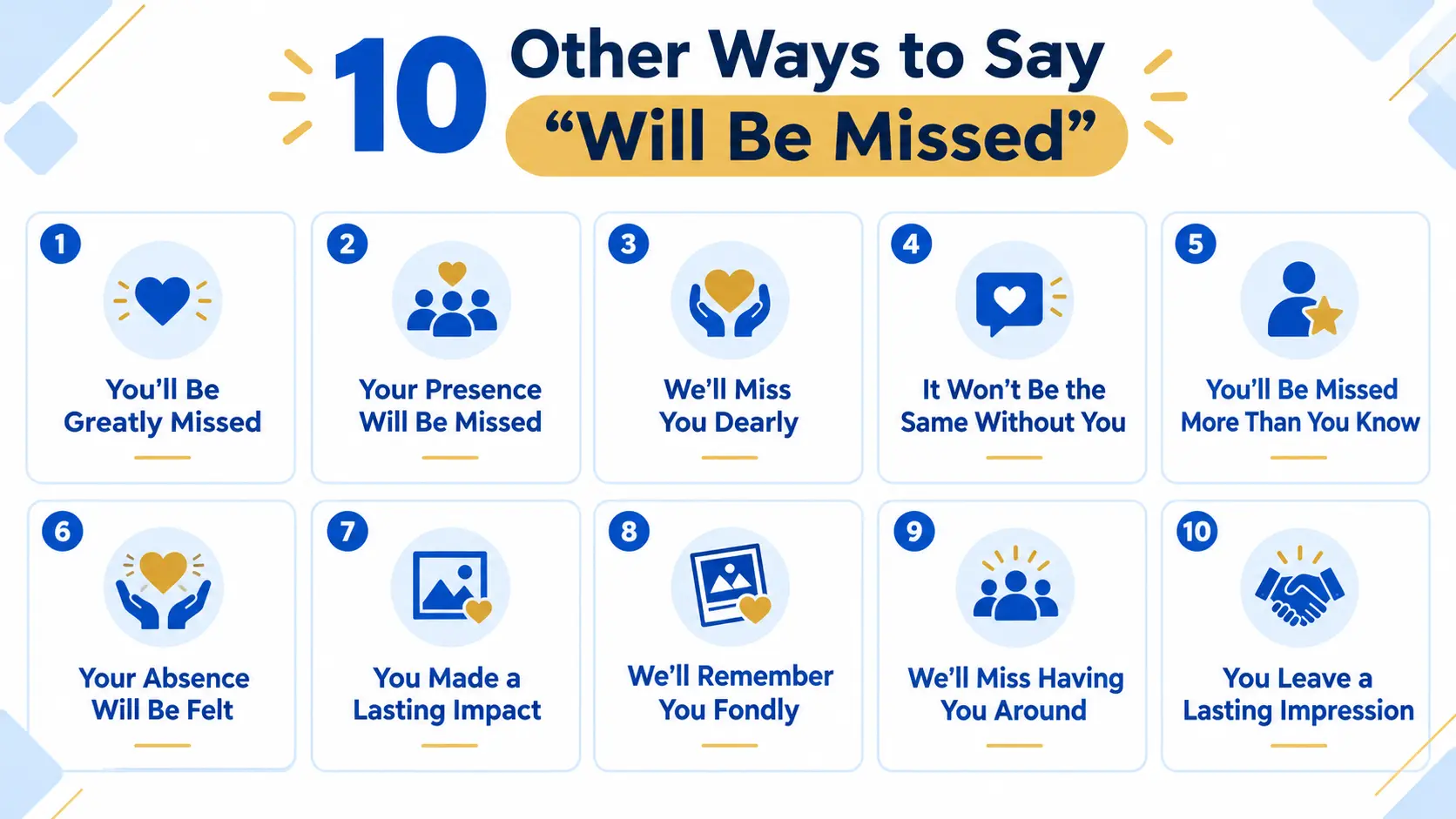
Another way to say “will be missed” is “you’ll be greatly missed,” “your presence will be missed,” “we’ll miss you dearly,” or “it won’t be the same without you.”
These expressions help you share appreciation, sadness, and affection when a friend, coworker, family member, or loved one leaves.
Key Takeaways
- Use “you’ll be greatly missed” for heartfelt and respectful farewells.
- Choose “your presence will be missed” for professional or formal messages.
- Say “we’ll miss you dearly” to express deep affection.
- Use “you made a lasting impact” to recognize someone’s contributions.
- Match your wording to the relationship, occasion, and emotional tone.
What Does “Will Be Missed” Mean?
The phrase “will be missed” expresses the sadness or sense of loss people expect to feel when someone leaves, moves away, retires, or is no longer part of their lives. It can also recognize the positive influence someone has had on others.
People commonly use this expression in farewell cards, retirement speeches, goodbye emails, social media posts, and memorial messages. Its tone can be professional, friendly, or deeply emotional, depending on the situation.
For example, a manager might write, “Your dedication will be missed,” while a close friend might say, “You’ll be missed more than you know.”
For the full definition, see Cambridge Dictionary.
Why Use Other Ways to Say “Will Be Missed”?
Although “will be missed” is a thoughtful expression, repeating it can make messages sound predictable. Choosing a more specific phrase helps you communicate your feelings with greater warmth and clarity.
Consider using an alternative when you want to:
- Avoid repetition: Make several farewell messages sound different.
- Express stronger emotions: Show affection, gratitude, or sadness.
- Maintain professionalism: Recognize a departing colleague’s contributions.
- Personalize your message: Reflect the relationship you share.
- Recognize someone’s impact: Explain why their absence will matter.
The best alternative depends on whether you are writing to a coworker, friend, family member, teacher, or someone you are honoring.
10 Best Other Ways to Say “Will Be Missed”
1. You’ll Be Greatly Missed
Meaning: This phrase expresses strong appreciation and sadness about someone’s departure. It works well when you want to sound sincere without becoming overly emotional.
Best For: Professional, Formal, Warm, Polite
Example 1: Your leadership and kindness will always be remembered, and you’ll be greatly missed by the entire team.
Example 2: Congratulations on your retirement, Sarah! You’ll be greatly missed by everyone at the school.
Quick Tip: Use this phrase in farewell cards, retirement messages, and workplace announcements when you want a respectful, heartfelt tone.
2. Your Presence Will Be Missed
Meaning: This expression highlights the value someone brings simply by being part of a group. It suggests that their personality, participation, or company has made a difference.
Best For: Professional, Formal, Polite
Example 1: Your presence will be missed at our weekly meetings, especially your thoughtful ideas and practical advice.
Example 2: As you move to your new position, please know that your presence will be missed throughout the department.
Quick Tip: Choose this alternative for coworkers, teachers, volunteers, or community members when you want to emphasize their contribution to a group.
3. We’ll Miss You Dearly
Meaning: This phrase communicates deep affection and a strong emotional connection. It sounds more personal than a standard farewell and is especially suitable for people you care about.
Best For: Friendly, Warm, Casual
Example 1: Have a wonderful time in your new home, Emily. We’ll miss you dearly and can’t wait to visit.
Example 2: Grandma, we’ll miss you dearly during the holidays, but we’re excited for your next adventure.
Quick Tip: Save this expression for close friends, relatives, and meaningful personal relationships. In formal workplace emails, a less intimate alternative may be more appropriate.
4. It Won’t Be the Same Without You
Meaning: This expression explains that someone’s absence will change an experience, group, or routine. It conveys affection naturally and often feels more conversational than a traditional farewell.
Best For: Casual, Friendly, Warm
Example 1: The office won’t be the same without you, especially during our Friday lunch breaks.
Example 2: Enjoy college, Jake! Our weekend game nights won’t be the same without you.
Quick Tip: Use this phrase when you share a routine or memorable experience with the person leaving. A specific detail makes the message more personal.
5. You’ll Be Missed More Than You Know
Meaning: This phrase suggests that someone’s importance goes beyond what they may realize. It conveys strong feelings without requiring a lengthy explanation.
Best For: Friendly, Warm, Polite
Example 1: You’ve helped so many new employees feel welcome. You’ll be missed more than you know.
Example 2: Take care on your travels, my friend. You’ll be missed more than you know until we meet again.
Quick Tip: Use this expression when you want to reassure someone that they matter to you. Add a brief reason to make your appreciation feel genuine.
6. Your Absence Will Be Felt
Meaning: This phrase emphasizes the noticeable difference someone’s departure will make. It has a serious, respectful tone and works especially well when acknowledging someone’s role in a team or community.
Best For: Formal, Professional, Polite
Example 1: Your absence will be felt across the organization because of the steady guidance you’ve provided over the years.
Example 2: As our longtime volunteer steps away, her absence will be felt by every family she has helped.
Quick Tip: Use this expression in professional announcements, formal tributes, and community messages. Pair it with a specific contribution to explain why the person mattered.
7. You Made a Lasting Impact
Meaning: This phrase focuses on the positive difference someone has made rather than the sadness of their departure. It recognizes achievements, kindness, or influence that will continue to matter after they leave.
Best For: Professional, Formal, Warm
Example 1: Your mentorship made a lasting impact on our team, and we are grateful for everything you’ve taught us.
Example 2: Through her patience and generosity, our teacher made a lasting impact on generations of students.
Quick Tip: Choose this expression for retirement tributes, farewell speeches, appreciation messages, or memorial writing when you want to celebrate a person’s influence.
8. We’ll Remember You Fondly
Meaning: This phrase communicates warm memories and lasting affection. It is particularly useful when someone is moving on from a shared experience or when you want to honor their memory respectfully.
Best For: Formal, Friendly, Warm, Polite
Example 1: Thank you for your years of service at the library. We’ll remember you fondly and wish you every happiness.
Example 2: Our family will remember you fondly for the laughter and kindness you brought to every gathering.
Quick Tip: Use this phrase in farewell notes, retirement messages, and respectful tributes. It is especially suitable when you want to emphasize memories rather than sadness.
9. We’ll Miss Having You Around
Meaning: This expression is relaxed, friendly, and conversational. It tells someone that their company has become a valued part of everyday life.
Best For: Casual, Friendly, Warm
Example 1: Good luck with your move across the country! We’ll miss having you around for coffee on Saturdays.
Example 2: It’s been great working with you, Mark. We’ll miss having you around the office.
Quick Tip: This phrase works best for friends, neighbors, and familiar coworkers. For a formal announcement, choose a more polished expression.
10. You Leave a Lasting Impression
Meaning: This phrase recognizes that someone has made a memorable difference through their actions, personality, or achievements. It emphasizes their legacy rather than directly stating that they will be missed.
Best For: Professional, Formal, Warm
Example 1: Your creativity and commitment leave a lasting impression on everyone fortunate enough to work with you.
Example 2: With her generosity and courage, she leaves a lasting impression on the entire community.
Quick Tip: Use this expression when highlighting someone’s legacy, particularly in speeches, appreciation posts, and formal tributes. It can also stand alone as a meaningful compliment.
Comparison Table
| Alternative | Best Used In | Tone |
|---|---|---|
| You’ll Be Greatly Missed | Farewell cards, retirement | Warm, respectful |
| Your Presence Will Be Missed | Workplace messages | Formal, professional |
| We’ll Miss You Dearly | Family, close friends | Affectionate |
| It Won’t Be the Same Without You | Friends, coworkers | Casual, sincere |
| You’ll Be Missed More Than You Know | Personal goodbyes | Heartfelt |
| Your Absence Will Be Felt | Formal tributes, team announcements | Serious, respectful |
| You Made a Lasting Impact | Retirement, appreciation | Appreciative |
| We’ll Remember You Fondly | Farewells, tributes | Warm, reflective |
| We’ll Miss Having You Around | Friends, neighbors, coworkers | Friendly, casual |
| You Leave a Lasting Impression | Speeches, recognition messages | Respectful, admiring |
Common Mistakes When Saying “Will Be Missed”

1. Using an overly casual phrase in a formal message
Expressions such as “we’ll miss having you around” work well among friends but may feel too informal in an executive farewell or official announcement. Match your language to the relationship and setting.
2. Choosing words that sound too emotional
“We’ll miss you dearly” is appropriate for close relationships, but it may feel too personal in a routine business email. For professional communication, consider “your contributions will be greatly missed.”
3. Repeating the same expression
Using “you’ll be missed” several times in one card or speech can make your writing sound repetitive. Vary your wording by recognizing the person’s influence, personality, or shared memories.
4. Forgetting to personalize the message
A generic farewell may not communicate what made the person special. Include a real example, such as their helpful advice, sense of humor, or years of service, to make your message more meaningful.
5. Using the wrong tone for a sensitive situation
A cheerful phrase may suit someone moving to a new city but feel inappropriate in a memorial message. Consider the occasion and the reader’s feelings before choosing your words.
Frequently Asked Questions
1. What is another way to say “will be missed”?
You can say “you’ll be greatly missed,” “your presence will be missed,” or “we’ll miss you dearly.” For a more personal message, try “it won’t be the same without you.” Choose the phrase that best reflects your relationship with the person and the reason for the farewell.
2. How do you say “you will be missed” professionally?
Professional alternatives include “your contributions will be greatly missed,” “your presence will be missed by the team,” and “you’ve made a lasting impact on our organization.” These expressions recognize a colleague’s value without sounding overly emotional. They work well in farewell emails, retirement announcements, and workplace cards.
3. What is a heartfelt way to say someone will be missed?
“You’ll be missed more than you know” is a heartfelt choice because it communicates strong feelings in simple language. You could also say “we’ll miss you dearly” or describe a meaningful memory. A specific detail about the person’s kindness or influence often makes the message more touching.
4. How do you say someone will be missed in a farewell card?
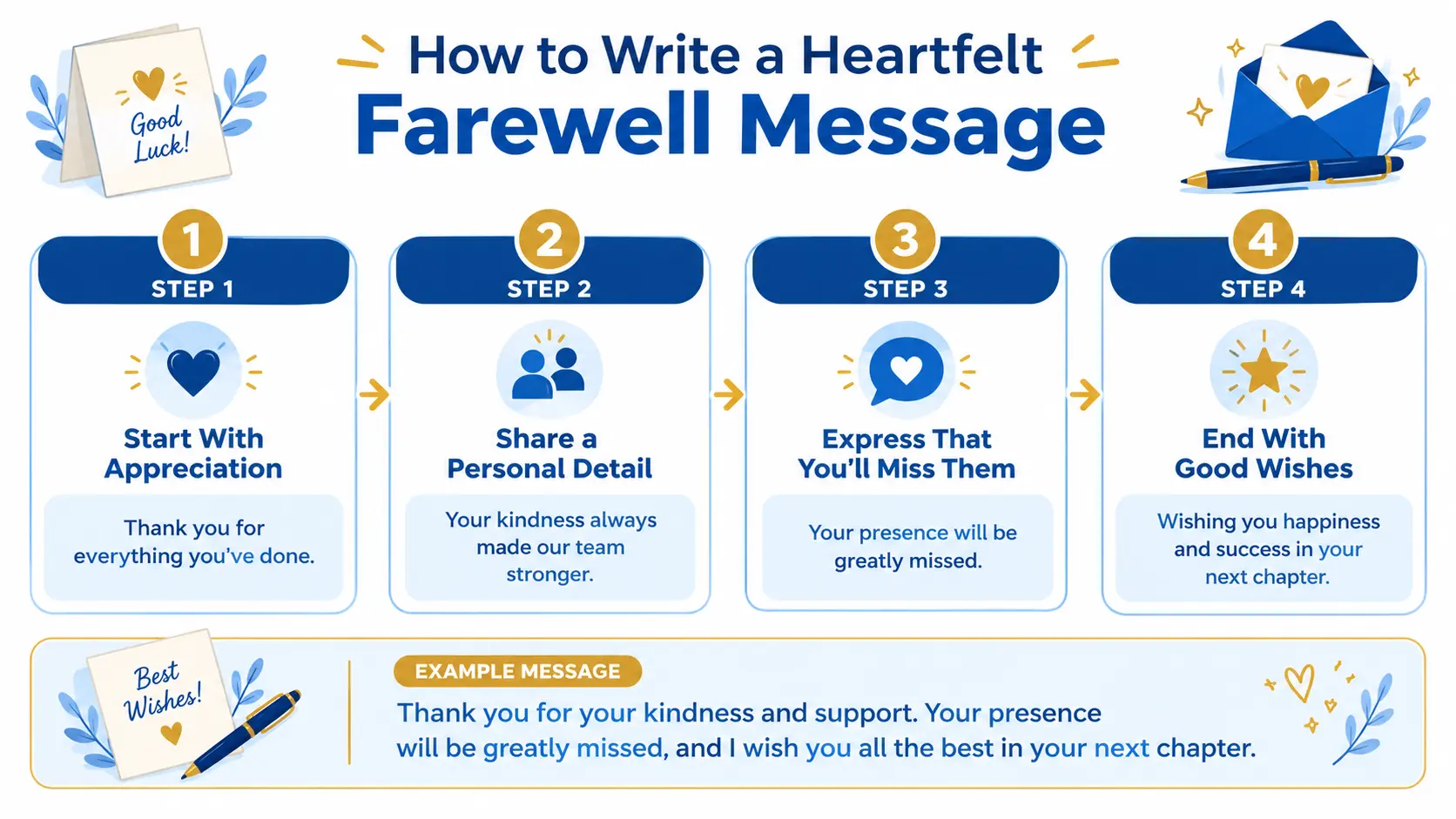
Start with a warm statement, such as “You’ll be greatly missed,” and add a personal detail. For example, mention their friendship, humor, or support. Finish by wishing them well in their next chapter. This approach makes your farewell card sound genuine instead of relying on a familiar phrase alone.
5. What can I write instead of “you will be missed” for a coworker?
For a coworker, consider “your teamwork and dedication will be greatly missed” or “you’ve made a lasting impact on our team.” These options acknowledge professional contributions while remaining friendly. If you know the colleague well, “the office won’t be the same without you” is another natural choice.
6. How do you say “will be missed” without sounding sad?
Focus on appreciation and positive memories rather than loss. Expressions such as “you made a lasting impact,” “we’ll remember you fondly,” and “wishing you success in your next chapter” keep the message uplifting. You can still acknowledge the person’s importance while expressing excitement about their future.
7. What is another way to say someone will be missed in a tribute?
“You leave a lasting impression,” “your absence will be felt,” and “we’ll remember you fondly” can work in a tribute. For a memorial, choose language that respects the person’s life and the feelings of those reading it. Adding a sincere memory can make the tribute more personal.
8. Is “you will be missed” grammatically correct?
Yes, “you will be missed” is grammatically correct. It uses the future form of the verb “be” with the passive voice of “miss.” The expression means that people will feel someone’s absence. You can use the contraction “you’ll be missed” in conversational writing or the full form in more formal messages.

Conclusion
Finding another way to say “will be missed” helps you express appreciation, affection, and respect in a more personal way. The right phrase depends on your relationship with the person and the occasion. For professional farewells, “your presence will be missed” and “you made a lasting impact” recognize someone’s value. For friends and family, “we’ll miss you dearly” and “it won’t be the same without you” sound warmer and more personal. In tributes, “we’ll remember you fondly” honors meaningful memories.
Before sending your message, consider what you want the other person to feel: appreciated, remembered, encouraged, or loved. Then choose a phrase that reflects that intention. The best farewell isn’t necessarily the most elaborate one; it’s the one that sounds sincere and shows the person why they mattered.
Looking for more ways to refresh everyday phrases? Explore our guides to fresher ways to say said and done, or find a better way to say he says.

Editorial Desk
The Titan Standards Editorial Team develops, reviews, and maintains practical English-language resources. The team checks articles for clarity, accuracy, context, readability, and consistency with Titan Standards’ editorial guidelines.